
China fires missile from nuclear sub
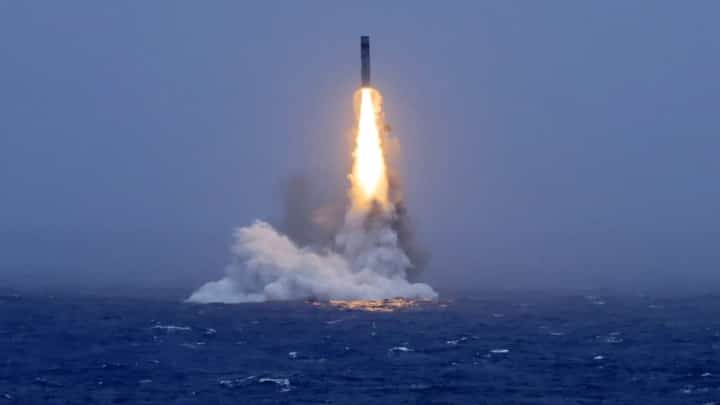
The Department of Foreign Affairs (DFA) on Wednesday called on China to exercise restraint after it fired a long-range missile from a nuclear-powered submarine into the Pacific Ocean on Monday, drawing concerns and protests from several nations.
The DFA deemed the move concerning and urged Beijing to “refrain from actions that heighten miscommunication and misunderstanding.”
“We underscore the importance of maintaining a calm, secure, and stable environment in the Indo-Pacific region. Actions that erode confidence are unhelpful in advancing dialogue, diplomacy, and cooperation,” the DFA stressed.
The Chinese Embassy in Manila claimed that Pacific countries were notified in advance, though the DFA said it was short notice as the Philippines was only informed on Sunday or barely one day before Beijing carried out the missile test.
The Department of National Defense condemned the missile launch, calling it a provocative and “reckless display of military power” that showed little regard for regional stability.
The missile launched from a nuclear-powered submarine flew over the northern coast of Luzon and splashed down in the South Pacific Ocean in the waters between Nauru and Tonga.
China defended the launch as a routine military training activity and said it was not aimed at a specific country.
Chinese Foreign Ministry spokesperson Mao Ning said the launch was “consistent with international law” and “customary international practice,” adding that the test was “safe, standard, and professional” and should not have caused fear or panic.
Several regional leaders expressed grave concern and condemned Beijing’s missile test, with Australian Prime Minister Anthony Albanese criticizing it as a “provocative act” that destabilizes the Pacific region.
“The fact that this was a test of a nuclear-capable intercontinental ballistic missile fired from a nuclear-powered submarine, that is of real concern,” Albanese said.
The US Embassy in Manila said Beijing’s “provocative” missile launch ran counter to regional stability and was “inconsistent with the pursuit of meaningful arms control discussions.”