
Expanded voucher bill aims to ease public school congestion

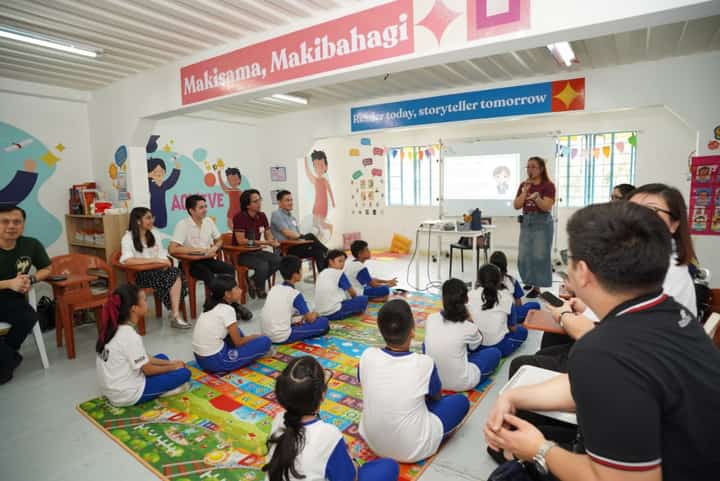
IN PHOTOS | Education Secretary Sonny Angara lauded the congressional passage of the Basic Education Voucher Assistance Act, a landmark measure that expands private school tuition subsidies from Kindergarten to Grade 12 for middle-middle-income families and below. The consolidated legislation aims to ease severe congestion in public school classrooms while strengthening support and quality assurance across the private education sector.
DepEd PH
An expanded government voucher program that would allow more students to enroll in private schools moved a step closer to becoming law after a bicameral conference committee approved a measure aimed at easing chronic overcrowding in public schools.
The proposed Basic Education Voucher Assistance Act, which reconciles the differing versions approved by the Senate and the House of Representatives, would institutionalize tuition subsidies from Kindergarten to Grade 12 and broaden eligibility to include students from middle-middle-income families, a significant expansion from the current program.
The measure is designed to reduce enrollment pressure on public schools by enabling qualified learners to transfer to participating private schools using government-funded vouchers, while also providing financial support to the private education sector.
Education Secretary Sonny Angara on Wednesday welcomed the bicameral approval, describing the measure as a practical response to classroom congestion and unequal access to quality education.
"This milestone legislation provides a pragmatic solution to the logistical constraints of our public school system while giving middle-middle-income and below families more equitable access to quality schooling," Angara said in a statement.
Under the bill, tuition assistance would be available to qualified learners from middle-middle-income households and below, expanding the government's existing subsidy program beyond its traditional beneficiaries.
The proposal also extends voucher assistance throughout the entire basic education cycle—from Kindergarten to Grade 12—and covers students whose preferred senior high school tracks or strands are unavailable in nearby public schools.
Priority beneficiaries include learners from overcrowded public schools, communities without nearby public schools, and those belonging to vulnerable and disadvantaged sectors.
The measure also calls for the creation of a centralized Department of Education registry for voucher recipients and participating private schools to improve monitoring, accountability and program implementation.
If enacted, the law would complement reforms introduced under DepEd Order No. 11, series of 2026, which strengthened the implementation of the Enhanced Government Assistance to Students and Teachers in Private Education (E-GASTPE) program.
The bill must still be ratified by both chambers of Congress before it is transmitted to President Ferdinand Marcos Jr. for signature.
DepEd said it would begin preparatory work ahead of the measure's expected enactment to ensure the expanded voucher program can be rolled out without delay.###