
eGovPH deserves more attention
The Bangko Sentral ng Pilipinas has already directed banks to recognize the Digital National ID as a valid proof of identity, while the Philippine Statistics Authority has repeatedly clarified that digital versions carry the same legal weight as their physical counterparts when properly authenticated.


EVERY digital transaction completed through eGovPH is one less queue, one less form and one step closer to modern governance.
PHOTOGRAPH courtesy of PCO
Digital transformation is often associated with billion-dollar startups, artificial intelligence and Silicon Valley.
Sometimes, however, the most meaningful innovation is much simpler.
It is renewing a government permit without lining up.
It is carrying a digital National ID on your phone.
It is applying for a job, accessing public records or checking government services from anywhere.
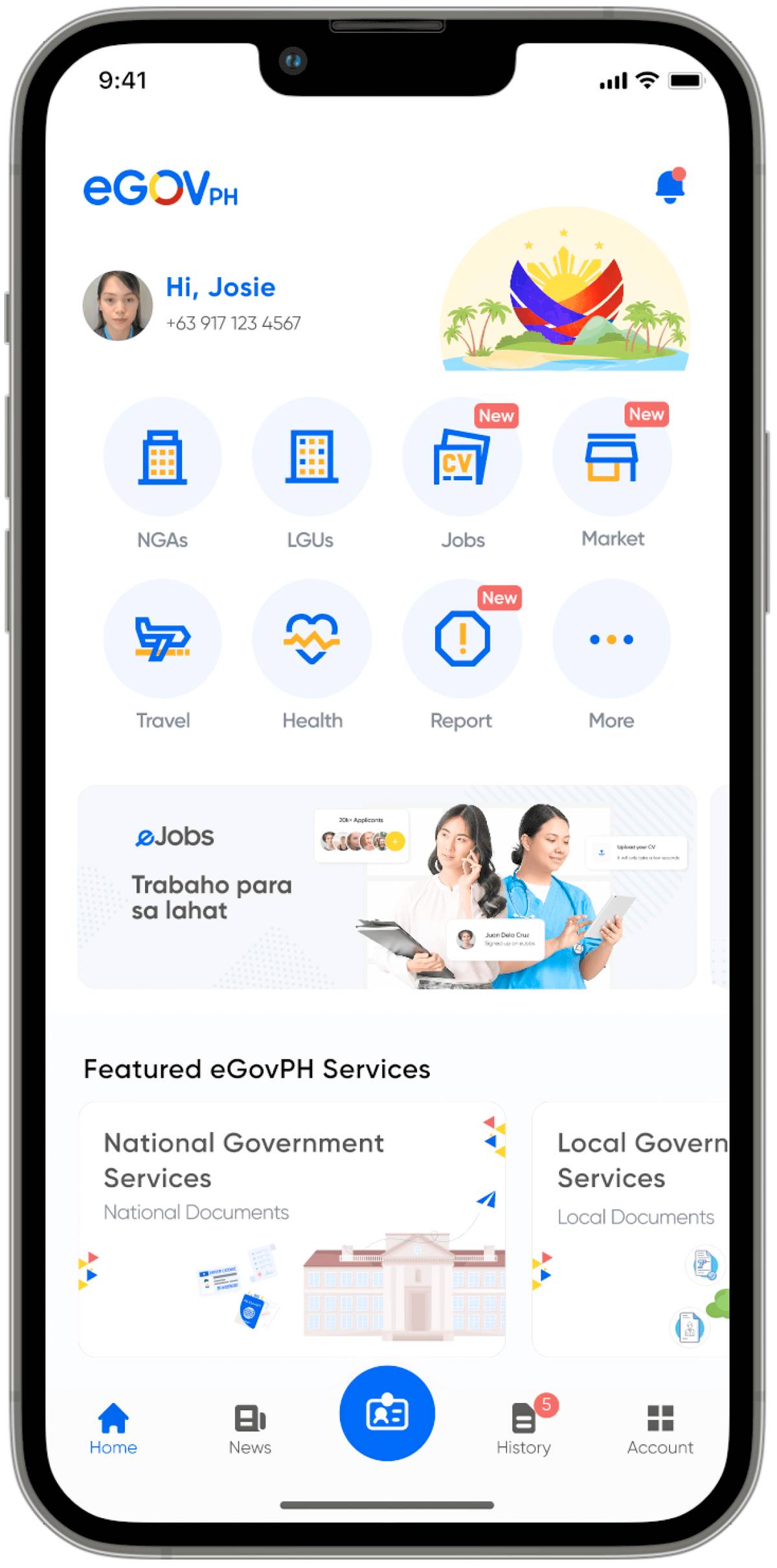
That is what the Department of Information and Communications Technology’s eGovPH Super App is trying to accomplish.
It may not generate the headlines of the latest AI breakthrough or smartphone launch, but it is arguably one of the Philippines’ most important technology projects.
The numbers suggest it is working.
According to the DICT, the app has already surpassed 800 million transactions and 56 million downloads, far exceeding the agency’s original target of 30 million users by 2028. Daily downloads now average about 100,000, while usage has surged by 700 percent over the past year. The platform now integrates more than 1,300 government systems, making it one of Southeast Asia’s largest digital government ecosystems.
The growth has not been without pain.
Earlier this year, the app suffered temporary outages after demand overwhelmed its servers following the rollout of new features. Rather than a cybersecurity breach, the problem was almost ironic: Too many Filipinos were using it at once. The DICT responded by expanding cloud capacity and upgrading its infrastructure.
THE best government service is the one you barely have to think about.
PHOTOGRAPH courtesy of DICT
That, perhaps, is what grit looks like in technology.
Not avoiding failure. But continuing to improve while millions of people are already depending on your platform.
The app itself has also grown rapidly.
Today it offers digital government IDs, permits, financial and medical assistance, AI-powered services through eGovAI, paperless document signing via eGovDocs, job-matching through e-Trabaho, disaster information through Project NOAH, and digital credentials such as the Digital TIN ID. More government agencies and local government units continue to join the platform.
Yet despite its progress, eGovPH still faces one obstacle that technology alone cannot solve.
Acceptance.
The Bangko Sentral ng Pilipinas has already directed banks to recognize the Digital National ID as a valid proof of identity, while the Philippine Statistics Authority has repeatedly clarified that digital versions carry the same legal weight as their physical counterparts when properly authenticated.
And yet many Filipinos still encounter establishments, banks and even some government offices that insist on photocopies, laminated IDs or printed documents.
It defeats the very purpose of digitalization.
If government agencies build secure digital platforms but institutions refuse to recognize them, the burden simply shifts back to the citizen.
Digital transformation is not achieved by launching an app.
It succeeds only when every institution trusts and uses the same system.
The same principle applies beyond government.
Many companies proudly describe themselves as “digital-first,” yet continue relying on paperwork, wet signatures and manual verification processes that technology has already solved.
Digitalization is not about replacing paper with PDFs.
It is about redesigning processes so citizens and customers no longer waste time proving the same information over and over.