
Buy, buy, buy: Why consumption remains king
Consumption has long been the driver of Philippine economic growth, accounting for roughly three-fourths of gross domestic product for decades and ranking among the highest shares in Asia. World Bank data show household consumption has consistently represented around 73 percent to 77 percent of GDP over the past several decades.
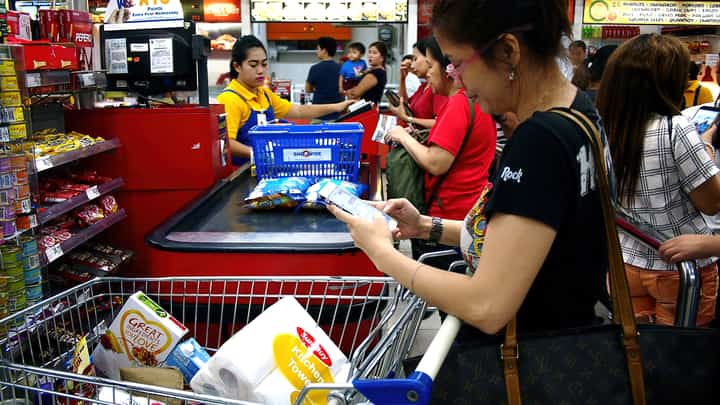
WHILE many economies built their growth models on exports and industrial production, the Philippines relied on households. Income sources may vary — OFW remittances, BPO workers' salaries, domestic wages, but ultimate, they all go to the same destination —consumer spending, with Filipino housewives spending the largest portion of their household budgets on food and other grocery items.
Photo courtesy of PNA
The modern global economy is increasingly being shaped by innovation, particularly advances in technology and artificial intelligence. Headlines today often revolve around breakthrough developments, billion-dollar startups, semiconductor races, and the opportunities and disruptions created by new technologies.
The push to modernize economies has prompted many countries to pivot toward technology, manufacturing, and innovation-led growth over the past two decades. China has emerged as a global manufacturing powerhouse while investing heavily in advanced technologies. Japan and South Korea have built globally competitive industries around electronics, automobiles, semiconductors, and research-intensive sectors.
Different story
The Philippine economy tells a different story.
While many of its regional peers increasingly relied on exports, manufacturing, and technology to power growth, the Philippines entered the 21st century by leaning more heavily on a longstanding economic engine: the Filipino consumer.
Consumption has long been the driver of Philippine economic growth, accounting for roughly three-fourths of gross domestic product (GDP) for decades and ranking among the highest shares in Asia. World Bank data show household consumption has consistently represented around 73 percent to 77 percent of GDP over the past several decades. In the fourth quarter of 2024 alone, Household Final Consumption Expenditure (HFCE) accounted for 75.3 percent of GDP, according to the Philippine Statistics Authority (PSA).
The figure is remarkable not only for its size but also for its consistency. Household spending has survived political crises, inflation spikes, peso depreciation, global recessions, pandemics and geopolitical tensions. With so much of the economy resting on the spending decisions of ordinary Filipinos, what changed over time was not their willingness to consume but the sources of income that allowed them to do so.
The ouster of Ferdinand E. Marcos Sr. in 1986 ushered in a period of political transition and economic rebuilding. At the time, the Philippines remained heavily dependent on agriculture, traditional services and domestic wages. Household consumption was already the dominant component of GDP, reflecting an economy driven more by local demand than exports.
A stabilizing force
That pattern persisted through the 1990s. Despite the disruptions caused by the Asian Financial Crisis, household spending remained a stabilizing force within the economy. While several neighboring economies experienced severe contractions as capital fled the region, domestic consumption helped cushion the impact on the Philippines and reinforced its role as a key growth driver entering the new millennium.
The 21st century opened with political turmoil. The impeachment proceedings against President Joseph Estrada contributed to uncertainty that saw GDP growth slow to 2.9 percent in 2001 from 4.4 percent the previous year.
Still, Filipinos continued to spend
The composition of household spending has remained remarkably consistent across decades. Food, housing, utilities, transportation, education and other necessities have consistently accounted for the largest share of household budgets. While the proportion spent on food gradually declined as incomes rose, it remained the single largest expenditure category for most Filipino families.
Major support source: OFWs
A major source of support emerged through overseas Filipino workers (OFWs). Remittances from Filipinos abroad surged during the early 2000s, providing households with a stable source of income insulated from domestic political and economic developments. Cash remittances coursing through the banking system rose from about $6 billion in 2000 to more than $17 billion by 2009, according to Bangko Sentral ng Pilipinas (BSP) data.
The steady inflow boosted purchasing power and enabled millions of households to spend not only on basic necessities but also on housing, education, healthcare and consumer goods.
The years following Estrada’s removal saw the economy regain momentum. Remittances continued to grow while a new source of household income emerged through the rapid expansion of the business process outsourcing (BPO) industry.
What began as a niche sector evolved into one of the country’s largest employers. Industry revenues grew from less than $100 million in the early 2000s to nearly $9 billion by 2010, while employment expanded from only a few thousand workers to more than 600,000 by the end of the decade. The sector helped create a new generation of middle-class consumers whose salaries flowed directly into retail spending, housing, transportation, and services.
Then came the global financial crisis.
Worldwide recession
The mortgage-backed securities crisis that originated in the United States triggered a worldwide recession in 2008 and 2009. Global trade contracted sharply, financial markets plunged, and growth slowed across both developed and emerging economies.
The Philippines was not spared. GDP growth slowed from 7.1 percent in 2007 to 4.2 percent in 2008 before falling further to 1.1 percent in 2009.
Yet the country emerged as a notable exception in the region.
Unlike many export-dependent Asian economies, the Philippines relied far more heavily on domestic demand. While exports weakened significantly during the crisis, household spending continued to expand. PSA data show household consumption grew by 4.9 percent in 2008 and another 3.9 percent in 2009 despite the global downturn.
Remittances played a critical role. Total remittance inflows reached $16.4 billion in 2008 and continued growing to $17.3 billion in 2009 despite widespread economic weakness abroad. Remittance inflows were equivalent to roughly 10 percent to 12 percent of GDP during this period, making overseas Filipinos one of the country’s most important sources of foreign exchange and household income.
Remittances directed to household consumption
Studies by the BSP showed that remittances were largely directed toward household consumption. Recipient families commonly spent remittance income on food, education, healthcare, housing, and other everyday needs, providing a reliable source of domestic demand when much of the global economy was retrenching.
The economy recovered under the administration of President Benigno Aquino III and sustained its momentum throughout much of the following decade.
Between 2010 and 2019, the Philippines grew by an average of approximately 6.4 percent annually, placing it among Asia’s fastest-growing economies. Throughout the period, household consumption remained the largest expenditure component of GDP, supported by rising employment, steady remittance growth, moderate inflation, and the continued expansion of the BPO industry.
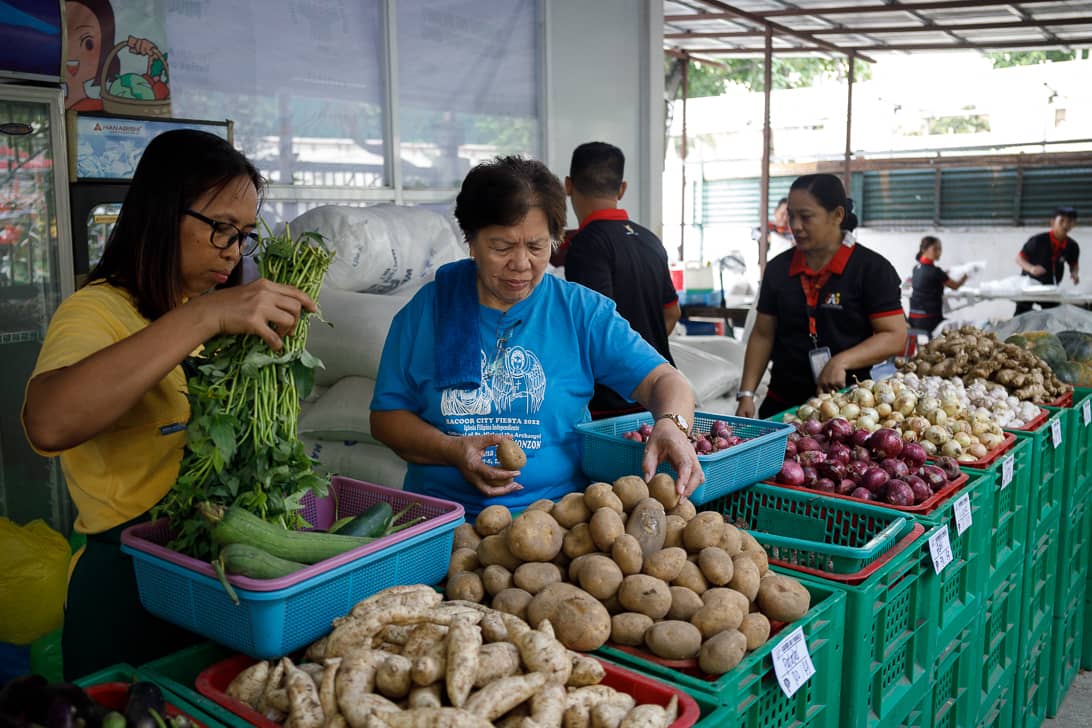
THE story of Philippine growth is not a story of rising GDP; it is the story of millions of ordinary spending decisions repeated by millions of ordinary Filipinos, like these women buying vegetables for the household meals they prepare for their families every day across the country.
Photo courtesy of PNA
Digital world transition
The transition toward a more digital world also created new avenues for spending. E-commerce platforms, online services, digital wallets, and cashless payments altered the way Filipinos consumed goods and services. According to BSP data, digital payments accounted for just 1 percent of retail transactions in 2013. By 2023, they represented more than half of all retail payments.
The digital economy has also emerged as a significant contributor to growth. By 2025, the digital economy generated P2.74 trillion in gross value added, accounting for 9.8 percent of GDP.
Then, suddenly, the Covid -19 pandemic brought the world to a halt.
As lockdowns restricted mobility and economic activity, households dramatically changed their spending behavior. Faced with uncertainty, many consumers cut discretionary spending and increased savings. Consumer confidence plunged, while industries dependent on face-to-face interaction—including transportation, tourism, restaurants, recreation, and retail—experienced severe contractions.
The result was historic.
The Philippine economy contracted by 9.5 percent in 2020, marking the deepest postwar recession on record.
Collapse underscored importance of household spending
The collapse underscored just how important household spending had become. HFCE contracted by 7.9 percent in 2020, accounting for a substantial portion of the overall economic decline.
Yet the recovery once again highlighted the resilience of Filipino consumers.
As restrictions eased and vaccination programs expanded, households gradually resumed spending. HFCE rebounded by 4.2 percent in 2021 after its sharp contraction the year before, helping drive GDP growth of 5.7 percent.
The following year, household spending accelerated even further. HFCE grew by 8.3 percent in 2022 while GDP expanded by 7.6 percent, one of the strongest growth performances in Asia that year. By then, household consumption had already surpassed pre-pandemic levels.
Familiar pattern
The pattern was familiar.
When Filipino households stopped spending, the economy contracted. When they resumed spending, the economy recovered.