
Paete honors malaria BUSTER Francisco Baisas
Baisas was a pioneering Filipino entomologist whose landmark research on mosquitoes helped advance malaria control and protect generations of Filipinos.
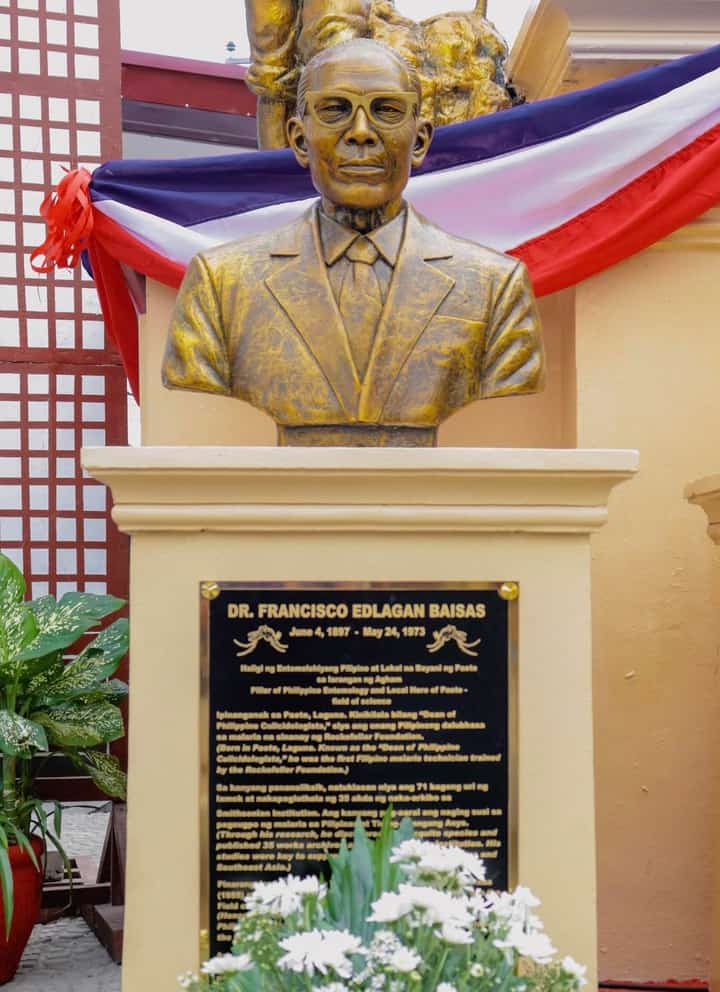
Through the efforts of the newly formed Paete Historical and Cultural Heritage Foundation (PHCHF), with the support of the descendants of Dr. Francisco Baisas (1896-1973), a monument honoring the distinguished Filipino scientist was recently unveiled in his hometown of Paete, Laguna.
Known as the “Dean of Philippine Culicidology,” Baisas was a pioneering figure in the country’s fight against malaria, a life-threatening but preventable and curable mosquito-borne disease. Culicidology is the scientific study of mosquitoes.
Through Municipal Ordinance 2026-43, Baisas was also officially declared Paete’s Local Hero in the Field of Science.
The Department of Science and Technology–Forest Products Research and Development Institute (DOST-FPRDI) described him as “a man whose scientific breakthroughs protected generations of Filipinos.”
“Named one of the country’s Ten Outstanding Scientists in 1955, Dr. Baisas was a pioneering entomologist whose groundbreaking research on Philippine mosquitoes laid the foundation for malaria control that saved countless lives,” the institute said.
It added that his important scientific work and specimens remain preserved at the Smithsonian Institution in Washington, D.C.
The monument was unveiled on 4 June, Baisas’s 130th birth anniversary, at the Liwasang Bayan in Paete. The ceremony was attended by members of the local government, representatives of the DOST-FPRDI and PHCHF, members of the Baisas family, and residents of the town.
Created by Paete artist Gemo Velda, the sculpted bust rests on a concrete pedestal and stands in front of the town’s monument honoring Philippine national heroes.
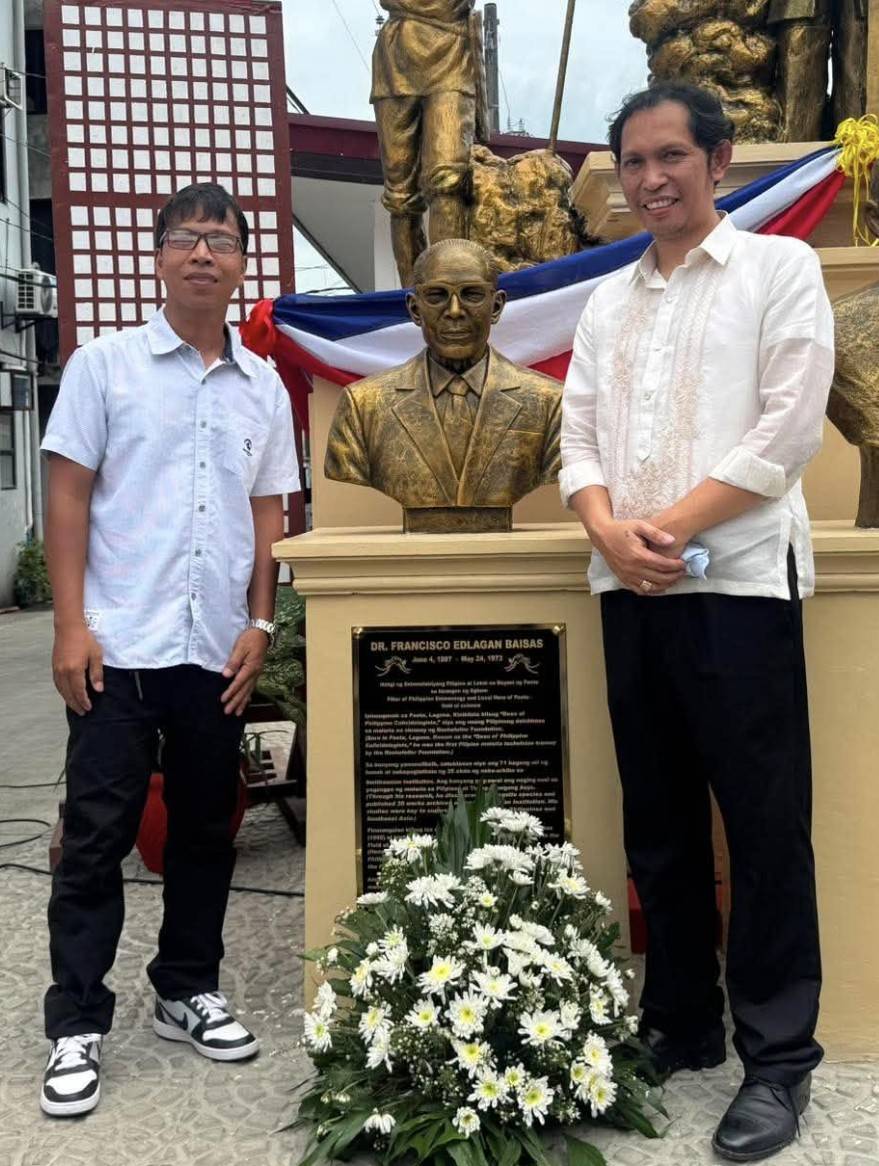
AT the newly-unveiled monument.
From journalism student to malaria scientist
Baisas was studying journalism at the University of the Philippines in 1922 when the Laguna division superintendent of schools recommended him to the Rockefeller Foundation’s Philippine office. The foundation was then looking for a Filipino who could be trained as a malaria technician—the first to receive such training in the country.
Only six months after joining the foundation, Baisas was promoted to field director. In 1926, he was elevated to the position of entomologist-supervisor.
He passed the government examinations for malaria technicians and malaria entomologists in 1929 and 1930, respectively, earning scores of 93.55 percent and 92.50 percent. The latter examination included the submission of a thesis.
Baisas later returned to UP, where he completed degrees in zoology and entomology in 1934.
At the end of World War II, he worked as an entomologist at the 3rd General Medical Laboratory before returning to the Institute of Malariology of the Rockefeller Foundation.
Baisas was married to Crispina Calingo, a native of Pateros, with whom he had eight children. Even after retiring from government service in 1961, he continued his scientific work.
In 1970, he moved to the United States to join his family. He died there three years later.
A legacy of science and service
Although his name remains unfamiliar to many Filipinos, Baisas is remembered in scientific circles as one of the country’s foremost authorities on mosquitoes. He authored numerous scholarly papers and described 71 previously unidentified mosquito species through his research.
John Joven Cajipe of the PHCHF, who also serves as Paete’s local historian, said Baisas’s life demonstrates that the town — widely celebrated for its woodcarving tradition — has also produced remarkable figures in fields beyond the arts, particularly science.
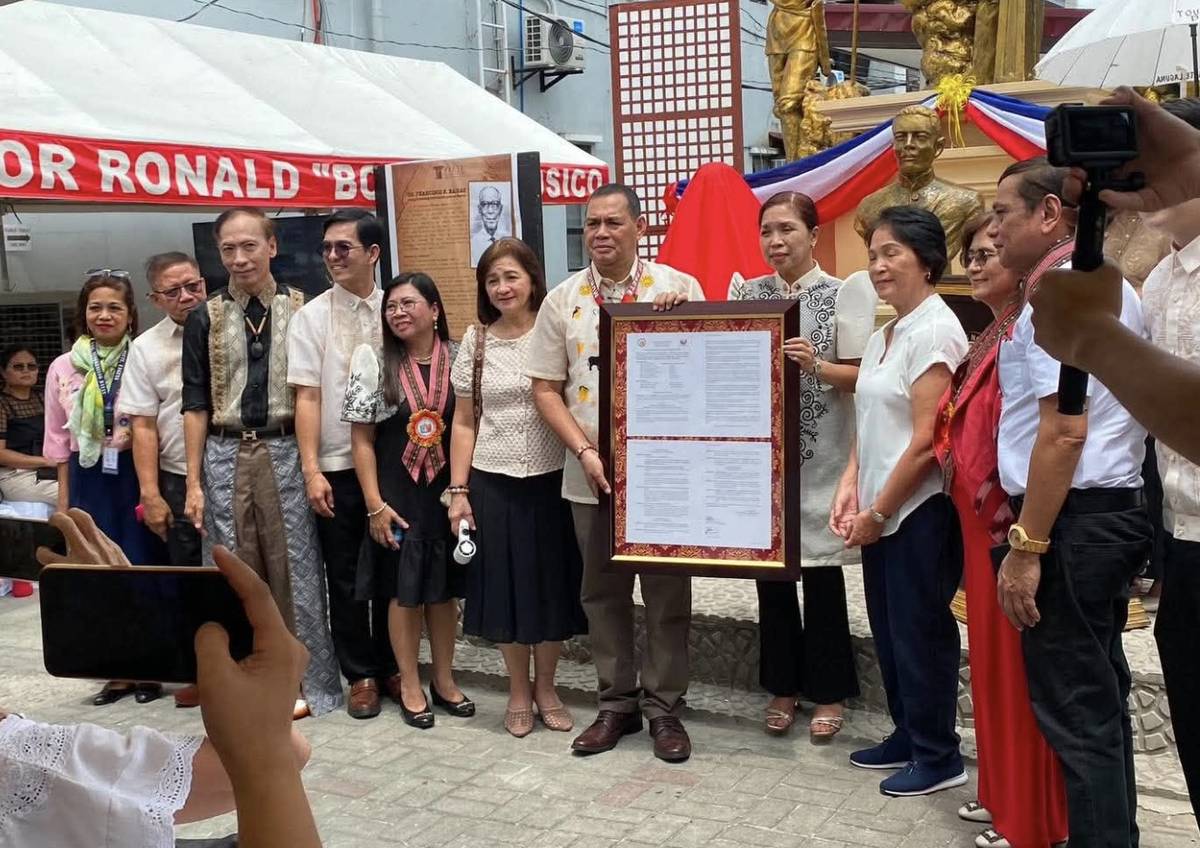
PRESENTATION of ordinance, officially declaring Baisas as Paete’s Local Hero in the Field of Science.
“Sa pagkilala kay Baisas, ipinakikita natin na ang Paete ay hindi lamang mahusay sa sining kundi maging sa larangan ng agham (In recognizing Baisas, we show that Paete excels not only in the arts but also in the field of science),” Cajipe said.
He added that the monument would remind younger generations of Paeteños that distinction may be achieved in any chosen vocation.
“Magiging inspirasyon ito sa mga kabataang Paeteño upang magsikap at maging mahusay sa kani-kanilang larangan (This will inspire young Paeteños to strive for excellence in their respective fields)” he said.
More than five decades after his death, Baisas’ legacy endures in the scientific knowledge he helped build, in the lives protected by malaria-control efforts, and in the hometown that now proudly claims him as one of its heroes.