
DOST turns Apayao wild grass into livelihood opportunity

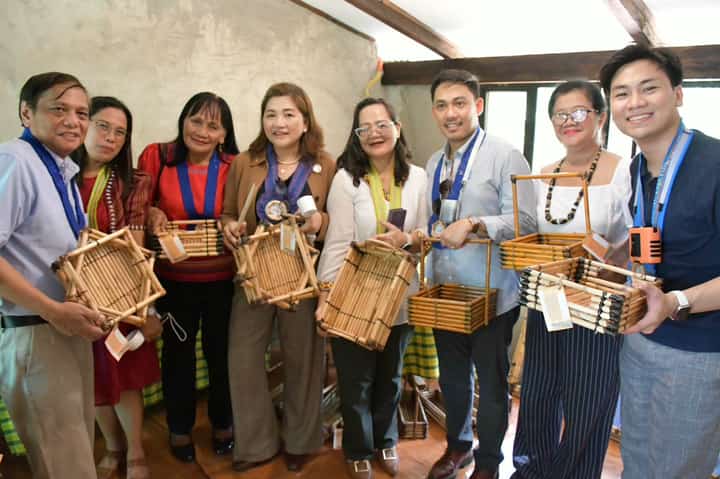
DOST-FPRDI Director Rico J. Cabangon (extreme left) together with other DOST officials and partners show the traditional crafts produced from the Institute-developed Eco-dryer during the inauguration of the Runo Processing Facility in Pudtol, Apayao.
The Department of Science and Technology-Forest Products Research and Development Institute (DOST-FPRDI) is helping transform a locally abundant wild grass in Apayao into high-value products, creating new livelihood opportunities through science and technology.
The initiative was highlighted during the inauguration of the Runo Processing Facility and showroom at the Agguimangan Agro-Eco Tourism Farm in Pudtol, Apayao, on 18 May.
As a project co-implementer, DOST-FPRDI equipped the facility with its Eco-dryer technology, which significantly reduces the drying time of runo (Miscanthus sinensis) while improving dimensional stability, preservative retention, and production consistency.
DOST Secretary Renato Solidum Jr. said many communities possess resources with untapped economic potential that can be transformed into sustainable enterprises through science, technology, and strong local partnerships.
DOST Assistant Secretary for Countryside Development Maria Teresa De Guzman said Apayao's communities are not only protecting natural resources but are also creating economic opportunities from them.
DOST-FPRDI Director Rico Cabangon said the facility will help generate livelihoods, build local skills, and promote sustainable forest-based enterprises in the province.
Before the facility opened, DOST-FPRDI trained local artisans on Eco-dryer operations, runo preservation, advanced finishing techniques, machine operation, and mixed-media product development.
The processing hub forms part of the project "Revitalizing and Unlocking the Potential Economic Opportunity (RUNO) of Handicrafts in Apayao through Science, Technology and Innovation," supported by the DOST-Philippine Council for Industry, Energy, and Emerging Technology Research and Development's Women-Helping-Women: Innovating Social Enterprises (WHWise) program.
The project aims to develop community-based enterprises by providing equipment, technical training, and technology transfer to maximize the value of non-wood forest products.