
Three ICC judges sue U.S. President Trump over sanctions

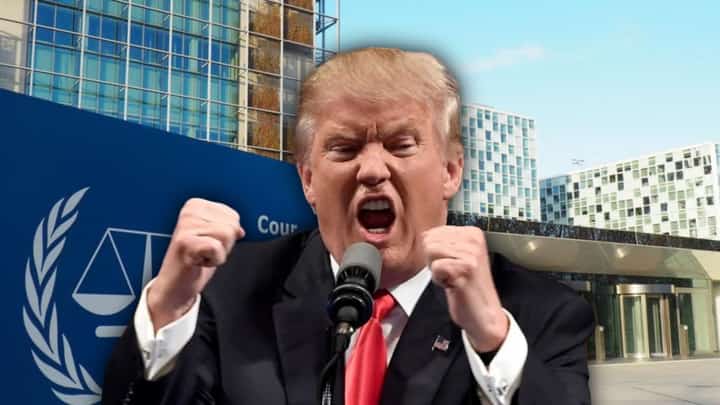
Three ICC judges have sued former U.S. President Donald Trump in a Manhattan federal court, challenging sanctions they say unlawfully targeted their finances and judicial independence after the court pursued war crimes investigations involving Israel and U.S. troops in Afghanistan.
Three judges of the International Criminal Court (ICC) have filed a lawsuit against U.S. President Donald Trump and his administration, challenging sanctions imposed on them last year and arguing that the measures were unlawful.
The lawsuit, filed Wednesday in a federal court in Manhattan, was brought by judges Kimberly Prost of Canada, Solomy Balungi Bossa of Uganda, and Reine Adelaide Sophie Alapini-Gansou of Benin.
According to the complaint, the sanctions were intended to exert pressure on ICC judges and punish them for judicial decisions made in their official capacity.
The sanctions were imposed by the Trump administration following the ICC's issuance of an arrest warrant for Israeli Prime Minister Benjamin Netanyahu and its earlier decision to investigate alleged war crimes committed by U.S. troops in Afghanistan.
The U.S. State Department, Treasury Department, and the White House did not immediately respond to requests for comment, Reuters reported.
The judges argued that the sanctions exceed the authority granted under the International Emergency Economic Powers Act (IEEPA) and were not based on a legitimate national emergency or extraordinary threat.
In the lawsuit, they described the sanctions regime as an effort to influence judicial independence by targeting their financial and personal interests.
The complaint also detailed the practical effects of the sanctions, claiming they have prevented the judges from carrying out routine financial transactions, including the use of credit cards and banking services, as well as access to online platforms, travel bookings, and, in some cases, health insurance.
The judges further argued that the sanctions hinder the submission of evidence and legal arguments in proceedings before the ICC.
Established in 2002, the ICC has jurisdiction over genocide, crimes against humanity, and war crimes committed in its member states or in situations referred by the United Nations Security Council. While the court has 125 member countries, several nations, including the United States, China, Russia, and Israel, do not recognize its authority.
The dispute marks the latest chapter in the long-running tensions between Washington and the Hague-based tribunal. During Trump's first term, the United States imposed sanctions on then-ICC prosecutor Fatou Bensouda and one of her senior aides over the court's investigation into Afghanistan.