
Lebanese mourn destroyed homes, livelihoods
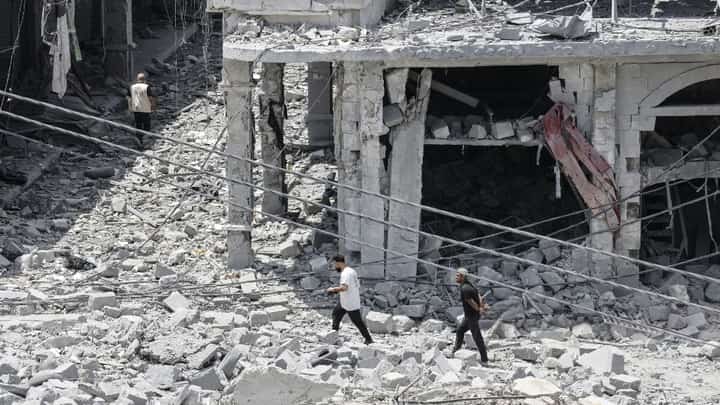
PEOPLE make their way through the heavily damaged historic market of Nabatieh as residents displaced by fighting return to southern Lebanon.
MAHMOUD ZAYYAT/AGENCE FRANCE-PRESSE
Nabatieh (AFP) — When Kamal Kamal heard a ceasefire deal had been agreed between Iran and the United States, he rushed back to the southern city of Nabatieh only to find an Israeli strike had reduced his life’s work to rubble.
The city, usually home to some 90,000 people before the latest war between Israel and Hezbollah erupted on 2 March, was largely deserted as Israel pressed its military offensive in the area in recent days.
Kamal fought back tears as he stared stunned at the pile of rubble that used to be his roastery and warehouse for coffee and other products, after Israel pummeled the region with strikes and issued sweeping evacuation orders.
“When I opened it in the seventies, I was still a young man... now nothing is left,” he said, leaning heavily on a walking stick and surveying the vast destruction.
“How my life has been spent in vain here!”
The war in Lebanon has been included in the framework deal to end the broader Middle East war.
But Lebanon’s army on Monday urged displaced residents to delay their return to southern border villages, citing the “risk of Israeli violations and attacks.”
Iran-backed group Hezbollah issued a similar warning.
Yet residents who have cautiously returned to Nabatieh have expressed dismay at the huge damage Israel inflicted on the city’s neighborhoods and its famed market, where the roofing had collapsed and shops were devastated.