
DepEd taps LGUs to help close massive classroom gap

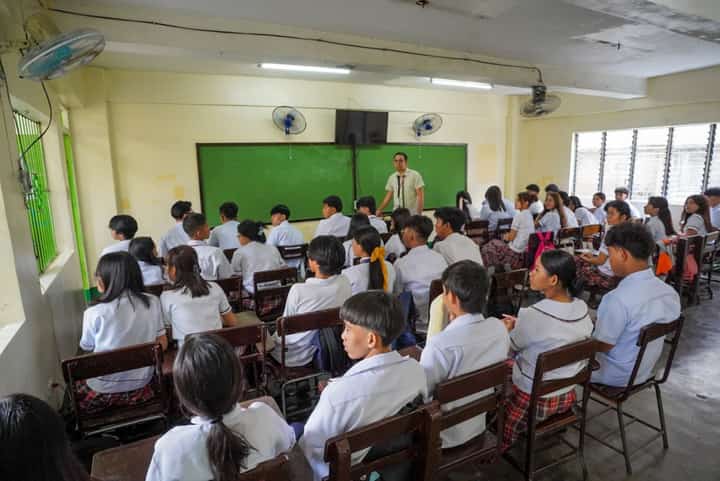
IN PHOTOS | Education Secretary Sonny Angara has reinforced the framework for the nationwide localized classroom building program to ensure transparency, accountability, and the timely completion of infrastructure projects. Partnering with 79 local government units (LGUs), this initial PHP9.3 billion investment aims to deliver 2,632 classrooms across more than 600 school sites nationwide using a digitized project monitoring system.
DepEd PH
Facing a classroom shortage that has left many public schools overcrowded and operating on multiple shifts, the Department of Education (DepEd) is expanding its partnership with local government units (LGUs) to speed up the construction of thousands of new learning spaces nationwide.
Education Secretary Sonny Angara on Tuesday announced tighter monitoring and accountability measures for a localized classroom-building program involving 79 LGUs, which are set to construct 2,632 classrooms worth P9.3 billion in more than 600 school sites across the country.
“Hindi kayang lutasin ng DepEd nang mag-isa ang kakulangan sa silid-aralan,” Angara said, stressing the need for local governments to help address infrastructure gaps in the education sector.
The 79 LGUs are among the first local governments tapped under the program, which seeks to decentralize classroom construction in hopes of accelerating project implementation.
To prevent delays and potential irregularities, DepEd issued updated guidelines requiring stricter oversight of LGU-led projects.
Under the rules, a newly established Joint Project Implementation and Construction Committee will supervise project implementation, while participating LGUs must use a digital monitoring platform called INSIGHTED to track construction progress and validate accomplishments in real time.
Funding releases will also be tied to verified construction milestones, with project costs disbursed in three tranches.
The localized classroom-building initiative forms part of a broader government effort to address one of the country's most persistent education challenges.
DepEd continues to grapple with a classroom backlog estimated at over 160,000 units, a deficit that education officials have linked to overcrowded classrooms, shortened instructional hours and strained learning conditions in public schools.
For years, public schools have struggled with inadequate infrastructure amid rising enrollment and budget constraints. The classroom deficit has forced many schools to implement double-shift classes and convert non-classroom spaces into temporary learning areas.
Angara said the LGU partnership is intended to complement other ongoing infrastructure programs, including DepEd's P36.227-billion classroom construction pipeline and the government's public-private partnership initiatives for school buildings.
With the new guidelines now in effect, DepEd expects more local governments to participate in the program as it seeks to narrow the country's classroom gap and improve learning conditions for millions of students.###