
4PH fuels affordable housing boom
‘The objective is to stimulate demand through affordable financing while creating more opportunities for Filipinos to own homes’


A VIEW of the Sta. Maria Highlands in Barangay Catmon, Sta. Maria, Bulacan. (Inset) DHSUD Secretary Jose Ramon Aliling (right) presents a symbolic key and certificate to a beneficiary of the housing project.
PHOTOGRAPHS COURTESY OF DHSUD
President Ferdinand Marcos Jr.’s flagship housing program is emerging as a major force in the property market, with industry analysts crediting the initiative for boosting demand in affordable housing and helping reduce excess condominium inventory in Metro Manila.
The Expanded Pambansang Pabahay para sa Pilipino Program, or 4PH, is now “at the center of the real estate market,” according to property consultancy Colliers Philippines, which recently reported that affordable and economic housing segments have overtaken the traditionally dominant mid-income market in Metro Manila’s pre-selling condominium sector.

Speaking during the firm’s first-quarter 2026 Philippine Property Market Briefing, Colliers research director Joey Roi Bondoc said the housing market is increasingly being shaped by government intervention through the 4PH Program.
“4PH is doing wonders,” Bondoc said, particularly in generating demand among low-income and urban-poor buyers.
The consultancy also reported that total unsold ready-for-occupancy condominium units in Metro Manila declined from 29,400 to 27,900, while the estimated absorption period shortened from more than 13 years to about 7.7 years, indicating stronger market uptake.
The assessment comes as the Marcos Jr. administration continues to expand housing opportunities through lower financing costs, higher loan ceilings and a wider range of housing options aimed at addressing the country’s estimated 2.2-million-unit housing backlog.
Department of Human Settlements and Urban Development (DHSUD) Secretary Jose Ramon Aliling said the government is broadening the reach of the housing initiative by extending support beyond traditional socialized housing into economic and open-market segments.
“The objective is to stimulate demand through affordable financing while creating more opportunities for Filipinos to own homes,” Aliling said during a DAILY TRIBUNE roundtable discussion.
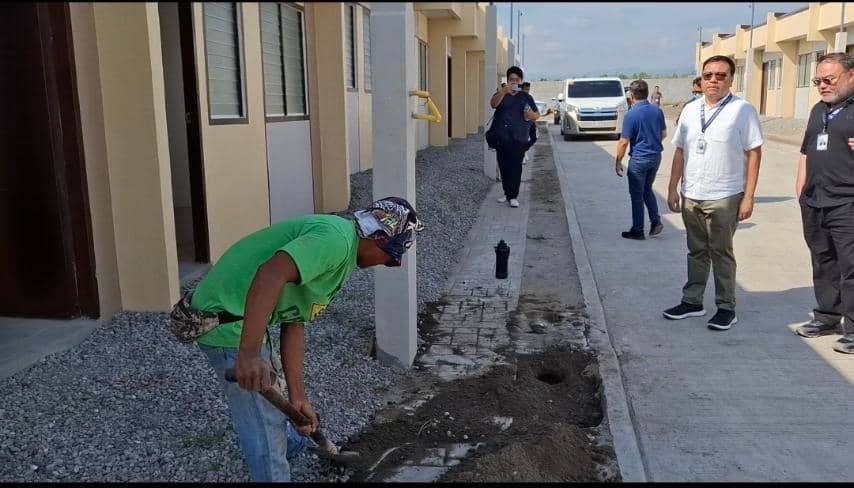
SECRETARY Aliling (second from right) inspects completed house-and-lot units at the Deca Homes Gensan 2 Development in Barangay Apopong, General Santos City.
Under the expanded framework, socialized housing continues to cover units priced below P1.8 million. Economic housing, meanwhile, is being eyed for an increased ceiling of up to P3.8 million from the current P2.5 million, subject to final approval by concerned agencies.
Government planners are also considering fixed interest rates for economic housing buyers that would be significantly lower than prevailing commercial bank rates.
A third category covering open-market housing is likewise being developed, with the ceiling proposed to nearly double the previous P6-million limit and be accompanied by concessional financing during the first three years.
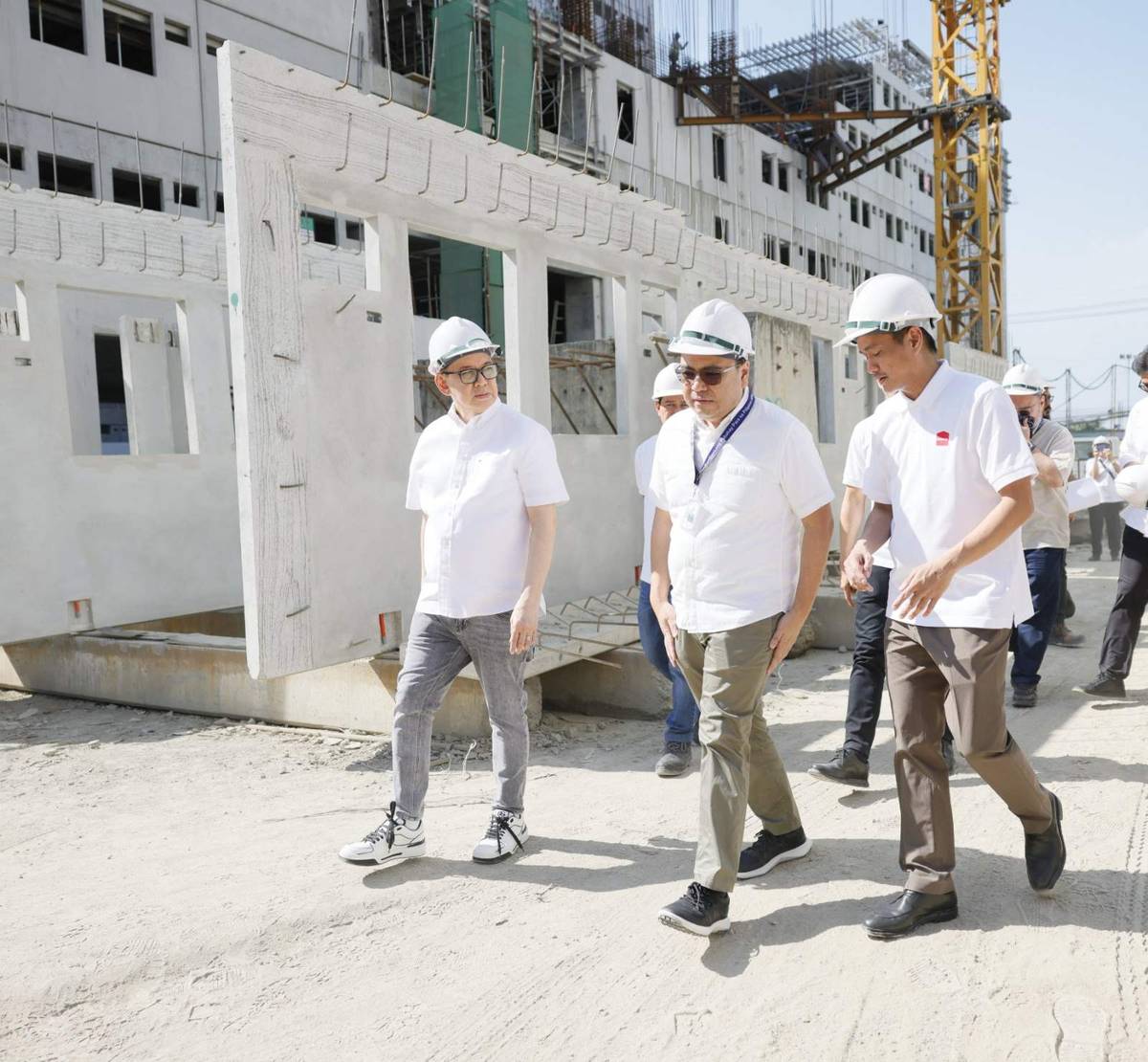
Aliling (center) leads an inspection of the Port Town housing project in Manila.
The expanded financing push also includes the Pag-IBIG Fund’s newly approved increase in the maximum housing loan amount to P10 million per borrower, a move aimed at giving more middle-income and higher-earning Filipinos access to affordable long-term financing while supporting demand for economic and open-market housing units.
“What we did with socialized housing, we are now trying to replicate for economic housing because it has already been proven effective,” Aliling said.
“You stimulate the demand side through financing and then economic housing begins to move.”
The strategy is also helping address one of the property sector’s biggest concerns: excess inventory.
According to Colliers, affordable and economic housing units account for 42 percent of unsold ready-for-occupancy condominium inventory in Metro Manila. When combined with lower mid-income projects, the share exceeds 80 percent.
Private developers have likewise responded with more aggressive sales strategies, including lease-to-own arrangements, rental-to-purchase schemes and other buyer incentives.
Aliling said the government has been engaging developers to align housing prices with the expanded program’s ceilings.
“Meet us halfway,” he said. “We are increasing the ceiling, and you reduce your prices.”
For the housing chief, the significance of the Colliers assessment lies in its independence from the government.
“What is good about the Colliers report is that it did not come from us. It came from an independent source,” Aliling said.
Beyond financing reforms, the DHSUD has introduced multiple housing modalities under the Expanded 4PH Program to accommodate varying financial capacities of Filipino families.
These include rental housing, incremental housing and the Enhanced Community Mortgage Program, complementing traditional homeownership schemes.
More than 10,000 families nationwide have already availed themselves of Pag-IBIG Fund’s subsidized housing loans carrying interest rates as low as three percent annually for up to 10 years.
The government is also accelerating construction and project rollouts across the country.
Among the major developments is the Port Town Housing Project in Manila, an in-city housing development expected to generate more than 2,150 condominium units and benefit over 6,000 residents through a joint venture between Pag-IBIG Fund and the Social Housing Finance Corporation.
Regional housing fairs are likewise helping connect prospective homeowners with available units. In Central Luzon alone, around 20,000 housing units from about 40 developers were showcased during a recent housing fair organized by Pag-IBIG Fund in Pampanga.
Projects are also underway in Bulacan, Laguna, Pampanga, Quezon City, Iloilo, and other parts of the country under various modalities of the Expanded 4PH Program.
As the Marcos Jr. administration seeks to narrow the housing backlog and expand homeownership, officials are banking on a strategy that combines subsidized financing, private-sector participation and multiple housing pathways to reach more Filipino families.
The combination of expanded financing, broader housing options and accelerating project delivery is increasingly positioning 4PH not only as the government’s flagship shelter program but also as a key driver of activity in the country’s affordable housing market.