
NIA shifts cropping calendar, expands solar irrigation to strengthen climate resilience
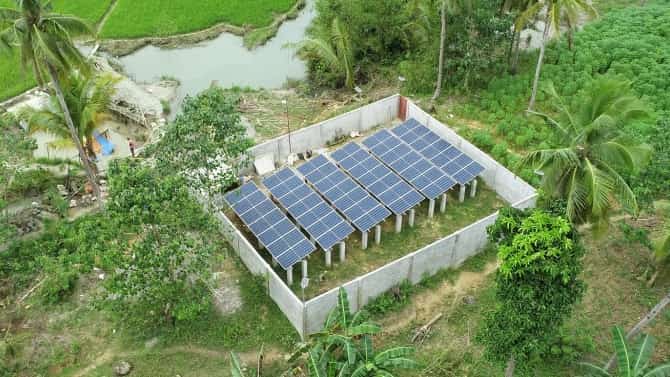
The National Irrigation Administration (NIA) is implementing major changes to its cropping calendar and accelerating the rollout of solar-powered irrigation systems nationwide as part of its long-term strategy to shield farmers from the effects of climate change.
NIA Administrator Eddie Guillen said in an exclusive interview with DAILY TRIBUNE that the agency's decision to adjust planting schedules is aimed at increasing cropping intensity while reducing crop losses caused by typhoons and extreme weather events.
Traditionally, rice production has been divided into wet and dry cropping seasons. However, according to Guillen, the timing of these seasons often exposes standing crops to destructive weather conditions, particularly during the height of the rainy season.
"The objective is to increase cropping intensity, which refers to the number of effective planting cycles achieved in a given agricultural area," Guillen said.
He noted that although farmers generally plant rice twice a year, crop damage from storms and flooding reduces the actual productivity of many irrigated areas.
Using the Upper Pampanga River Integrated Irrigation System supplied by the Pantabangan Dam as an example, Guillen said NIA shifted planting schedules to take advantage of residual rainfall while avoiding peak typhoon periods.
Under the revised calendar, planting begins earlier in October, allowing farmers to harvest by February and complete a second cropping cycle before the onset of stronger storms.
The adjustment, he said, reduces dependence on irrigation water during land preparation while improving yields due to more favorable weather conditions.
"This is part of our climate change resiliency program. We have to adapt to changing climate patterns," Guillen said.
Despite forecasts of a possible severe El Niño episode, Guillen said NIA has adopted a proactive approach through a combination of short-, medium-, and long-term interventions.
Among the agency's immediate measures is the promotion of climate-smart agriculture, including the revised cropping calendar and the adoption of Alternate Wetting and Drying (AWD) technology.
Unlike traditional irrigation methods that keep rice fields continuously submerged, AWD allows fields to dry intermittently before water is reapplied.
According to Guillen, the system can reduce irrigation water consumption by as much as 30 percent.
He cited the 2023-2024 El Niño period, when approximately 40,000 hectares under the Pantabangan system were considered vulnerable. Through AWD implementation, only about 6,000 hectares reportedly experienced irrigation shortages.
The NIA chief also highlighted the use of government-provided heavy equipment for desilting operations, river maintenance and the construction of temporary water retention structures to improve water delivery during drought periods.
Guillen identified solar-powered irrigation systems as one of NIA's most promising climate adaptation investments.
He revealed that around 2,500 solar pump irrigation systems have already been installed nationwide, particularly in vulnerable agricultural areas.
The systems, he said, offer a sustainable alternative to diesel-powered pumping stations, which have long been burdened by high fuel, maintenance and electricity costs.
Many of the newer solar facilities also incorporate artificial intelligence-based technologies designed to improve operational efficiency.
Guillen disclosed that NIA is currently coordinating with the Department of Energy to allow the agency to sell excess electricity generated by its solar irrigation facilities through net metering arrangements.
"We want to export excess power to the grid," he said.
According to Guillen, NIA intentionally designs many of its solar facilities with generating capacities that exceed operational requirements, enabling them to continue producing electricity even when irrigation pumps are not in use.
Since irrigation activities are typically limited to only a few months each year, excess power generated during idle periods could potentially become an additional revenue source.
Guillen also argued that solar irrigation projects offer significant advantages over conventional dam construction.
While large dam projects can take several years to complete and may cost more than P1 million per hectare served, solar pump systems can be completed within months and at substantially lower costs.
He cited projects in Isabela and Camarines Sur where development costs reportedly ranged from P230,000 to P500,000 per hectare.
The systems are particularly suitable for areas situated along major river basins, including the Cagayan River Basin, where conventional dam construction may be economically unviable.
While irrigation remains NIA's primary mandate, Guillen emphasized that the agency has expanded its efforts to help improve farmers' incomes and market access.
He pointed to NIA's role in organizing farmer cooperatives, encouraging collective production, and facilitating market linkages with local government units.
Several farmer organizations supported by NIA now supply rice directly to LGUs and institutional buyers in different parts of the country.
Guillen also cited the agency's earlier support for contract farming initiatives, which were eventually transferred to the Department of Agriculture.
"Irrigation may be our mandate, but concern for farmers should not stop there," he said. "The mandate has limits, but compassion does not."
The NIA administrator likewise appealed to the public to help protect irrigation infrastructure amid reports that some canals are being used as dumping sites or are being obstructed by unauthorized structures.
He reminded residents that construction activities within NIA rights-of-way require prior authorization from the agency.
Guillen said Irrigators Associations play a critical role in maintaining irrigation systems and are provided government support for canal maintenance and operation.
"NIA has limited manpower, so we rely heavily on the sense of ownership and cooperation of our Irrigators Associations," he said.
Guillen reiterated that food security remains a top priority of President Ferdinand Marcos Jr., noting that irrigation development continues to receive strong government support.
He said the President has directed government agencies, including NIA, the Department of Agriculture, the Department of Social Welfare and Development, and the Department of Labor and Employment, to coordinate efforts aimed at minimizing the impact of El Niño on farming communities.
Even in areas facing water shortages, Guillen encouraged farmers to explore high-value crops such as corn, tobacco, onions and garlic, which require less irrigation than rice.
Drawing from the experience of Ilocos farmers, he expressed confidence that Filipino agricultural communities can adapt successfully to changing climate conditions through innovation, cooperation and resilience.
Meanwhile, Guillen disclosed that discussions are ongoing with the Department of Public Works and Highways regarding future convergence projects, with a proposed initiative in Cebu being eyed as a potential starting point.
"There are already discussions and proposals on the table. We hope these convergence projects can finally get underway and continue moving forward," he said.