
Textbook false flag
Marcos had pledged that 37 lawmakers, government officials and contractors would be in jail by Christmas 2025. Christmas came and went, but the scandal did not.

There is a pattern so familiar in Philippine political history that it practically has acquired a life of its own.
When a scandal reaches critical mass, when the names are too prominent, when the testimonies become too credible, a security threat materializes.
The conjured tumult comes conveniently enough to shift the national conversation without quite triggering the skepticism a full-blown fabrication would invite, which is what is playing out now.
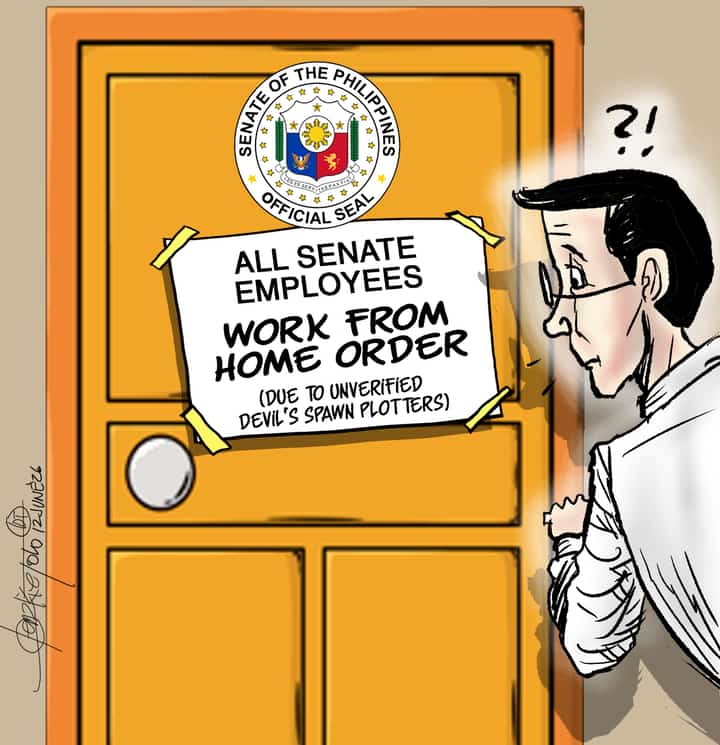
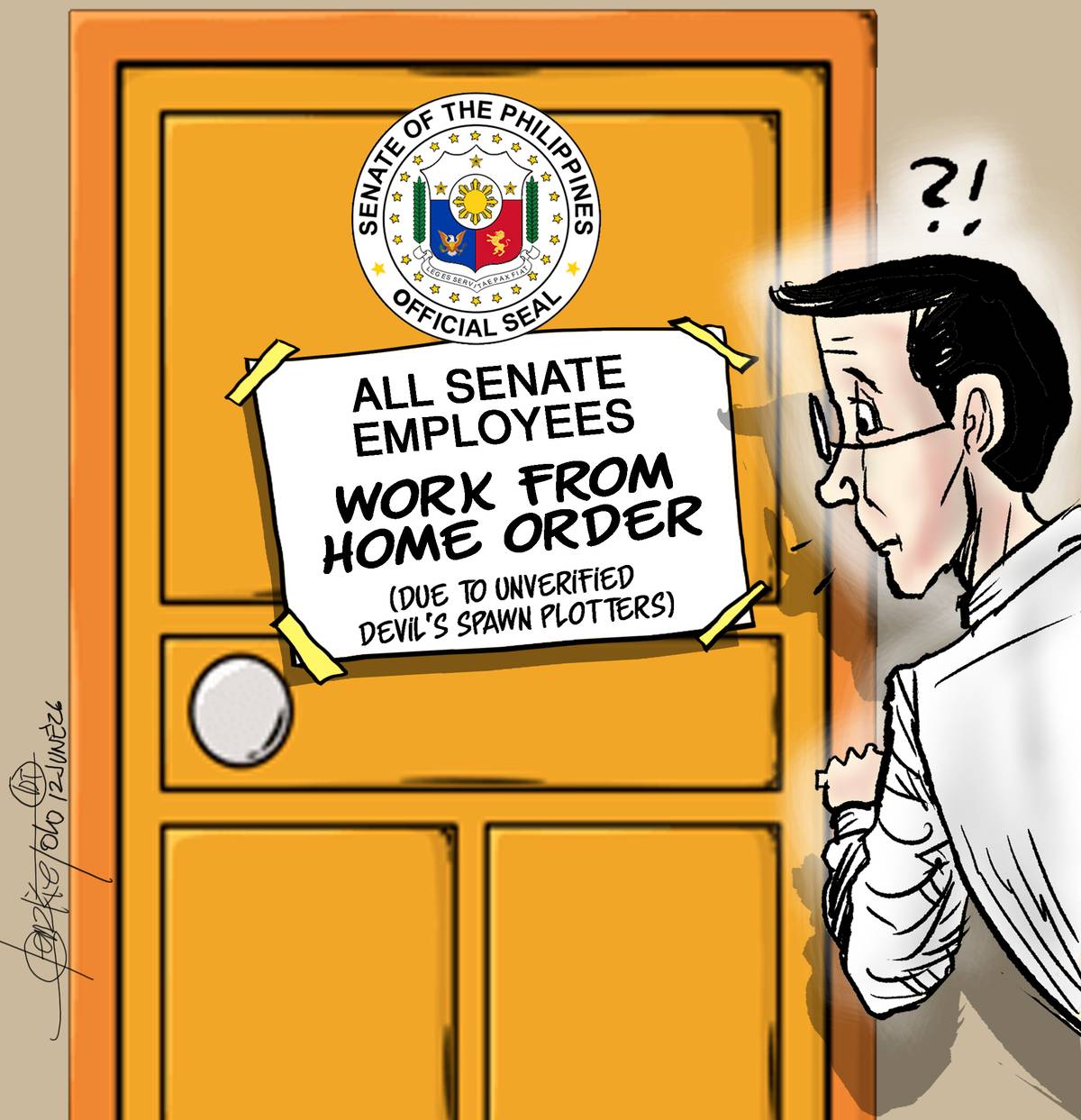
Acting Senate President Win Gatchalian authorized a work-from-home arrangement for Senate personnel on 10 and 11 June, following information of a supposed security threat on the chamber relayed by the National Bureau of Investigation (NBI).
The NBI director told a Blue Ribbon Committee meeting that armed troublemakers may be headed for the Senate, with the threat possibly connected to the 18 self-proclaimed bagmen of expelled congressman Zaldy Co.
These are the same 18 whose sworn testimonies on kickback deliveries have been shaking the foundations of the Marcos administration for weeks.
The group’s testimonies have implicated figures from the highest corridors of power in the massive plunder of public funds from the annual national budgets through substandard and, at times, ghost projects.
Marcos had pledged that 37 lawmakers, government officials and contractors would be in jail by Christmas 2025. Christmas came and went, but the scandal did not.
Instead of prosecutions, Filipinos got a leadership putsch in the Senate. Accountability gave way to procedural mayhem, including hearings conducted without stenographers, disputed quorums and rival presiding officers.
And now a security scare that keeps Senate workers home precisely when the Blue Ribbon panel is in full investigative stride.
The so-called threat deserves scrutiny. Security officials called 12 June, Independence Day, a “critical date” while announcing enhanced security around the Senate building.
What is being peddled online by trolls apparently getting their orders from higher powers was that pro-Duterte groups and a religious sect were planning to storm Malacañang or, alternatively, the Senate.
The PNP hierarchy, which apparently failed to coordinate with the script writers, said it had received no validated intelligence regarding any such threat.
Malacañang, meanwhile, said it was not surprised, calling the alleged plotters “kampon ng demonyo” (the devil’s spawn), but admitted that no verified information existed.
What appears to be in play is a managed alarm. A threat is surfaced, unverified, unvalidated, but enough to generate headlines.
The threat is attributed to the administration’s enemies, to which the security apparatus responds loudly.
The conversation pivots from the P1 trillion in ghost flood control projects to the phantom Independence Day plotters.
The playbook for invoking emergency powers — martial law under Article VII, Section 18 of the 1987 Constitution, or a state of national emergency under Section 23 — requires predicate conditions, which are rebellion and invasion.
Those conditions do not have to be real, but they must be plausible enough that Congress and the public would absorb the narrative before they could analyze it.
The 18 supposed former Marines swearing to suitcases of cash delivered to named officials implicated not just a rogue Department of Public Works and Highways official but the entire system of infrastructure patronage through which the crooks in government are funded and maintained.
The reaction is disruption. The Senate security threat narrative does three things at once: it discredits the 18 witnesses by associating them with potential violence; it creates legal and political cover for an expanded executive presence around the legislature; and it plants in the public mind the notion that the national stability is threatened not by corruption, but by those exposing it.
The real clear and present danger is not armed groups outside the Senate but those who manufacture threats the moment they sense their grip on power slipping.