
Senateflix and the law
As this dispute inevitably heads toward the Supreme Court, the immediate focus must shift back to the welfare of the nation. The country cannot afford an idle legislature.

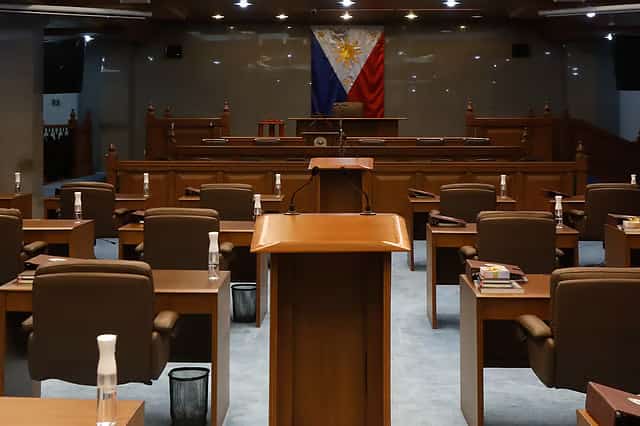
This constitutional crisis gripping the Philippine Senate is more than just a regular political scuffle; it is an institutional breakdown that threatens the very foundation of our democratic framework.
With two factions simultaneously claiming to hold the rightful majority, the upper chamber has devolved into a state of paralysis. At the heart of the dispute is a fundamental mathematical and legal disagreement over what constitutes a quorum.
One bloc maintains that the chamber must strictly adhere to an absolute majority of thirteen out of twenty-four members. Conversely, a counter faction asserts that because certain senators are currently outside the body’s coercive jurisdiction, the active base should be lowered, making their smaller assembly legally valid.
This type of institutional standoff is not unique to the Philippines, nor is it a novel phenomenon in global political history. In fact, the argument for adjusting a quorum based on active membership relies heavily on a 1949 Philippine precedent, Avelino v Cuenco, where a dramatic walkout led to a redefined threshold.
Looking abroad, we see stark parallels in international history. During the late Roman Republic, the weaponization of procedural technicalities and competing claims of authority between rival factions frequently paralyzed the Roman Senate, eventually paving the way for autocratic rule.
In modern democratic history, we have seen similar instances of constitutional hardball. In 2019, the United Kingdom experienced a severe executive legislative crisis when the Prime Minister attempted to suspend Parliament to bypass a deadlock over Brexit, a move later declared unlawful by the UK Supreme Court.
In the United States, tactical boycotts, such as Oregon state senators fleeing the state capital to deny the chamber a quorum, demonstrate how easily legislative machinery can be weaponized for factional gain.
What these historical examples teach us is that when political actors prioritize strict technical maneuvering over the spirit of governance, the public ultimately pays the price.
As this dispute inevitably heads toward the Supreme Court, the immediate focus must shift back to the welfare of the nation. The country cannot afford an idle legislature. We are currently facing critical domestic challenges, from managing persistent economic pressures to upgrading vital public infrastructure. Externally, complex geopolitical tensions require a unified and coherent national posture.
For the sake of the country, both factions must find a path toward resolution and unity. Our leaders must remember that their authority is derived from the electorate, not from procedural loopholes. Only by moving past this factional divide can the Senate restore its institutional dignity and address the pressing challenges facing the Filipino people.