
‘I NEED the whole stadium TO jump’: BTS lands in Bulacan
But its real power lies in how easily it transforms. By day, it is a world-class sporting facility. By night, especially on concert evenings, it becomes a living ecosystem for fandom.


The Philippines is holding its breath and its heart. After years away, and following BTS J-Hope’s solo night here last year, the seven-piece phenomenon returns. This won’t be just another stop in a world tour. It will be a homecoming: a couture moment of reunion, ritual and incandescent feeling.
Stadiums today read like stage sets from the future: architectural catwalks where sustainability, tech and spectacle collide. Think SoFi Stadium’s gravity-defying grandeur — a template for what live music can be when design meets devotion. Back home, the Philippine Stadium answers that call.
“I need the whole stadium to jump.” The Kings of K-pop — BTS — drop that line like both dare and love letter, and soon that call will echo across Philippine soil.
Located within the 140-hectare Ciudad de Victoria tourism enterprise zone in Bocaue and Santa Maria, Bulacan and flanked by the iconic Philippine Arena, the Philippine Sports Stadium — also known as the New Era University Stadium or Iglesia ni Cristo Stadium — was designed for scale and adaptability. Its 103-meter by 68-meter FIFA-approved pitch anchors a venue capable of seating around 20,000 spectators for sporting events and expanding to accommodate up to 40,000 people for concerts, festivals and large-scale gatherings.
But its real power lies in how easily it transforms. By day, it is a world-class sporting facility. By night, especially on concert evenings, it becomes a living ecosystem for fandom.
The stadium’s architecture was created to meet international standards, prioritizing crowd comfort, visibility, acoustics and movement. Unlike older arenas with obstructed sightlines or rigid layouts, the Philippine Sports Stadium was designed so every guest feels connected to the action unfolding below. Its seating arrangement ensures unobstructed views from every angle, while the roof structure provides protection from sun and rain without compromising airflow, lighting or openness. Every detail balances utility with atmosphere, allowing the venue to shift seamlessly between sport, music, faith and celebration.
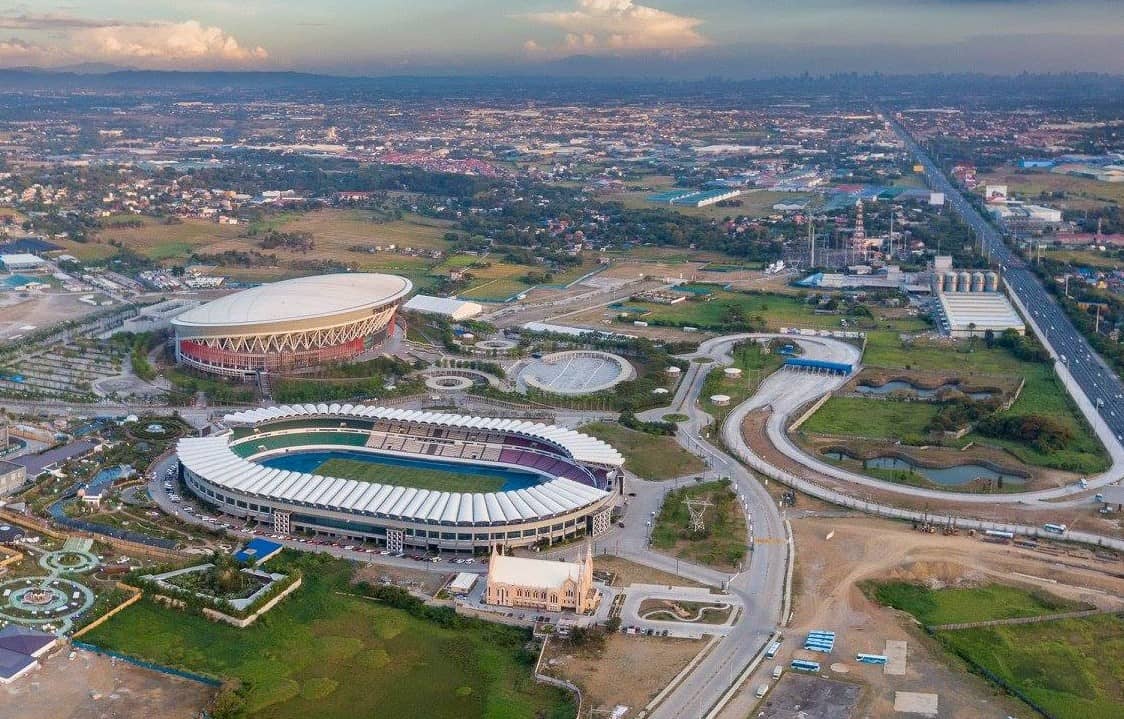
THE countdown begins for the Philippine stadium return of K-pop phenomenon BTS, promised to turn the Philippine Sports Stadium into a pulsing ecosystem of light and sound.
Photographs courtesy of Philippine Sports Stadium and Bighit
While primarily built for football, the stadium has grown into one of the country’s most versatile multipurpose venues. It has hosted international football friendlies, regional tournaments, grassroots development programs and matches involving the Philippine national football team, the Azkals, as well as local leagues such as the United Football League. Its FIFA-standard pitch gives it international credibility, positioning the Philippines as a viable destination for global and regional sporting events while helping cultivate a growing football culture among Filipinos.
Yet sports are only one part of its identity. What truly distinguishes the Philippine Sports Stadium is its ability to transform into a communal living space — one where entertainment, faith, culture and fandom coexist.
K-pop, in particular, has already transformed the stadium into one of the country’s most vibrant fan spaces. SEVENTEEN became the first international artist to headline the venue with back-to-back sold-out shows in January 2024, proving how completely fandom can reshape architecture into atmosphere. The stadium became an ocean of synchronized lightsticks, chants and movement — less of a venue and more of a living organism pulsing in rhythm with its audience.
That same month, NCT 127 turned the stadium into a sea of neo-pearl champagne light during NEO CITY – THE UNITY, flooding the open-air venue with futuristic energy and collective euphoria. Fans arrived from across the country carrying banners, photocards and lightsticks, transforming rows of seats into temporary neighborhoods of belonging.
Most recently, the stadium became the site of Original Pinoy Music (OPM) history through Cup of Joe’s Sandali: The Cup of Joe Fest on 23 May — the first solo concert by a Filipino act ever staged at the Philippine Sports Stadium. Joined by OPM legends Bamboo and Ely Buendia, the event transformed the venue into a massive communal celebration marked by LED bracelets, water-festival energy and a palpable sense of national pride. Every generation of music has left a different imprint on the stadium’s walls.
Now, BTS is poised to write the next chapter. Lights will bloom like constellations. Sound will swell like tide; and the crowd will move as one curated organism. The barrier between stage and seat will dissolve into a single, shimmering pulse: performer, audience and place beating in the same measured rhythm.
This is the promise of modern arenas. The Philippine Stadium proves a space can breathe, remember and sing.