
IS NUCLEAR TOO SOON?

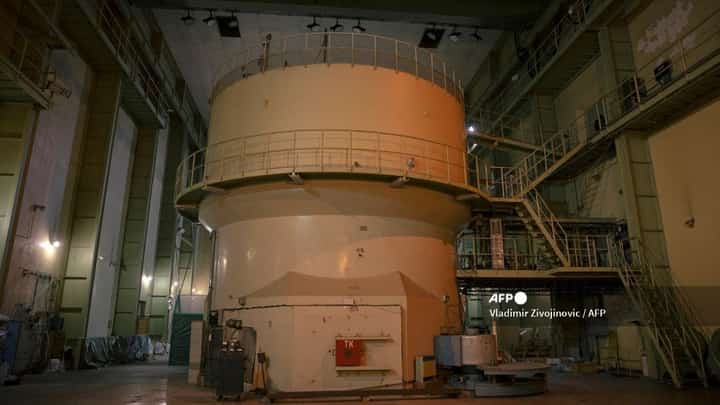
(FILES) A picture taken on 16 August 2024 shows the former Yugoslav-era research nuclear reactor at Serbia's Vinca nuclear facility near Belgrade.
Vladimir Zivojinovic / AFP
The Philippines is flirting with nuclear ambition again, with plans that could put a reactor on the grid within a decade.
Dr. Chad Michael Briggs has spent enough time around broken systems to distrust that level of confidence.
Briggs is a professor of disaster risk and crisis management at the Asian Institute of Management. His work has taken him through the hard terrain of environmental security: Ukraine, Nato, the European Union.
He was speaking in Manila as Ukraine marked 40 years since Chornobyl.
Two days after Reactor No. 4 blew open, radiation alarms went off at a nuclear plant north of Stockholm.
Workers found it on their shoes. Sweden checked its own plant. Nothing. The trail led east.
It was Soviet.
By the time Moscow told the truth, the radiation had already crossed borders.
In Kyiv, May Day went on. Children stood outside. Workers reported for duty. Families breathed air officials knew was radioactive.
Chornobyl is remembered as the nightmare of nuclear power. It is also the story of a government losing a race with its own lie.
That is the collision now in the Philippine nuclear pitch. It is being sold as cheaper electricity, a way out of imported fuel.
Briggs’ was not an argument against nuclear power. But can the Philippines afford the kind of honesty nuclear power demands?
The Department of Energy has put dates and numbers to the ambition: nuclear electricity by 2032. 1,000 megawatts initially. 4,800 by 2050.
Proposals this year. Officials say the country has learned from Bataan. It is a hard claim to make casually when the plant is still sitting in Morong, finished since 1984, never switched on, still embarrassing every new promise made in its shadow.
BNPP was built to save the country from the oil shocks of the 70s. Instead, it became its own kind of crisis. A project awarded at about $500 million. By the end, the bill was roughly $2.3 billion.
The Philippines spent years paying for a plant that never produced a watt. Corruption allegations followed it. Safety concerns dogged it. Independent reviewers cited thousands of defects.
Then Chornobyl exploded, and Bataan became almost impossible to defend: a finished reactor in a country suddenly afraid of what finished reactors could do.
Now Bataan is being sold again no longer as a rare government mistake but, to its advocates, a stranded asset.
A memorandum with Korea Hydro & Nuclear Power is studying whether the plant can be rehabilitated.
Advocates say it could take four to five years and cost about $1 billion to $1.2 billion, cheaper and faster than starting from bare ground. The Westinghouse design, they note, has working relatives overseas.
A new 1,000-megawatt plant could cost about $4 billion. That does not buy the permanent cost of safety.
Private companies do not want to be trapped under a $4-billion promise: too much money upfront, too many years before it pays back. So government steps in. And government, in the end, means people paying for a risk some did not approve and a bill they cannot refuse.
Small modular reactors sound like the bite-size version of nuclear power. That is the appeal. Smaller plant, closer to the islands, less Bataan-sized drama.
But nuclear does not become casual because the box is smaller. You still need the guards, the engineers, the inspections, the emergency drills, the waste plan and the money to keep all of it going. The reactor shrinks. The responsibility does not.
So the question for Filipinos is not only whether nuclear can lower bills someday but whether they will be asked to pay for the dream first.
There has been one real step toward readiness: President Marcos signed a 2025 law, RA 12305, creating an independent nuclear watchdog. But the watchdog is still waiting for its teeth: the rules that say who gets a license, how inspections happen, what penalties bite, who takes command in an emergency, who has the power to stop a plant cold.
The Philippines is reaching for a steadier future: power that holds, prices that ease, a system less at the mercy of elsewhere. Nuclear power can deliver it. But it demands the small, daily discipline this country has learned to admire and then ignore.
That was Briggs’ warning in Manila. The country may someday be ready for the atom. But the real work is not only building the plant. It is building the country that can be trusted with one.