
Re-introducing traditional Filipino cuisine


From 2010 to 2016, The Maya Kitchen featured its Culinary Elite program. It was a series of special cooking demonstrations featuring top chefs and restaurateurs who were given a platform to share their curated recipes. Every session was an opportunity to learn from a highly respected and most distinguished culinary figure, including chefs, restaurateurs and food advocates such as Glenda Barretto, Claude Tayag, JP Anglo, Jessie Sincioco, Myke ‘Tatung’ Sarthou, Chele Gonzales, and the late Margarita Forés. In the sessions that they handled, they shared personal recipes, family heirloom recipes, and/or traditional Filipino heritage recipes that they have either kept as authentic as possible or tweaked to give them a modern interpretation.
The Maya Kitchen, which is the culinary arts center of the trusted Filipino brand Maya, has achieved a lot with its Culinary Elite Series as it promoted culinary education through short courses and lifestyle classes for more than six decades now.
Just recently, the Culinary Elite program returned with renewed purpose: to heritage Filipino ingredients, strengthen connections with regional food producers, and reintroduce Filipino pantry staples to a new generation through contemporary techniques and storytelling.
According to The Maya Kitchen’s Ernesto Fajardo, this initiative reinforces the grand’s deeper connection to Filipino culinary culture. Says he: “For decades, Maya has been part of Filipino family traditions — from breakfast hotcakes to first baking experiences in the kitchen. Reviving The Maya Kitchen Culinary Elite allows us to strengthen that legacy by working closely with chefs and storytellers who share our passion for promoting Filipino culinary education and innovation. Through this initiative, we continue the work of both Maya and The Maya Kitchen in inspiring Filipinos to cook, learn, and rediscover our food heritage.”
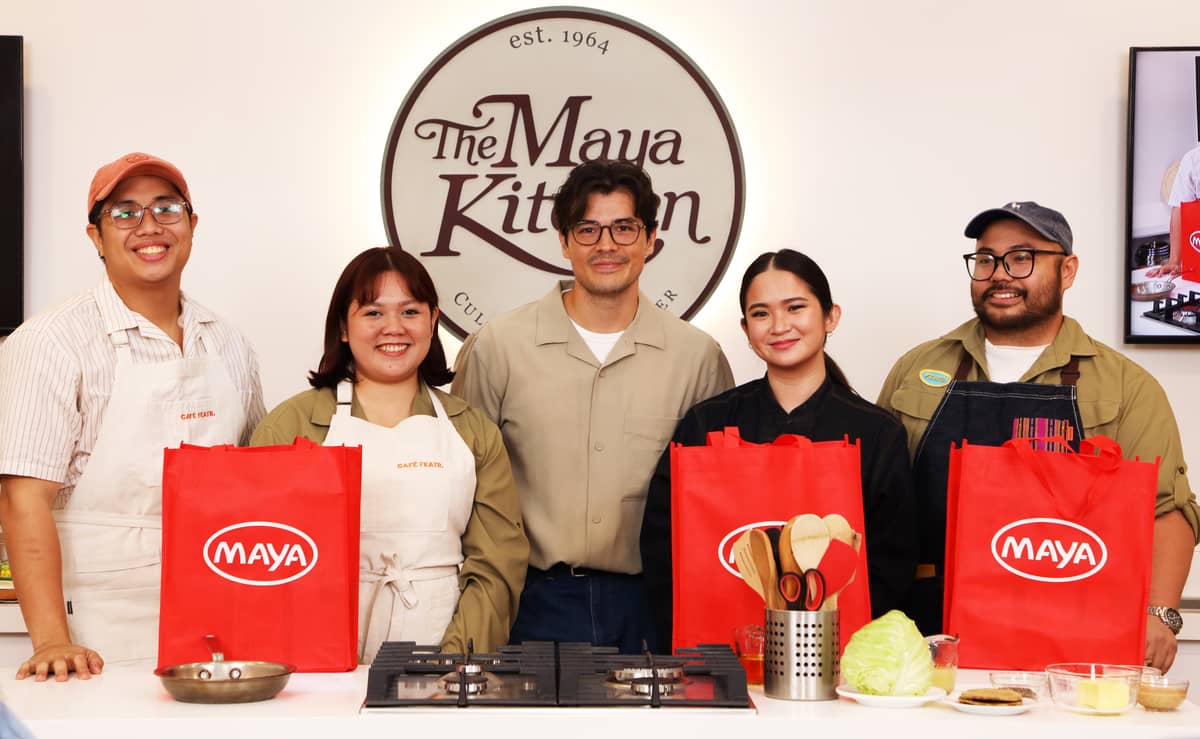
FEATR Team collaborated with The Maya Kitchen in a special demo recently.
Photographs courtesy of Maya Kitchen
The Maya Kitchen consultant Nina Daza Puyat, who has long championed Filipino cuisine and food education, stresses that the revival of the program reflects Maya’s enduring role in shaping Filipino culinary culture. As she puts it, “The Maya Kitchen has always been about sharing knowledge and teaching Filipinos how to cook confidently at home. The Culinary Elite program allows us to promote and preserve our Filipino food heritage while adapting it for the next generation of home cooks.”
To emphasize the important role that the Culinary Elite program plays in promoting traditional Filipino regional cuisines and ingredients, The Maya Kitchen collaborated with FEATR, a food storytelling platform that celebrates Filipino cuisine and champions local ingredients. The launch thus brought together the two platforms that advocate for sustainability, culinary education, and the preservation of Filipino food traditions and featured a special demo conducted by FEATR founder Erwan Heussaff and his team.
Rooted in a shared commitment of celebrating Filipino cuisine and championing local ingredients, the collaboration between MAYA and FEATR brings together two platforms that advocate for sustainability, culinary education, and the preservation of Filipino food traditions.
“Filipino food has always been more than sustenance: it’s a record of who we are, where we came from, and what we’ve been through. FEATR exists to help make sure those stories aren’t forgotten, to deepen how we understand and appreciate our food and ingredients today, and to help shape what Filipino food could become tomorrow. We communicate everything we learn about our culture through our digital platforms and shows, but we always felt like something was missing. This year we hope to hold more events like this, where people can interact with the ingredients and stories that we’ve featr’d in our documentaries,” explains Heussaff, whose work focuses on documenting Filipino culinary traditions and regional ingredients.
For The Maya Kitchen’s Culinary Elite program re-launch, Heussaff presented “Not-So Modern Filipino Pantry,” a culinary concept that reimagines heritage Filipino ingredients through modern, accessible cooking. It explored heritage Filipino ingredients, many of which come from small communities and traditional food practices, and presented them through contemporary recipes designed for modern kitchens.
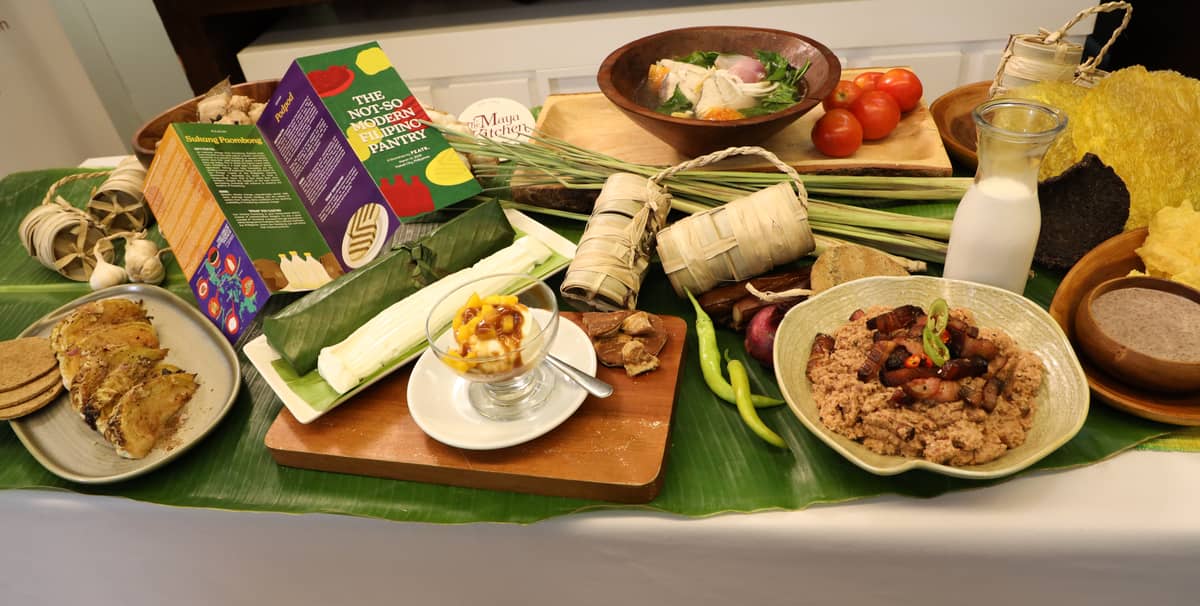
THE ‘Not-So-Modern Filipino Pantry’ dishes by FEATR included Pudpod and Roasted Cabbage, Kesong Puti Mousse Cups and Kinuday Sinantolan.
These locally sourced ingredients that are rooted in regional traditions, used by Heussaff in the dishes that he demonstrated, included Asin Tultol (a rare cooked sea salt from Guimaras created by filtering seawater through burned driftwood before evaporating the brine over fire, producing a mineral-rich finishing salt); Gamet (a hand-harvested dried seaweed from Sta. Praxedes, Cagayan, known for its natural umami and mineral content); Pudpod (or Podpod, a traditional smoked fish patty from Eastern Samar made from flaked fish, mixed with aromatics, prized for its rich, savory smokiness); Sukang Paombong (a naturally fermented nipa palm vinegar from Bulacan recognized for its complex acidity and depth of flavor); Pakaskas (a rare buri palm sugar from Isla Verde, Batangas, valued for its smoky sweetness and grainy texture); and Kinuday (a traditional smoked meat from the Cordilleras rooted in indigenous preservation techniques linked to the Cañao ritual. Known for its deep, bacon-like flavor, it has become a versatile ingredient in both traditional and modern Filipino cooking).
As part of the collaboration, Heussaff’s “Not-So Modern Filipino Pantry” showcased a curated approach to Filipino heritage ingredients through creative, contemporary interpretations. This meant a menu which consisted of such dishes as Kesong Puti Mousse Cups, Kiping with Gamet Aioli, Pudpod and Roasted Cabbage, Adobo sa Puti, Binakol na Isda and Kinuday Sinantolan.
With the revival of the Culinary Elite Series, The Maya Kitchen once again places Filipino chefs, ingredients, and culinary storytelling at the forefront of its mission — ensuring that the traditions that shaped Filipino cooking continue to inspire and fire up the kitchens of today and tomorrow.