
DOF to keep business-as-usual mindset on US tariffs
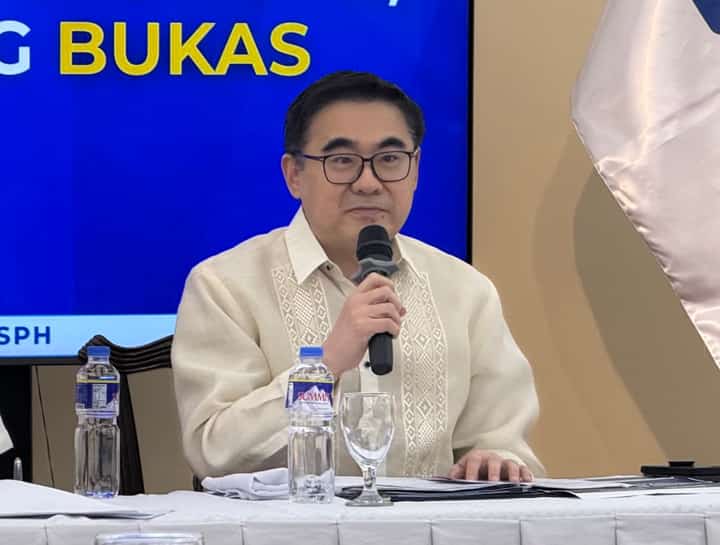
FINANCE Sec. Frederick Go says Philippine authorities assume new 15 percent tariffs follow prior exemptions on key exports.
Photo by Toby Magsaysay for DAILY TRIBUNE images.
The Department of Finance (DOF) is maintaining a business-as-usual approach to the newest wave of tariffs levied by President Donald Trump amid widespread confusion from Washington, D.C.
Speaking at a press briefing on Thursday, Finance Secretary Frederick Go said the DOF is presuming that goods taxed and exempted under the previous 19 percent tariff will still be treated the same under the new 15 percent tariff announced by Trump last weekend.
“So our assumption is that if they apply the 15 percent tariffs on us, it will continue to apply on the goods that they were applying a 19 percent tariff on,” he said.
“So our assumption is all the goods that were exempted before, which are the semiconductors and the major agricultural exports, will continue to be not included in the list of items to be subjected to the new 15 percent tariff,” Go added.
On Friday, 20 February, the U.S. Supreme Court struck down the Trump tariffs, calling them “unconstitutional” and ruling that the president exceeded his authority under the International Emergency Economic Powers Act. The court said the emergency law did not grant broad powers to impose import taxes without congressional approval.
In response, Trump announced a temporary 10 percent tariff on imports from all countries, invoking Section 122 of the Trade Act of 1974, which allows tariffs for up to 150 days without congressional approval. He later raised the rate to 15 percent, the maximum allowed under Section 122.
On Sunday, Go reaffirmed the business relationship between the Philippines and the U.S., referring to the Western superpower as “an important trade and investment partner.” He noted that even before recent developments, most key Philippine exports to the U.S. — including semiconductors and major agricultural products — were already exempt from tariffs.
Trump initially imposed the blanket tariffs as part of a broader “America First” economic agenda in April last year, with the Philippines initially facing a 17 percent tariff. Following further threats from Trump to raise the tariff rate to 20 percent, President Ferdinand R. Marcos Jr. met with Trump at the White House, where the pair agreed to a 19 percent tariff on Philippine goods entering the United States.
On Tuesday, Trade Secretary Cristina Roque said talks between Manila and Washington regarding the new tariffs were ongoing.
“We are still where we are now. We are still at the negotiating table (with US counterparts). There is still nothing yet. Our parties are still in talks,” Roque said on the sidelines of the ASEAN Editors and Economic Opinion Leaders Forum at the Fairmont Hotel in Makati City.
“We are currently monitoring developments in the U.S. In the meantime, we will continue to engage with the U.S. to ensure that our trade and investment relations remain robust,” she added.
In his 25 February State of the Nation Address, Trump once again upheld his tariffs, believing the policy could serve as a potential replacement for Americans’ income tax.
"As time goes by, I believe that tariffs, paid for by foreign countries, will, like in the past, substantially replace the modern-day system of income tax, taking a great financial burden off the people that I love," he said.