
Help in Troubled Waters
Even as maritime narratives clash, brief reciprocities between China and the Philippines cut through the politics of contested seas.


CHINESE Navy ship 174 aided a stranded Filipino fisherman on Christmas day an assistance Manila viewed skeptically, noting the vessel operated inside Philippine EEZ amid recurring disputes.
Photograph courtesy of China Embassy in Manila
The sea this week offered two faces of the same relationship: one governed by maritime custom and instinctive rescue, the other by contested maps and hardened language.
In separate statements issued days apart, Chinese and Philippine authorities found themselves acknowledging cooperation in one stretch of water while disputing reality in another.
On Thursday, the Chinese Embassy in Manila publicly expressed gratitude to the Philippine Coast Guard for what it described as timely medical assistance extended to a Chinese national injured while transiting the Basilan Strait.
The message, posted on social media by embassy deputy spokesperson Guo Wei, thanked the Coast Guard for aiding a Chinese crew member who had been electrocuted aboard a merchant vessel.
The incident occurred Tuesday, when the Coast Guard District Southwestern Mindanao received a distress call from MV Min Hua 9.
The vessel reported that a 55-year-old Chinese male crewman had suffered an electric shock onboard and required immediate evacuation.
The Coast Guard dispatched BRP Tubbataha with a medical team, reaching the vessel the same day.
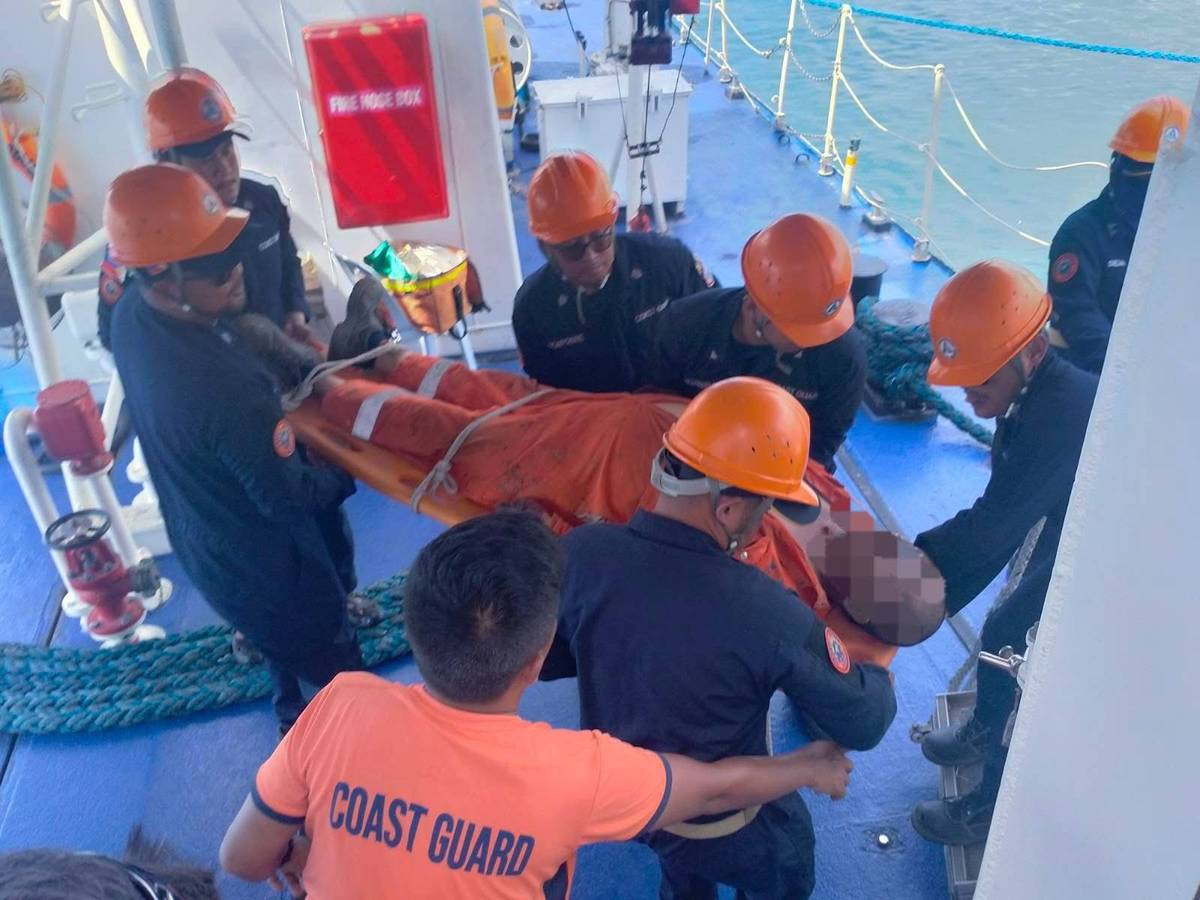
THE PCG evacuated an electrocuted crewman of a Chinese merchant vessel, while transiting the Basilan Strait.
Photograph courtesy of PCG
The injured man was brought ashore and rushed to a hospital in Zamboanga City for further treatment.
Coast Guard officials said the operation followed standard humanitarian procedures, underscoring a principle long observed at sea: distress overrides flag.
Yet as that episode of cooperation unfolded in the country’s southern waters, the tone hardened sharply to the west.
Also on Thursday, Philippine Armed Forces of the Philippines (AFP) rejected Chinese Embassy remarks that sought to downplay Beijing’s maritime activities in the West Philippine Sea.
The AFP said it “stands by the facts,” insisting that it is the sustained and coordinated presence of Chinese naval forces, the China Coast Guard and the maritime militia vessels that has fundamentally altered the security environment in the area.
According to the military, Chinese actions, including close-range maneuvers, water-cannoning incidents and what it described as acts of intimidation, have generated tension and placed Filipino fishermen and Philippine maritime personnel at risk.
These developments, the AFP said, were not episodic as cumulative, changing daily conditions at sea.
Officials emphasized that the country’s posture remains defensive rather than provocative.
The response followed China’s rejection of a recent Philippine Navy report documenting what Manila characterized as increasingly aggressive and coordinated Chinese maritime operations.
Beijing, in turn, accused the Philippines of advancing a “weak victim” narrative intended to mislead the international community.
The AFP answered by saying it would continue to carry out its mandate “calmly and firmly,” reiterating its commitment to safeguarding the country’s maritime domain and “standing by the truth.”
China has repeatedly asserted that its actions in the West Philippine Sea, part of the broader South China Sea, are defensive.
The Philippines has consistently challenged that position, citing international law and the 2016 arbitral ruling that invalidated China’s sweeping maritime claims.