




‘These scars water our love, still’


Text size
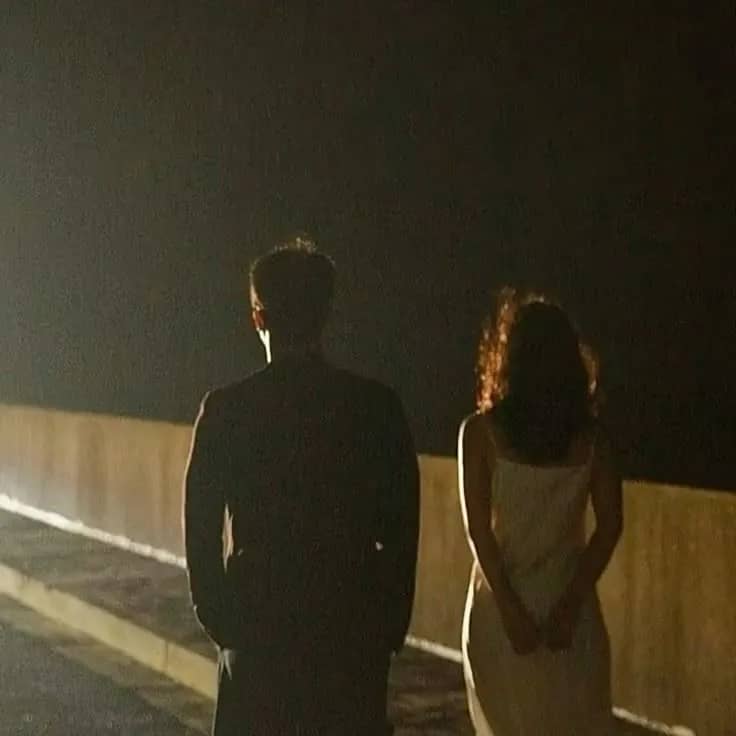
The passing of a significant moment does not yield to the limitations of time. It stretches infinitely. It stays, just long enough for the eye to savour it; to recognise that it is set apart from all the glimpses of mundanity that make up life. But it disappears just as sudden as it came. It does not bring closure. It just passes. It reminds you of something that once was; Something that could have been. It does not come back.
And that was how he saw her again. Right across the street of the tiny, tucked-away convenience store they used to frequent after long nights in the hospital. He had walked this way for years after she left, never once catching a glimpse of her. He had assumed that she had left the city completely. Or if not the city, maybe even perhaps the entire metro. Maybe she had tucked herself away in Biñan, where she was born and her family was from. Or perhaps she had flown to Siargao and its beautiful beaches, just like she had always promised their daughter with bittersweet tears in both their eyes.
But no. She was here.
He saw her, that unmistakable curl of her hair, and that stance of her shoulders, rolled back tight, both strong and vulnerable. As if bracing herself for the constant blows of life that came her way. Her back was to him, and she was standing on the sidewalk, just looking up at the towering hospital.
It was a private hospital, one of the best in the country. It stood in the middle of a polished street in Taguig, surrounded by high-rise condo buildings and overpriced designer stores and restaurants. Its white body gleamed in the hot Philippine sun, a wonderful contrast to the bright blue sky. As a young couple, they had spent most of their paycheques and took out loans after loans just to afford a meagre room and the expensive treatments that did not guarantee recovery.
He had been a rookie engineer, and she was an accountant. Both of them were barely five years out of college when the debt started. As the glass door of the convenience store swung close behind him, he heard the bell tinkle and chirp with past hushed prayers. The sleek cars kept driving on the beautifully paved street, passing ghosts of a past him and her, crossing the street with held hands. The rumbling engines reminded him of a rattling cough, shaking a frame too small, too weak. But then, the images and the sounds of the past cleared, and he saw her again.
Her back was to him. She kept staring at the hospital. And then, she walked away. She did not enter.
He started driving to and frequenting the convenience store again, even if there were nearer stores to home. Even when he didn’t necessarily have anything he needed to buy. After the pandemic, his work transitioned to a hybrid setup, allowing him to work from home and only go to the office twice a month. So now, he’d go in every day, at around three in the afternoon. He’d buy a pack of cigarettes, never mind the fact he stopped smoking years ago out of guilt. He’d buy a chocolate bar or a pack of gummy bears, put it in his pocket, and forget about it until he went home. He’d buy a bottle of coke or a cheap cup of coffee. And then he’d stand on the sidewalk, waiting for her to come back.
Come back.
Those two words. Those two damn words. He had heard them uttered in so many different ways.
“Come back soon,” he had told her numerous times when he was left in the hospital room and it was her turn for the convenience store run.
“When are you coming back?” he had heard from her boss when she called in work to file an emergency leave.
And finally, “Come back to us, anak. Come back to Mommy and Daddy,” they had uttered fervently, clutching their daughter’s tiny hands and weeping as the heart monitor echoed one final continuous beep.
Now, he whispered them to himself. Come back. He did not pray. He did not pray anymore.
By the third week after he saw her outside the hospital, he called her mother. He didn’t expect his mother-in-law to pick up. He assumed that maybe when his wife left four years ago, she had told her family of her decision and told them to cut him off. But on the third ring, the woman picked up.
“Oh, Johnny,” Tita Esme said in a way of greeting. She sounded surprised, but not upset. She even sounded like she missed him.
“Hello po, Tita,” he responded meekly. “Kumusta po kayo?”
“Ito, okay naman. Maganda takbo ng restaurant. Baka nga mag-expand na rin kami sa Los Baños at baka rin sa Cavite.”
He congratulated her. After a few more exchanges of the required pleasantries, he finally got to the point of why he called. “Tita, kumusta po si Beth? Nandyan po ba siya sa inyo?”
The line went silent. Then, Tita Esme replied, “Naku, Johnny. Ang tagal nang ‘di nagpaparamdam si Beth. Minsan, nagte-text, pero napakabihira. Hinahayaan ko naman, lalo na pagkatapos nung nangyari kay…Basta, alam mo na ‘yon.”
He wasn’t sure if he was relieved or angry that Beth had disappeared and was unreachable to her own mother, too. He didn’t have anything to say. He didn’t know what to think.
Tita Esme must have sensed his despair. She said kindly, “Matagal na akong naghihinala na may problema kayo, anak. Pagpasensyahan mo na si Beth, ha, Johnny? Alam mo naman kung gaano kabigat yung dala niya. Parehas kayo. Pero in the end, kayong dalawa na lang ang magdadamayan sa isa’t isa.”
He couldn’t take it anymore. He hung up.
That night, when he got back home to their—his—house in Cembo, he slept inside their room again. He had not slept there in four years. Instead, all this time, he had holed himself up in his home office, or slept on the sofa in the living room.
When he entered their bedroom, it was a monument. Preserved for eternity. The air was musty with disuse, but if he focused long enough, he could still catch traces of the perfume she once loved. The plush rug at the foot of the bed was so uniquely Beth. It was something he never would have picked out on his own.
Toys he couldn’t bring himself to pick up or throw out were scattered on the floor. The closet was still a mess, just the way she left it. On the nightstand was a half-empty box of N97 masks. Next to the nightstand was an empty toddler’s bed. A pink blanket with printed rabbits and hearts was slung over the white wood. The master bed was unmade. Their blanket was rumpled; the sheets were pulled from their corners.
Before she left, she had spent weeks in bed, too depressed to get up, until the pillow she lay her head on had a flattened dent. Johnny climbed into the bed, and his back muscles immediately succumbed to the comfort of the soft mattress he had deprived himself of ever since his life had crumbled. He placed his head on the pillow where she used to lie.
On the opposite wall was their family picture. The people in the portrait stared back at him. Smiling. Frozen in time. He wished he could have been preserved that way, too. Preserved like this bedroom he refused to touch. Then he closed his eyes and slept, his mind swimming with images of him and his wife as a young couple, and a little chubby-cheeked girl with his smile and her hair.
The next afternoon, he went back to the convenience store. He sat at the table, nursing a coffee and eating a siopao. He was waiting to see her, but his heart also refused to acknowledge the stubborn hope that she would indeed show up. The past four years, he had been living in the automation of routine. His days passed by in a blur of working, eating, sleeping, and staring at the empty child’s bed and his wife’s messy closet with all the clothes she left behind.
But then, he saw her again, and something significant in his chest shifted. He was back inside his body, no longer trapped in the cycles of his troubled mind. And though what an invigorating sensation it was, to feel his hands shaking with nerves, to have his eyes be blinded by the daylight, to feel the wind in his hair—it also hurt. He had not hurt this way since that tiny coffin was lowered into the ground. And now it was back, stronger than ever.
Johnny knew it was all Beth’s fault. That selfish bitch, with her curly hair and her strong shoulders. That inconsiderate, cruel woman, thinking she could just walk out and leave him alone to suffocate in grief, only to waltz back in and make him remember how to feel. So he sat in the convenience store. Waiting.
Come back. Tangina, come back, Beth.
And he saw her. She wore a green dress. A new one he had never seen before. But then, it had been four years. Of course, she had new clothes. Why should Johnny expect to see her in something familiar, something she had worn when they were both young and in love? But this logic did not quell the anger. He was still wearing a blue button-down he had bought from Uniqlo in 2019. He still wore his trusty leather brown loafers and his beige trousers. He still used the same cologne. Johnny still lived in the same house in Cembo, Makati, surrounded by the same neighbours, driving the same car, working the same job. How dare Beth leave him like this?
Beth stopped in front of the hospital again. She lingered on the sidewalk near the entrance. She did not enter. Johnny finished his coffee and siopao, then he exited the store and crossed the street.
He stood next to her. She did not acknowledge him. There was no surprise. Instead, she kept looking at the hospital.
“You came back,” he whispered. Johnny was surprised that the anger did not come out.
“Yes,” Beth said. Her voice was the same as it was. Tender. Breathy. A desperate vehemence that suggested the threat of tears despite the simplicity of that single word. Then, she continued, “I live nearby. I never left.”
Only then did Johnny turn to look at her. She was still wearing her wedding ring. Her face carried a deep heaviness that made her look older than her thirty years. He wondered if he was the same. And suddenly, all the anger that he had been stewing in, all the poisonous words he wanted to hurl at her disappeared. This woman had always inspired in him the need to protect. The need to be gentle. And it was the same now. Despite the hurt and anger of her leaving him, Johnny could not bring himself to be cruel to her.
He said simply, quietly, “You left. You left me, Beth.”
She finally turned to him. Her eyes shone with guilt, but they remained dry. With a choked voice, she said, “I had to, Johnny. Staying in that house, seeing her everywhere…it would have killed me. It was killing me. I was drowning. I had to leave.”
Now, he was the one at risk of crying. So Johnny cleared his throat and said, “What do you do now? Where do you live?”
“I found a rent-to-own studio condo at Trion Towers. It’s just a ten-minute walk from here. I’m still an accountant, but I’m a manager now. I work nearby, too. Nothing’s changed much. I’m still the same, Johnny.”
He chuckled dryly. They stood side by side, staring at the tall building of the hospital. They watched people enter and exit the building—old men and women, families with children, young couples with babies. Johnny and Beth stood there, side by side in companionable silence, something that only a shared part of their lifetime could create. Johnny remembered graduating the same year from the same university as her. Getting married. Getting their first jobs. Moving into their house and welcoming their daughter into the world. He remembered the shared Christmases, anniversaries, and birthdays; Remembered how Beth laughed when Angela took her first steps; How Beth sang in the kitchen when she made breakfast and dinner.
And most of all, Johnny remembered how everything changed. He remembered his tiny daughter’s frame being wracked with coughs; How she cried as she struggled to breathe. He remembered the panic of not being able to wake Angela from a deep sleep, of him and Beth rushing her to the hospital, wearing N97 masks. Remembered the weeping, the doctors covered head-to-toe in blue medical plastic suits. Remembered Beth’s desperate calls to relatives, borrowing money, taking out loans at the bank, and calling in to file emergency leaves at work. He remembered his little girl’s rattling last breaths. The wailing. The funeral. Remembered Beth slipping away into a cold depression, unreachable. Unconsolable. Until one day, Johnny came home from work, only to find his wife gone. She did not take anything with her aside from her purse. Not even Angela’s favourite blanket.
“You left, Beth,” Johnny said. “You’ve changed. You’ve lived a different life. I’m the one who’s still the same. You left me in that house, with the ghost of our daughter and the ghost of our marriage. You left me with debts. You left me in grief. I was drowning, too, Beth. I was, too.”
His tears finally came. Johnny and Beth stood on the sidewalk, outside the hospital. And though she did not weep, she held his hand and stood next to him in silent strength and companionship. For a moment, it was as if they were back in 2020, holding hands in front of the hospital, holding the weight of the world.
The moment stopped, and the sound of the cars faded away. People passed by them in slow motion, as if the gravity of their grief was sucking everyone in. A black hole where time struggled to flow. Limbs and tears suspended in molasses, dark honey. And just as quick as that moment of connection came, it was gone. Beth withdrew her hand. And Johnny got the feeling that she was leaving him again. Leaving him to his grief. Disappearing and changing while he stayed the same. Languishing. Frozen. Empty.
“She would have been six years old now,” Beth whispered, staring at the hospital’s grand facade.
“Why did you come back here, Beth?” he asked. “Surely it’s not because of Angela. You left her, too, when you left home. So why come back here?”
She winced. His words were not cruel or malicious. They just were. But still, she crumbled in the face of the truth of her actions. And just like he expected her to, she withdrew into herself and let anger overtake her pain. She spit out, “Don’t. Don’t speak to me about her, Jonathan. You have no right.”
It was a low blow. Beth knew it. Jonathan knew it. After all, Angela was his daughter, too. And though he wasn’t there for Angela and Beth towards the end as much as he hoped, he did his best. He kept working and finding more money to pay the bills.
But Beth was hardened, and she said, “What did you expect me to do, Johnny? A part of me died when that virus took her, but I couldn’t let myself wither away completely. I didn’t know who I was anymore. How could I be a mother without my daughter? So I had to leave. Don’t use that against me, as if I just turned my back on her, as if I didn’t love her.”
“Then why are you here?”
Beth wiped the angry tears from her eyes. Then, she pulled out a stapled bunch of paper from her purse. She handed it to Johnny.
He unfolded the documents and saw. Medical tests. Lab results. A doctor’s diagnosis. Stage 4 ovarian clear cell carcinoma.
Johnny sucked in a breath. He could feel his hands shaking and his vision blurring. He had just only found Beth. He had only begun to say what he was not able to say in the past four years. He had only just been granted the opportunity to confront her with his anger and his grief. The moment for this reckoning had only just come, and now it was bleeding away. It was all happening again. He had not yet come to terms with Angela’s death and Beth’s abandonment. And now, this? Would this cycle of pain never end?
He wanted to throw the papers at her. Wanted to tell her she was selfish for showing this to him. Wanted to yell at her that she should have just kept her sickness to herself. Johnathan wanted Beth to face her own selfishness, for taking advantage of his love for her over and over again.
But when he folded the papers and looked back at her, her face was an open casket. Her eyes shone with fear and despair. She had that same haunted look when they found out Angela had COVID. And what else could he do but love her? What else could he do but admire her desperate need to live, even if it meant using him and breaking his heart?
So he bit his tongue. He stepped closer to her, placing his hands on her shoulders, and then he touched his forehead to hers. Together, they closed their eyes and breathed in and out, in and out. Two heartbeats beating as one. Jonathan savoured this fleeting moment, pretending that they were still the same Johnny and Beth from years ago. Pretending that it was just him and her against the world, looking at a future that was theirs to protect and hold. When he stepped away from her, Jonathan offered Elizabeth his hand. He kissed her left knuckle, feeling the cool metal of her wedding ring against his lips. A silent promise.
He would be there for her. Even if it killed him in the process.
Together, holding each other’s hands, they stepped into the hospital. And Johnny knew then that he would stay by her side for this upcoming journey, despite the anger and grief he still nursed in his battered heart. He would push aside his needs. He would give her what she wanted. Even if he knew that inevitably, it would end up in her leaving him again, one way or another. Even if it meant he would end up alone in that house in Cembo, with her perfume lingering in the pillows, her clothes messy and untouched in their shared closet, their dead daughter’s bed and blanket sitting in the corner, his mind swimming with coffins, grief, and the crumbling of the most sacred moments at his fingertips.
He loved her. His heart was hers. And there was no coming back from that.
Early-stage cancer can be more easily treated than in the later stages. That is why doctors recommend regular cancer…
‘As far as I recall and based on the record, there is no showing.’
President Ferdinand Marcos Jr. is flying to Singapore for a five-day working visit upon the invitation of Singaporean…
