
Salted battery
Is Sodium coming for Lithium?


=When car batteries are no longer worth their weight in gold, we might have salt to thank. Not the kind you sprinkle on your sinigang, but the kind scientists are now turning into power.
Meet the sodium-ion battery, a new player on the energy block that promises to be cheaper, safer, and maybe, one day, the breakthrough that makes electric driving truly within reach for ordinary Filipinos.
At the 13th Philippine Electric Vehicle Summit held at SMX, during the press conference, I asked the panel, led by EVAP President Edmund Araga and executive partners, if there have been any exploratory studies on sodium-ion battery technology in the country.
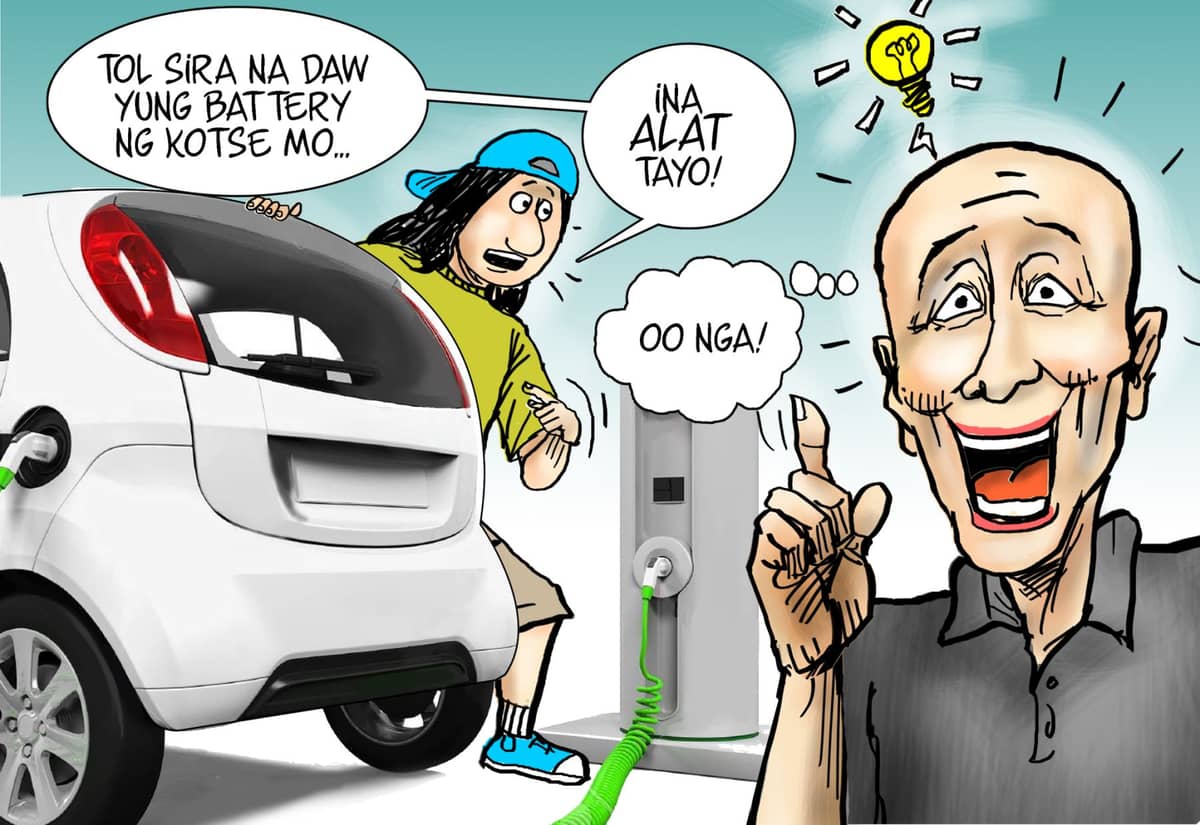
GRAPHICS BY GLENZKIE TOLO
The panel said no major local initiatives have been started yet, adding that more advanced countries are currently doing the scientific legwork. “They’re more exposed to it,” Araga said. Lito Jose, managing director of Jetour Auto PH, added, “Sodium has an advantage, it’s abundant.”
But, and this is the twisty world of an Off The Road story, there is a local startup already working on sodium-ion technology, and I even spoke informally with two of the young Filipino scientists on the team.
That’s for another story, but the fact that this pioneer exists here in the Philippines shows how it is starting to happen here, too. Though we have yet to see a major or mainstream initiative.
Sodium-ion batteries work a lot like lithium-ion batteries. They follow the same general idea of ions moving back and forth, except instead of lithium, they use sodium, the stuff that makes your French fries taste good.
The big deal here is that sodium is way more common and way cheaper than lithium. Scientists say you can find sodium basically anywhere there’s seawater, which means the Philippines could technically generate power using something we literally swim in every summer.
Of course, it is not that simple. Sodium-ion batteries store a bit less energy than their lithium cousins, which means they are not yet ideal for long-range electric cars. But for scooters, e-bikes, tricycles, or barangay shuttle vans, they might be just right.
Companies like CATL and HiNa Battery have already started producing sodium-ion packs for small city cars and two-wheelers.
There is even a scooter brand, Yadea, that’s rolling out sodium-powered models. While we still get stuck in traffic arguing over who cut off who, someone is already charging their “salt bike.”
Sodium-ion might actually be more Filipino than we realize. Our country, with our beaches, heat, and humidity, is practically one big salt factory. Back in the ’80s and ’90s, I used to pass Sucat Road and see little hills of salt drying under the sun.
For jeepneys or delivery trikes that only drive short city routes, sodium-ion could one day be the budget-friendly battery of choice. It’s safer and more affordable, according to some studies.
If this ever becomes reality, maybe future drivers won’t need to shout “Full tank!” anymore. “Full salt!” might be more appropriate then. And honestly, that sounds funny yet beautiful.
For now, the Philippines, despite having a pioneering startup, remains a spectator in the sodium-ion race. We’re still focused on getting more EVs on the road and improving charging networks.
But as prices for lithium continue to fluctuate and the world looks for cheaper, safer alternatives, sodium-ion might just be the next big thing, especially for developing nations like ours.
Still, it’s comforting to know that somewhere out there, scientists are figuring out how to power our cars with something that costs less.
When I left the EV Summit, I realized that maybe the Philippines does not need to chase every battery trend right away. Maybe it takes one summit, one idea, our Filipino spirit and a bit of hope that the next breakthrough will be ours.
And when that time comes, I’ll be one of the first to test drive it. Preferably somewhere near the beach, just in case I need to borrow a little sodium straight from the source, not from my neighbor.