




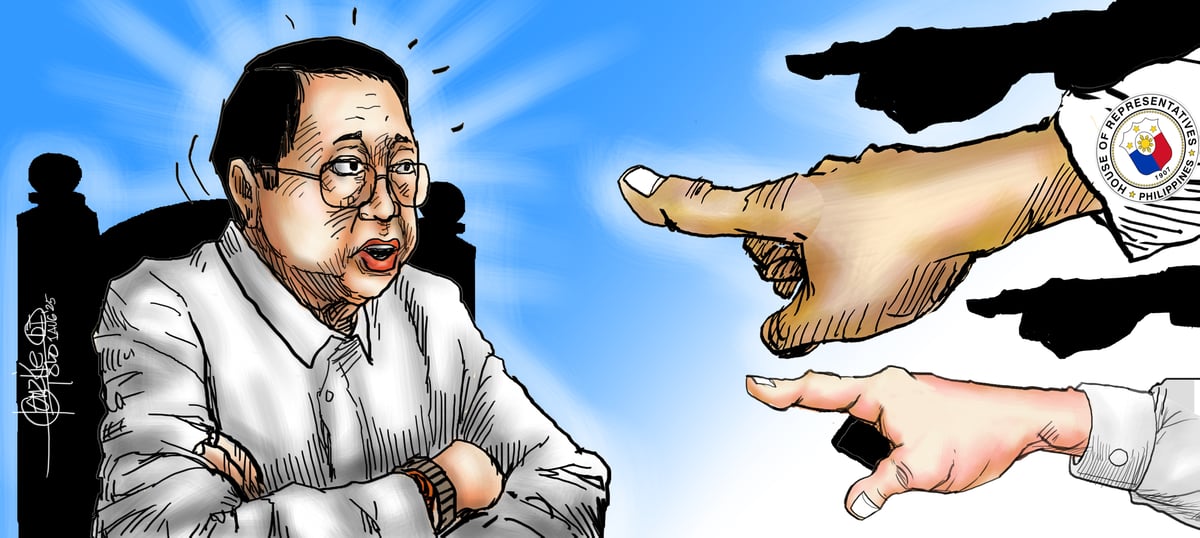
SecGen becomes a scapegoat
Caught in the middle, based on the account of Hernando, is the chamber’s Secretary General, Reginald Velasco, who may become primarily culpable if the constitutional breach is pursued.

Text size
Caught in the middle, based on the account of Hernando, is the chamber’s Secretary General, Reginald Velasco, who may become primarily culpable if the constitutional breach is pursued.
A magistrate in the Supreme Court’s unanimous 13-0-2 decision, which declared the impeachment proceedings against Vice President Sara Duterte unconstitutional, blamed schemers in the House of Representatives for the prohibited action.
Detractors of the decision have zeroed in on alleged political payback in the decision, considering that the majority of the High Tribunal, including Chief Justice Alexander Gesmundo, were appointees of former President Rodrigo Duterte.
Such a rebuke, however, did not have a leg to stand on with the unanimous ruling.
In a separate concurring opinion, Associate Justice Ramon Paul L. Hernando detailed how the impeachment proceedings were manipulated to skirt the one-year constitutional bar on more than a single impeachment complaint.
Caught in the middle, based on the account of Hernando, is the chamber’s Secretary General, Reginald Velasco, who may become primarily culpable if the constitutional breach is pursued.
Hernando commented that rather than complying with his duty under the House impeachment rules, Velasco did not immediately refer the first three impeachment complaints to the Speaker, “at the request of certain members of the House.”
Velasco admitted in several media interviews that he deliberately withheld the first three impeachment complaints to give way for certain members of the House to, among others, endorse another complaint.
“True enough, 215 members of the House later came up with the fourth impeachment complaint, and only then were the first three impeachment complaints finally included in the order of business of the House,” Hernando stated in his piece.
The magistrate indicated Velasco’s inaction on the first three impeachment complaints “amounted to a deliberate nonperformance of a duty and an arrogation of the House’s exclusive power to determine the initial action to be taken, thus tantamount to a grave abuse of discretion.”
When “Secretary General Velasco held hostage the first three impeachment complaints, the House was deprived of an opportunity to decide as a plenary, upon inclusion of the complaints in the order of business, whether to refer the complaints to the Committee on Justice,” Hernando went on.
He added that the Secretary General has absolutely no discretion to decide when to refer the impeachment complaints to the Speaker. Velasco may have to primarily bear the burden of grave abuse of discretion, according to Hernando.
“The Constitution and the internal rules of the respondent House already specifically provided for the period within which the Secretary General ought to perform his duty. The Secretary General’s non-observance of the said period, as well as the respondent House’s acquiescence and approval thereof, amounted to a grave abuse of discretion.”
Herando then gave a strong rebuke to the House leadership on the extraordinary authority that Velasco exercised.
“The respondent House cannot simply tolerate the Secretary General’s action even if it aligns with its agenda. Still, the Constitution is above the House of Representatives and should be strictly complied with,” warned Hernando.
While it is a given that Velasco would not have acted without being directed, the secretary general should have been more circumspect in taking orders, goes the reprimand of the SC justice.
For the sins of some powerful masters, the less prominent Velasco may take the rap, while the schemers remain secure in their saddles.
