 Daily Tribune
Industries which posted the fastest growth were the wholesale and retail trade and repair of vehicles at 6.4 percent, followed by financial and insurance which grew by 7.2 percent, and manufacturing which improved by 4.1 percent.
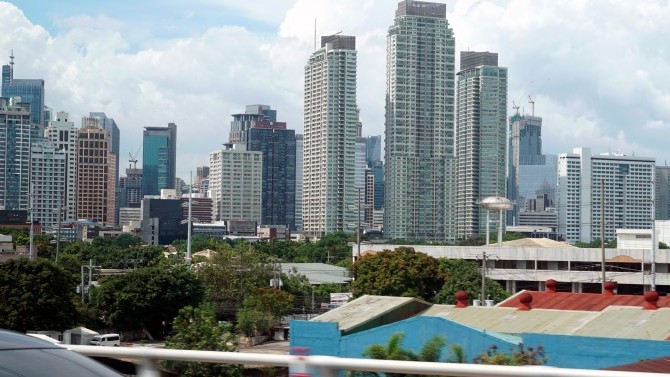
(File photo)
Notwithstanding the Cabinet overhaul stemming from a bitter political feud, economists and financial market analysts are hopeful that the country’s economic growth will remain among the fastest in Asia this year due to robust activities in certain industries.
They attributed the positive outlook to the Marcos administration’s highly qualified economic team.
“We will outperform other countries in the region. We rebounded since the pandemic and in this uncertain world, what I believe is the Philippines is one of the better places to be,” MBC trustee and 7-Eleven Philippines chief executive officer Jose Victor Paterno said.
His statements came after economic growth in the first quarter hit 5.4 percent based on data from the Philippine Statistics Authority (PSA). This was slower than Vietnam’s 7 percent but faster than China’s 5.4 percent, Indonesia’s 4.9 percent, and Malaysia’s 4.4 percent.
Industries which posted the fastest growth were the wholesale and retail trade and repair of vehicles at 6.4 percent, followed by financial and insurance which grew by 7.2 percent, and manufacturing which improved by 4.1 percent.
Economists attributed the industries’ expansions to strong consumer appetite for goods and services after government efforts to reduce inflation, which dropped to 1.8 percent in March, the lowest in more than four years. They added that the lower benchmark of the Bangko Sentral ng Pilipinas to lenders’ interest rates, at 5.75 percent in the first quarter, supported household and corporate spending.
Paterno said the local economic growth indicated resilience even after prices of some commodities rose due to the Russian-Ukraine war and global firms moderated demand for raw materials and product components due to Trump’s tariffs.
“There’s nothing [much] they can do with what happens in the rest of the world,” he said.
The International Monetary Fund (IMF) said the economy remains resilient despite external challenges and heightened policy uncertainty.
In a statement, IMF Mission Chief Elif Arbatli Saxegaard said economic growth is expected to settle at 5.5 percent this year and further accelerate to 5.8 percent next year.
An IMF team led by Saxegaard held meetings in Manila from 14 to 20 May to discuss recent economic and financial developments and the outlook for the economy.
“The Philippine economy holds significant potential with a sizable demographic dividend and abundant natural resources. The government has been undertaking reforms to reduce infrastructure, health and education gaps, promote foreign direct investment, and diversify the country’s export markets,” Saxegaard said.
“These reforms should be complemented by strengthening social protection programs, promoting digitalization, and increasing resilience to climate shocks and natural disasters.”
She, however, said that economic growth would be affected by global policy uncertainty and lower growth in major economies.
The IMF expects consumption to grow, supported by lower inflation, easing monetary policy, and low unemployment.
Inflation is projected to settle at 2.2 percent this year, near the lower end of the government’s 2 percent to 4 percent target range.
Saxegaard said the easing inflation would allow the Bangko Sentral ng Pilipinas (BSP) to further reduce policy rates.
“Risks of higher inflation include adverse weather and other supply shocks, including potential disruptions in global supply chains, and risk-off shocks, which could contribute to currency depreciation,” she said.
The IMF, meanwhile, projects the country’s current account deficit to narrow to 3.4 percent of the gross domestic product (GDP) from 3.8 percent in 2024 on the back of weaker commodity prices.
Saxegaard also highlighted the decline in the fiscal deficit.
“The fiscal deficit declined from 6.1 percent of GDP in 2023 to 5.7 percent in 2024, largely in line with the government’s latest fiscal program, and the overall fiscal stance is expected to be broadly neutral in 2025,” she said.
The medium-term fiscal consolidation remains appropriate and should be supported by a sustainable plan to raise tax revenues and implement expenditure reforms, she added.
The IMF also noted that systemic financial risks remain contained, credit growth remains healthy, and the banking system has strong capital and liquidity buffers.
“Important progress has been made in addressing Anti-Money Laundering/Combating the Financing of Terrorism (AML/CFT) issues, as exemplified by the Philippines’ welcome exit from the Financial Action Task Force (FATF) gray list in February 2025. The current momentum should be maintained,” Saxegaard explained.
Another MBC trustee, former chief executive officer of Sun Life Philippines and member of the Private Sector Advisory Council (PSAC), Riza Mantaring, said the government’s economic team helped attract foreign investments into the country by contacting local private companies.
“A lot of PSAC recommendations have been implemented,” she said.
“For the semiconductor industry, we were selected to be beneficiaries of the CHIPS Act. The private sector helped prepare the government’s presentation for that,” Mantaring continued.
The US Government created the CHIPS Act to mobilize $500 million for select countries in boosting the global supply of semiconductors as a way to fast-track the creation of innovative products.
University of the Philippines Economic Professor Ramon Clarete said the government, especially the Department of Trade and Industry, must still improve marketing efforts for the country.
“The economic team has still failed to signal effectively like Vietnam that foreigners can also do very good business here and compete with our local tycoons. Many new trade partnerships are forming,” he said.
Meanwhile, Jonathan Ravelas, a financial market analyst and senior adviser at Reyes Tacandong & Co., said government agencies must be reminded to work efficiently and quickly.
“I am supportive of the economic team. They have done well,” he said.
“But I think the President needs a whip to drumbeat what is needed, which is from his own words is faster delivery of government services,” Ravelas added.
MBC chairman Edgar Chua said the government must focus on providing healthcare to Filipino children.
“Studies have shown that if a child does not get the proper nutrition in the first 1,000 days, its effects are already irreversible,” he said.
“Otherwise, we’ll have a lot of people that will be a burden to the society because they cannot achieve their full potential,” Chua continued.


