
Microsoft unveils breakthrough Majorana 1 quantum chip
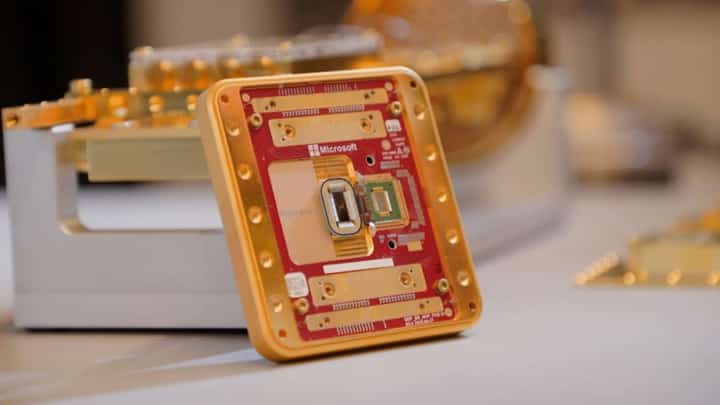
Microsoft unveiled a new computer chip on Wednesday, claiming it could revolutionize everything from combating pollution to developing new medicines. The tech giant joins Google and IBM in pushing the idea that the promise of quantum computing is now closer to reality.
The US-made chip, called Majorana 1, can fit in the palm of a hand but packs a revolutionary design that Microsoft believes will solve one of the biggest challenges in quantum computing — making these super-powerful machines reliable enough for real-world use.
"We took a fresh approach and basically reinvented how quantum computers could work," said Chetan Nayak, a senior scientist at Microsoft.
The company says its breakthrough was confirmed in research published Wednesday in the scientific journal Nature.
The new Majorana 1 chip uses a special approach to building quantum computers that could make them more stable and easier to scale up than the work done by Google or IBM, which are considered leaders in the field.
While the chip represents a major advance, Microsoft acknowledges that more engineering work lies ahead before quantum computers become practical tools.
However, the company says this breakthrough could make that reality possible within "years rather than decades."
Unlike regular computers that process information as 1s and 0s, quantum computers harness the strange properties of atomic particles, measured as qubits, to potentially solve problems that would take today's most powerful supercomputers thousands of years.
Microsoft says its new chip design could lead to quantum computers capable of tackling major challenges, like finding ways to break down harmful microplastics in the ocean or developing materials that can repair themselves when damaged.
Quantum research is seen as a critical field and both the United States and China have been investing heavily in the area, while Washington has also placed restrictions on the export of the sensitive technology.
The US Department of Defense has shown strong interest in the technology, selecting Microsoft as one of just two companies to advance to the final phase of its quantum computing program.
Google in December unveiled its Willow quantum chip, which dramatically reduced computing errors and performed a calculation in minutes that would take a traditional supercomputer millions of years, marking a significant advance toward practical quantum computing.