
The Philippines’ biggest arts fest welcomes nearly 60,000 attendees
The 2025 Pasinaya: The CCP Open House Festival, which kicked off the celebration of National Arts Month, became bigger with more satellite events in the regions and more artists and performers.


About 60,000 people flocked to the 2025 Pasinaya: The CCP Open House Festival. And with its two-day schedule brimming with events and activities, involving numerous artists, performers, cultural workers and volunteers, it remains to be the Philippines’ largest arts festival.
The total audience number was pegged at 58,417, as revealed by Cultural Center of the Philippines (CCP) vice president and artistic director Dennis N. Marasigan during “Pagdiriwang,” the closing program of the festival, showing an increase from last year’s count of 50,626. Attendees in Pasinaya Festival’s regional legs have seen dramatic increase.
The regional celebrations started last year with Iloilo City, Iloilo, in partnership with the Iloilo Museum of Contemporary Art, and Tagum City in Davao del Norte with the Musikahan sa Tagum Foundation, Inc. This year, three more sites were added — Batangas City in Batangas, Himamaylan in Negros Occidental and Sorsogon City in Sorsogon. The five sites were able to attract 20,044 attendees. These regional events were held simultaneously on 1 and 2 February together with the main celebration at the CCP Complex in Pasay City with extensions at the Circuit Makati in Makati City and in Manila.
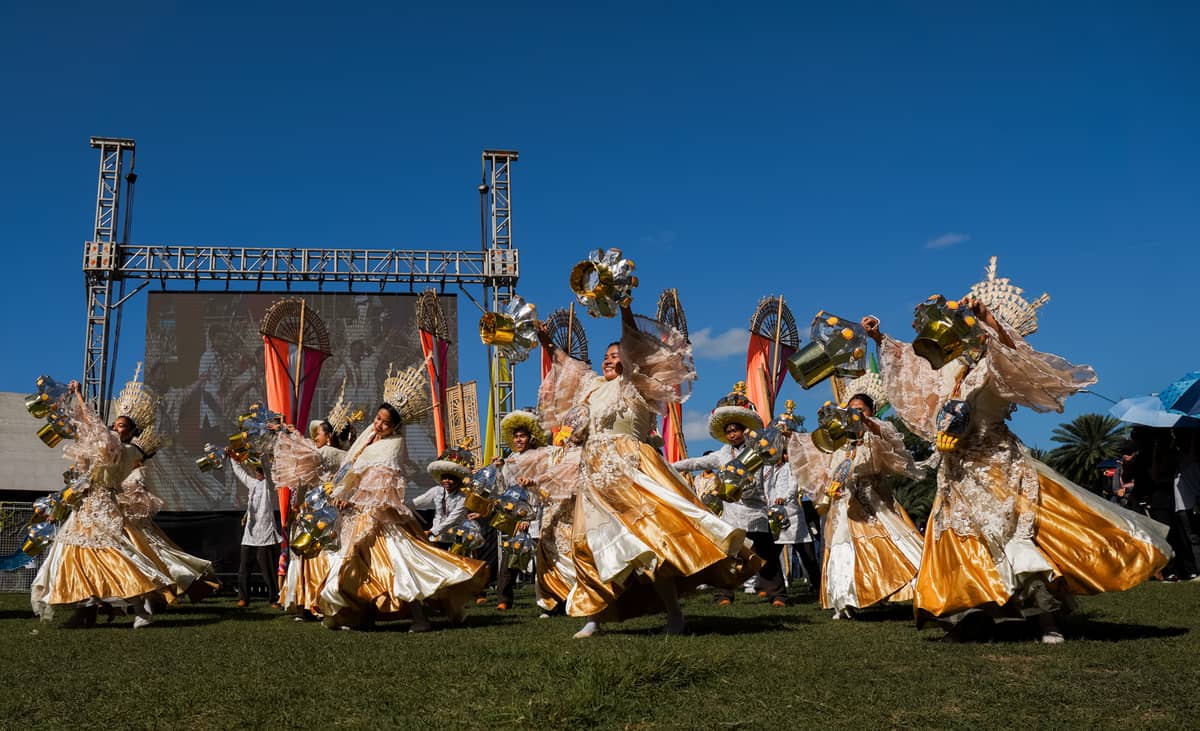
The Sining Tanglawan ng San Jose del Monte Performing Group during Pasinaya Festival’s opening program, ‘Panimula.’
PHOTOGRAPH COURTESY OF ATHENA FONTAMILLAS
“For CCP Pasinaya, we will continue to make this festival bigger, better, and brighter for everyone. Since 2005, CCP Pasinaya has always been a safe space for both our artists and our audiences. It is the best platform to showcase world-class talents and encourage arts education and appreciation,” said CCP president Kaye Tinga during the opening program called “Panimula” at the CCP Front Lawn.
“Panimula,” which showcased several performances, was also graced by Marasigan; National Commission for Culture and the Arts (NCCA) chairman Victorino Mapa Manalo; Teresita Calixto-Robles, chairperson of the Pasay Culture and Arts Council; CCP vice president for Administration Jose Victor Gaite; and head of the NCCA Subcommission on the Arts Arvin Villalon.
The year’s theme, “Para sa Lahat!” (For all!), articulated the festival’s aim to embrace and engage as many people as possible to explore, support, and celebrate the arts. To make it more accessible, the CCP enabled the attendees to enjoy all features as they can for a one-time donation of any amount.
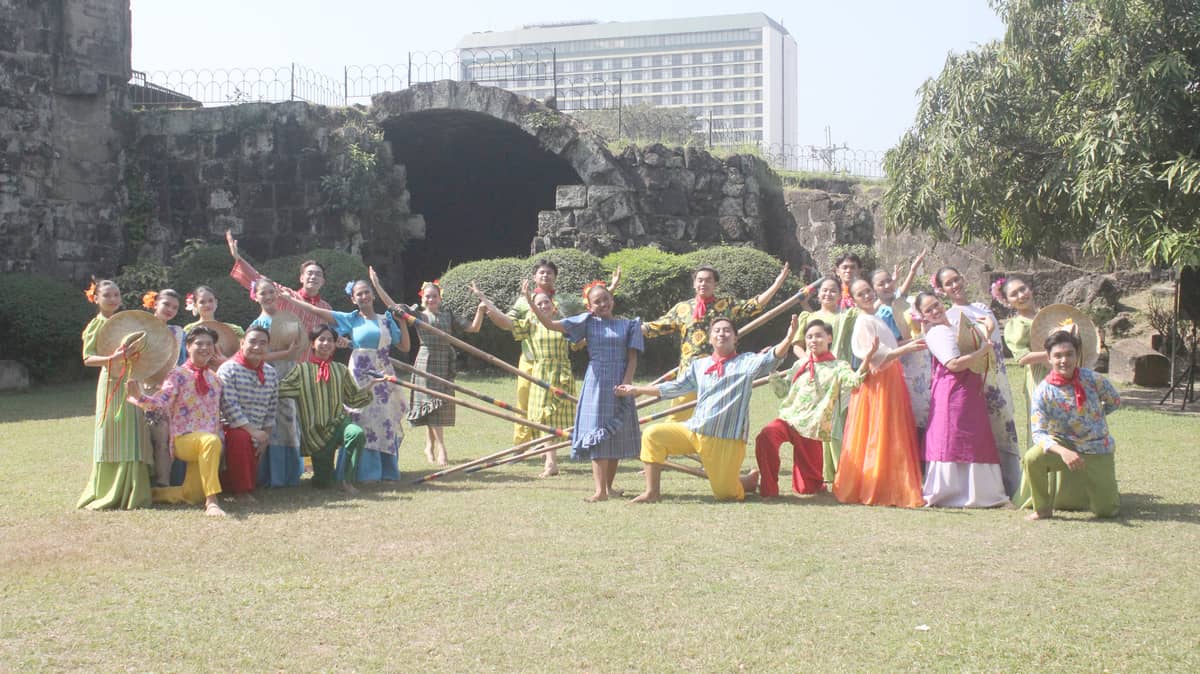
The Adamson University Dance Company at the Baluarte de San Diego in Intramuros.
Photograph courtesy of Kane Delgado
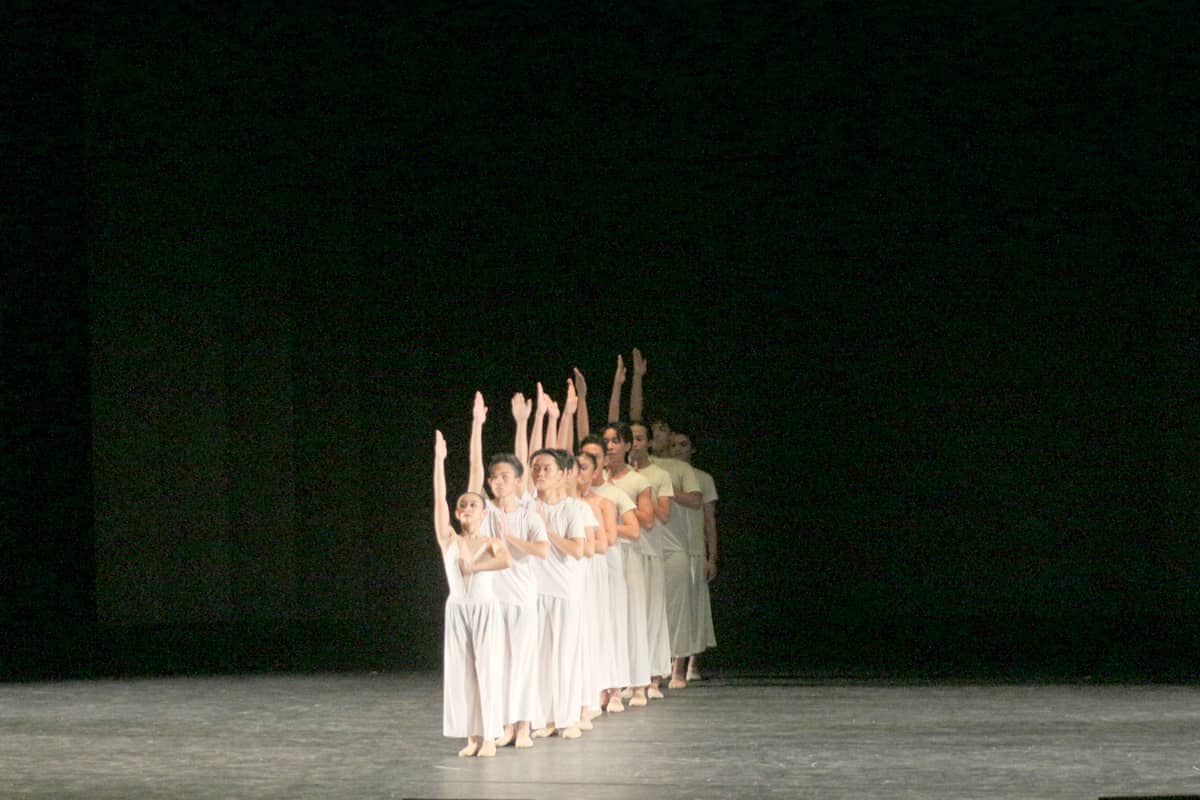
PHSA Makiling Dance at Aliw Theatre.
PHOTOGRAPH COURTEsY OF KRIS ANGEL DITAN
“Ang CCP Pasinaya ay talagang para sa lahat (is really for everyone). We go above and beyond to bring CCP Pasinaya to more and more parts of the country so everyone can experience the magic of this one-of-a-kind festival. Our dream is to have CCP Pasinaya in every town, in every city in our country,” Tinga added.
Conceptualized by former CCP vice president and artistic director Chris Millado, the Pasinaya Festival was meant to give audiences a sneak peek at the year’s offerings of the CCP resident companies. Over the years, it welcomed other cultural groups and has become an overall celebration of the different fields of art and of National Arts Month.
“CCP Pasinaya is the official kick-off of National Arts Month, marking the start of a nationwide celebration of Philippine arts and culture…. As the first major event of Arts Month, CCP Pasinaya sets the stage for a series of activities that aim to make the arts more accessible to the public, fostering a deeper cultural appreciation across the country. Join us in celebrating our shared history, heritage, and culture,” Tinga said.
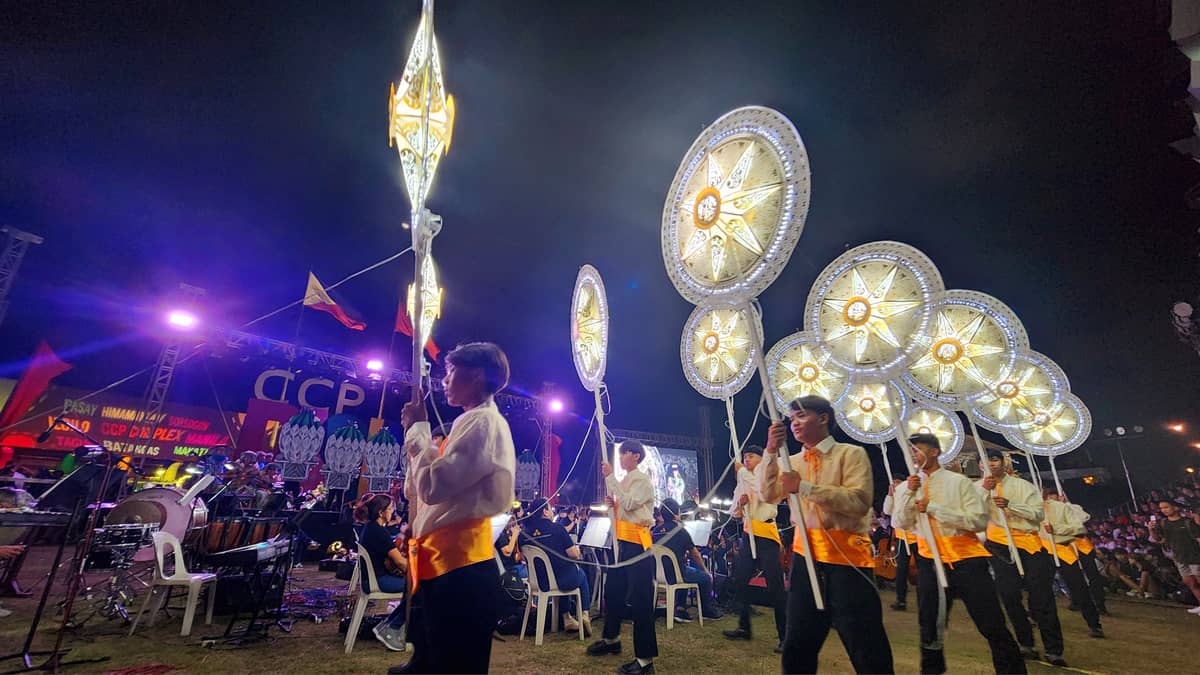
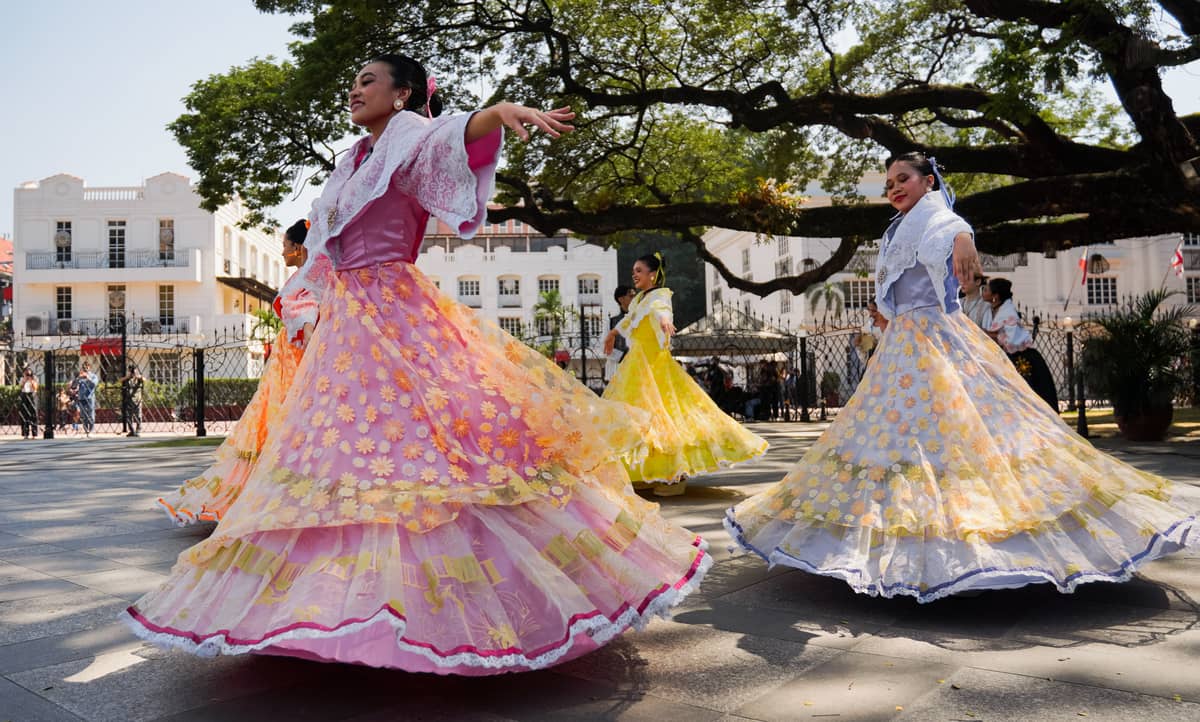
A group from Magalang, Pampanga, reenacting the Christmas lubenas tradition.
Photograph by Roel Hoang Manipon for the Daily Tribune
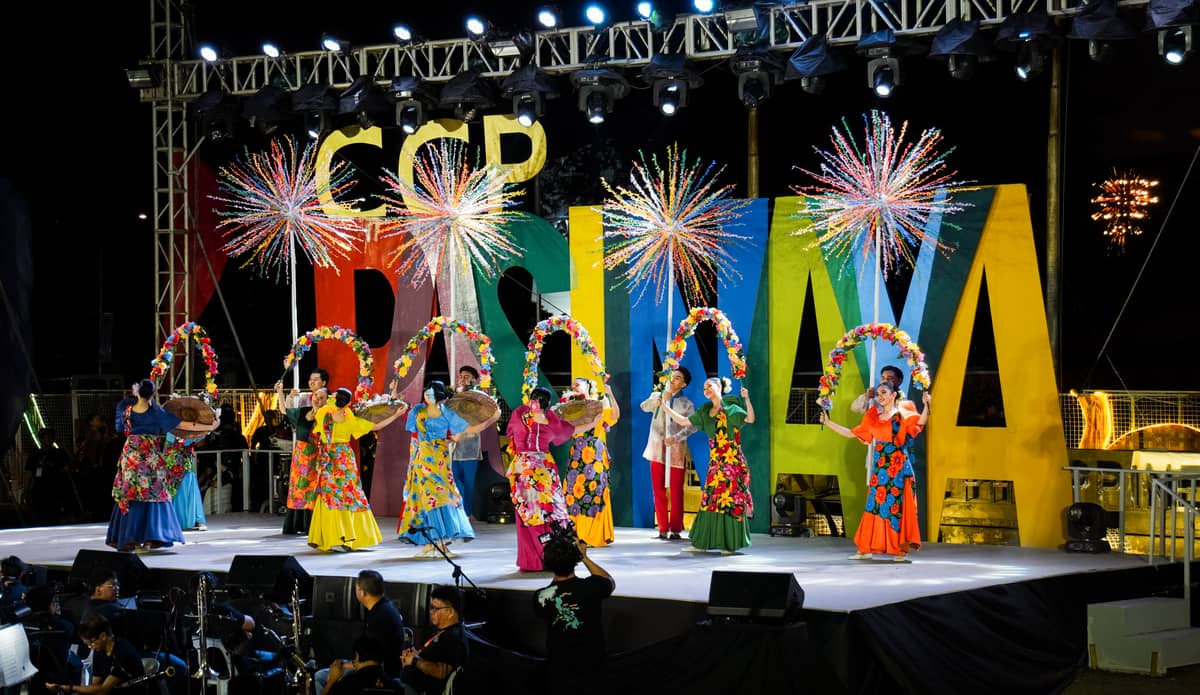
PHOTOGRAPH COURTESY OF ATHENA FONTAMILLAS
Manalo lauded CCP for continuously holding the Pasinaya Festival and other programs despite budget constraints and the ongoing rehabilitation of its iconic main building.
CCP invited volunteers to mount Pasinaya Festival, a way to partly address minimized funding and encourage the spirit of volunteerism. A total of 1,405 staff members and volunteers worked on this year’s festival.
Manalo also praised CCP for gathering different performing and cultural groups, some of which would be performing in a national event for the first time, from all over the country. He enthused that the festival is a good platform for young artists to showcase their works and performances.
“Puwede nating sabihin ito ay Pasinaya na rin para sa kabataan, unang okasyon na sila’y namulat sa lakas ng sining. At sana maging pasinaya na rin ito para sa ating lahat na tayo rin ay makilala natin ang puwersa at pag-unawa na handog ng sining (We can say that this is also an introduction for the youth, their first occasion to realize the power of art. And I hope that this will also be an introduction for all of us, that we will also know the power and insights that art offers),” he said.
This year, the festival featured 316 groups and 6,941 individual performers, perhaps the largest gathering of such kind in the country.
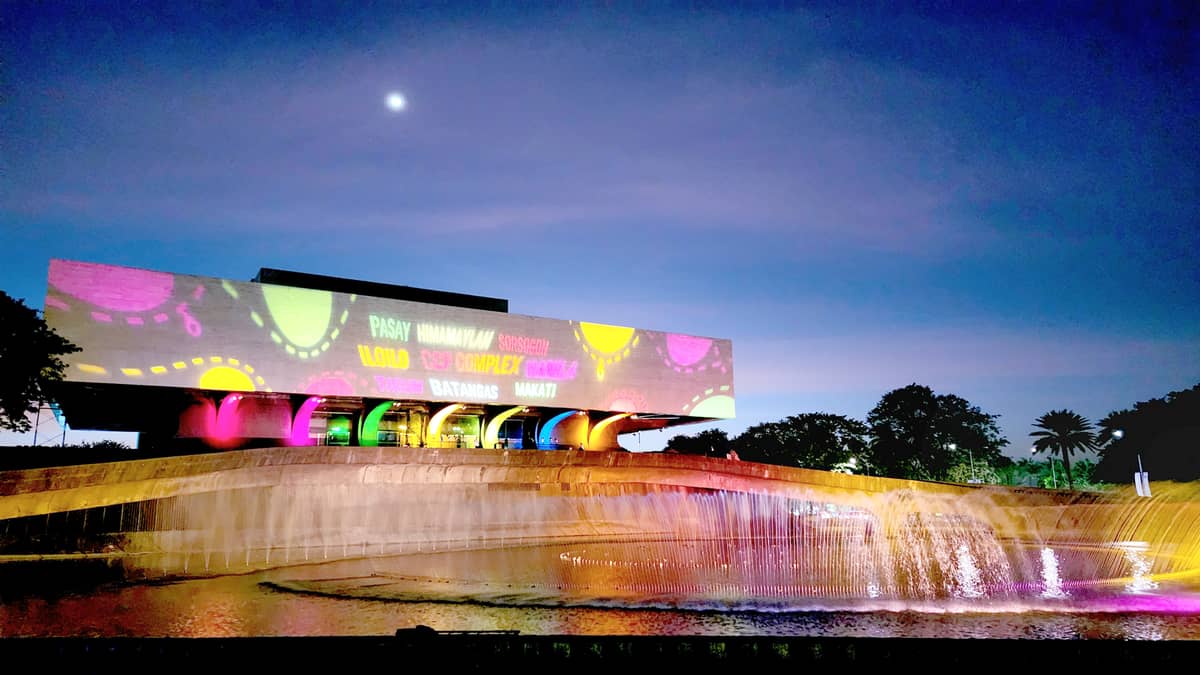
The special lighting on the facade of the CCP main building for the Pasinaya Festival.
Photograph by Roel Hoang Manipon for the Daily Tribune
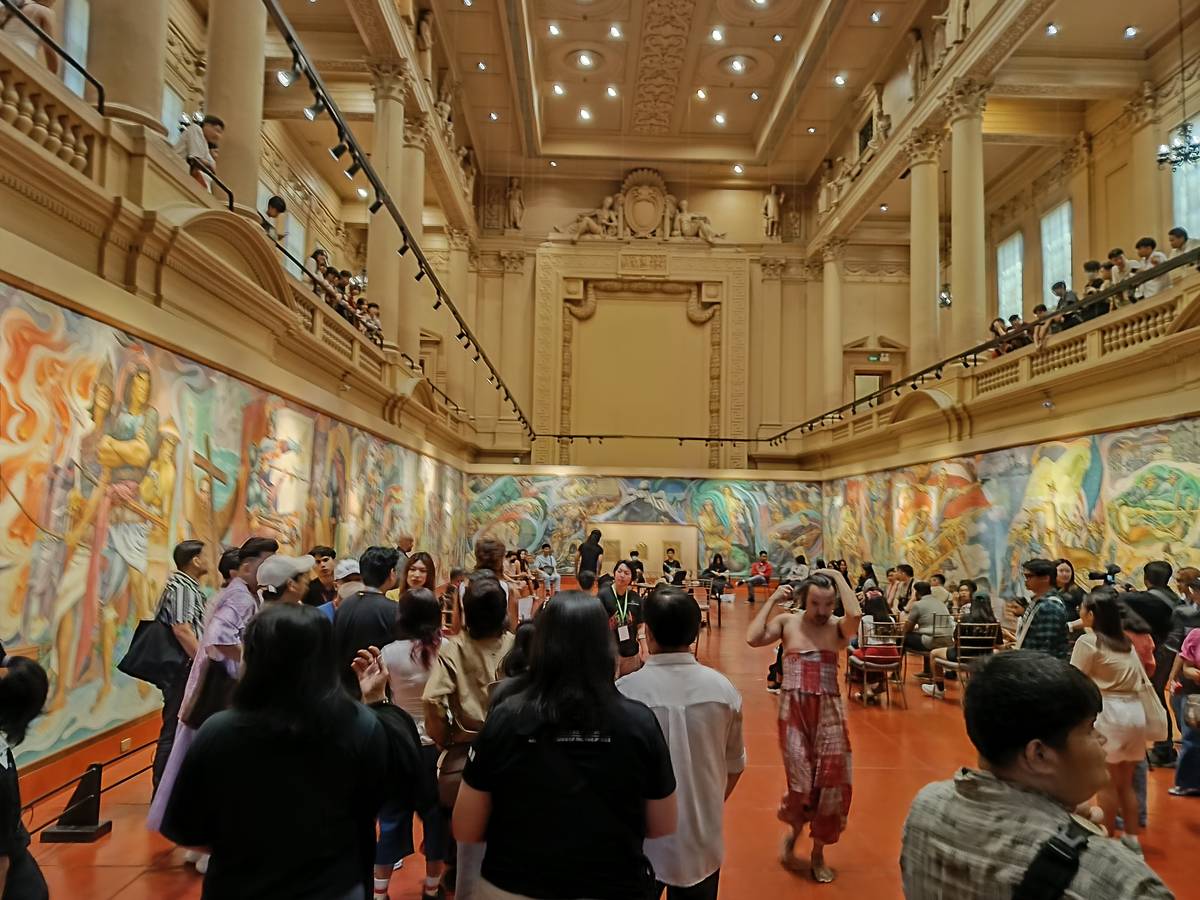
The National Museum of Fine Arts was one of the stops of the Paseo Museo tours.
PHOTOGRAPH COURTESY OF ANDRE CRISTOBAL
The 2025 Pasinaya Festival featured more than 200 performances, as well as workshops, talks, pitching sessions, cultural interactions, a market, tours and other activities that stimulated creativity, categorized into sections or components. A parade was also held to open the second day, participated in by participating artists and performers and partners, and led by a float bearing higantes made in Angono, Rizal.
In Metro Manila, most of these were held at the CCP venues — the CCP Front Lawn, Tanghalang Bamboo Pavilion at the Liwasang Kalikhasan and Tanghalang Ignacio Gimenez — as well as at Circuit Makati, Manila Metropolitan Theater, Intramuros, and Aliw Theater.
This year’s festival welcomed the addition of new components called Palaro and Paandar, where the makeshift Mess Hall was also an open-mic venue in which anyone can showcase their talents.
Palaro showcased the works of the grantees of the CCP Game and Comics Development project. Attendees were able to play digital games developed by Filipinos and pariticpate in tournaments.
The featured games were Sinag by Ranida Games, a mobile 1v1 fighting game that combines Philippine folklore and mythology with engaging gameplay; Pearls of Asia by Synthillate featuring Filipino business figures, and historical and cultural properties; Gala by Kendikorp that enables users to travel around the Philippines; Treasure Seekers, team-solving game, by Metamedia Information Systems Corp.; and the adventure game Kata by Katakata Creative.
“Whether you’re an experienced gamer or a first-timer, CCP Pasinaya’s Palaro delivers a unique fusion of innovative technology and Filipino culture. It’s a chance to experience our rich history and mythology in an entirely new way — through interactive, inspiring gameplay that highlights the creativity of local game developers,” said Marasigan.
Aside from the games, Palaro also featured the works of Filipino animators and comic artists including Makopa by Friendly Foes; Tungkung Langit at Alunsina by Komiket Inc.; Datu Pat i Mata by Lea Zoraina Sindao Lim; Tulogmatian by Ethel Mae Reyes; Teduray by Julius Sempio; Sinogo by Alfred Ismael Galaroza; and Legend of Sleeping Beauty Mountain by Marco Sumayao.
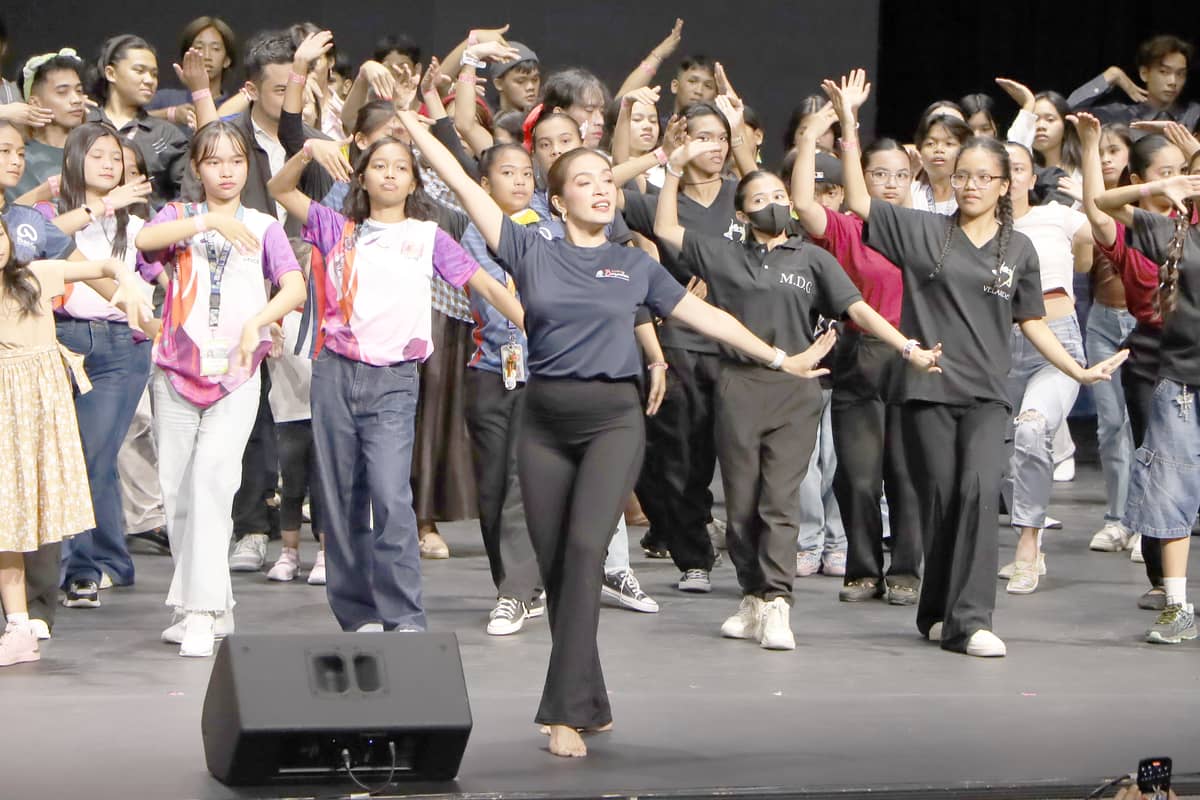
Dance workshop facilitated by the Bayanihan, The National Dance Company of the Philippines.
Photograph courtesy of Orly Dupaquil
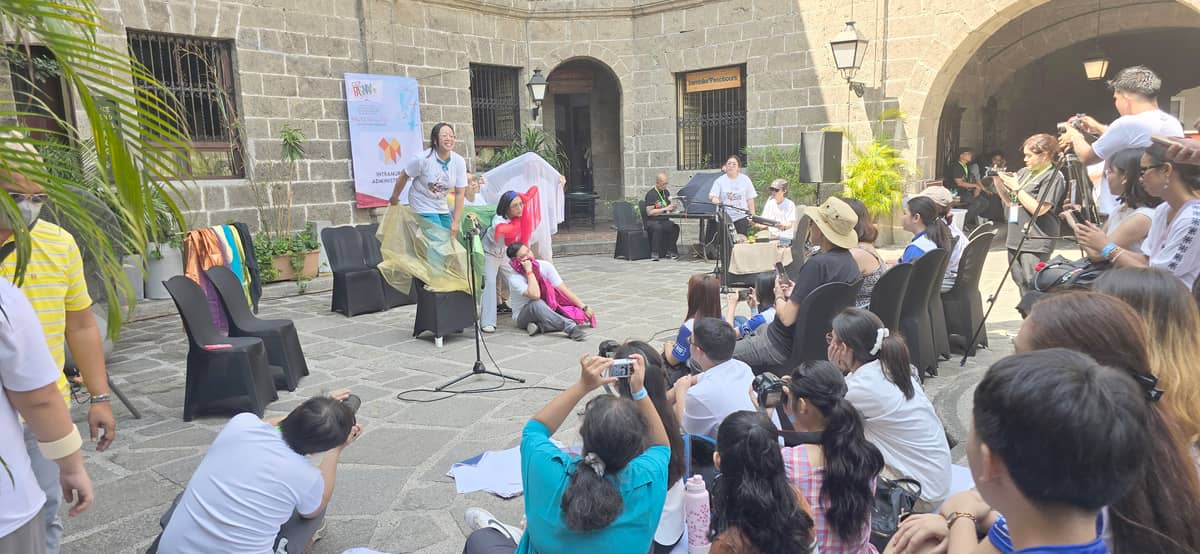
The performance of Dulambuhay Philippine Playback Theatre at Casa Manila in Intramuros.
PHOTOGRAPH COURTESY OF CHING DANSECO
The other components were Palihan, Palabas, Paseo Museo, Palitan, Pagtitipon and Pamilihan.
A popular feature, Palabas showcased different live performances as well as film screenings, mainly at CCP venues and partner venues such as Samsung Performing Arts Theater of Circuit Makati and Aliw Theater. Aside from the CCP resident companies — Philippine Philharmonic Orchestra, Bayanihan, the National Dance Company, the Ramon Obusan Folkloric Group, Philippine Ballet Theatre, Ballet Philippines, National Music Competition for Young Artists Foundation or NAMCYA, Tanghalang Pilipino, and the Philippine Madrigal Singers — it also featured professional, amateur, school-based and community-based performing groups such as Alice Reyes Dance Philippines, Philippine High School for the Arts’ Sanghiyas Pangkat Mananayaw, Musika Ibarang, Likhang Sining Dance Company, Marikina Dance Guild, Kalilayan Folkloric Group, Adamson Dance Company, Sandiwang Kayumanggi Folk Dance Troupe, and Nueva Ecija’s Bungkos Palay Performing Arts Foundation, University of Santo Tomas Salinggawi Dance Troupe, Indak Kultura Dance Company, Philippine Baranggay Folk Dance Troupe, Barangay Ukulele, Philippine Suzuki Youth Orchestra, Sing Philippines Youth Choir, Eastern Chamber Singers, Himig Rizalia of Rizal Technological University, Timoteo Paez Elementary School Rondalla, Koro Ilustrado, Kapisanan ng Diwa at Panitik, Makabayang Musikero Laban sa Tiwali or MAMULAT of the Philippine Normal University, Laya Philippines, Kapisanan ng mga Mag-aaral na Manunulat sa Pilipino, Sintalab, Ang Pinoy Storytellers, Lipa Actors Company, and Komedya ng Don Galo.
Selected films from the Gawad CCP Para sa Alternatibong Pelikula at Video and Cinemalaya Philippine Independent Film Festiva films were also screened.
Some of the performances were staged at the sites visited by the Paseo Museo, another popular feature. This component was a hop-on-hop-off tour to different museums, galleries, cultural spaces, and heritage sites in Pasay and Manila, where performances were staged and workshops held.
Twenty sites were included in this year’s Paseo Museo — Bulwagang Roberto Chabet, Liwasang Kalikhasan, Adamson University Gallery, Asian Institute of Maritime Studies’ Museo Maritimo, Bahay Tsinoy, Baluarte de San Diego, Casa Manila, Centro de Turismo, Museo de Intramuros, Fort Santiago, Galleria Duemila, Government Service Insurance System’s Museo ng Sining, Manila Clock Tower Museum, Manila Metropolitan Theater, Museo Pambata, Museum of Contemporary Art and Design of the De La Salle-College of Saint Benilde, National Museum of Anthropology, National Museum of Fine Arts, National Museum of Natural History, and Jose Conrado Benitez Gallery of the Philippine Women’s University’s School of Fine Arts and Design Studio.
Palihan comprised a wide range of different workshops conducted by artists and other experts, while Palitan was a pitching session where concepts and projects were proposed to producers, and CCP Kaisa sa Sining regional network members gathered in Pagtitipon. Pamilihan, located at the parking area of Tanghalang Ignacio Jimenez, was a market selling food, handicrafts, merch and other products.
“The CCP continuously creates more opportunities for all Filipino artists to showcase their talents to a wider audience. While we pursue our vision of cultivating and enhancing appreciation of Philippine arts, we also give the public free opportunities to experience exceptional artistic performances that can inspire and change their lives,” Marasigan enthused.