
At 85, Quezon City retains title as richest LGU
Mayor Joy Belmonte cites steady management of wealth, good governance, transparency

The Quezon City Government garnered five awards at the 2024 Creative Cities and Municipalities Congress organized by the DTI, proving that it is still the country’s most competitive city.
At 85 years old, Quezon City stands tall as the richest local government unit in the Philippines, a testament to its steady governance and efficient management of resources. Under the leadership of Mayor Joy Belmonte, the city has retained this title for four consecutive years, with total assets reaching P448.509 billion as of the end of 2023. This achievement cements Quezon City’s reputation not just as a bustling metropolis but also as a model for sustainable growth and financial stability.
“We did not raise taxes. We did not impose additional burden on our fellow QCitizens. And we have no debt. The key lies in the prudent and efficient management of the funds entrusted to us. Not only do we ensure our budget is maximized through efficient programs, but our Unqualified Opinion from the Commission on Audit, achieved for four consecutive years, is proof of this,” said Mayor Belmonte. “Here in QC, we take care of things differently, and it translates into higher revenue for the city.”
Based on the COA’s 2023 Annual Financial Report on Local Government, Quezon City led all LGUs, surpassing the total assets of the country’s richest province, Cebu, at P309.897 billion. Quezon City has been holding the “richest LGU” distinction since 2020, with the steady management of its wealth, which grew from P96.423 billion in 2019 to P452.333 billion in 2020. Since then, Quezon City managed to maintain its wealth around the P400-billion mark or P451.007 billion in 2021, P443.406 billion in 2022, and P448.509 billion in 2023.
“We can confidently say: We do not waste the trust of our citizens. From 2019 to today, we have reciprocated this trust with service that goes beyond the norm. We serve with integrity, efficiency, and transparency,” said the Mayor.

The Quezon City Government has received once again an ‘Unqualified Opinion’ from COA for the fourth consecutive year. This is considered the highest rating COA grants to government branches, including LGUs. Mayor Joy Belmonte and Vice Mayor Gian Sotto received the COA report from COA-QC Supervising Auditor Joseph Perez.
PHOTOGRAPHS COURTESY OF QC/LGU
Investing in People
From the approved P39 billion budget for 2024, more than half is allocated to social services: health, education, livelihood, housing, emergency response, and support for various sectors.
“This has consistently been a priority over the past years because our agenda begins with improving the quality of life for our citizens. This budget is significantly higher compared to the resources we inherited five years ago.”
Over the past year, Quezon City generated P27.41 billion in locally sourced revenue, a significant portion of which — P22.9 billion — came from diligent collection of real property and business taxes. According to the Department of Finance, Quezon City leads Highly Urbanized Cities in Year-on-Year Growth, with a 30% increase between Fiscal Years 2022 and 2023. For 2024, the city expects to surpass last year’s total tax collection.
“All of this is the result of our efforts to streamline and simplify processes for tax collection and business operations. For instance, our Ordinance offers discounts to those who settle their tax obligations early. Our digitization efforts in the City Government have also been a game-changer, making processes more convenient while reducing face-to-face interactions to avoid bribery and red tape.”
The QC E-Services portal, accessible anywhere, now hosts 145 online services and transactions. Taxes and other fees can be paid here through bank transfer, card payment, or e-wallet.
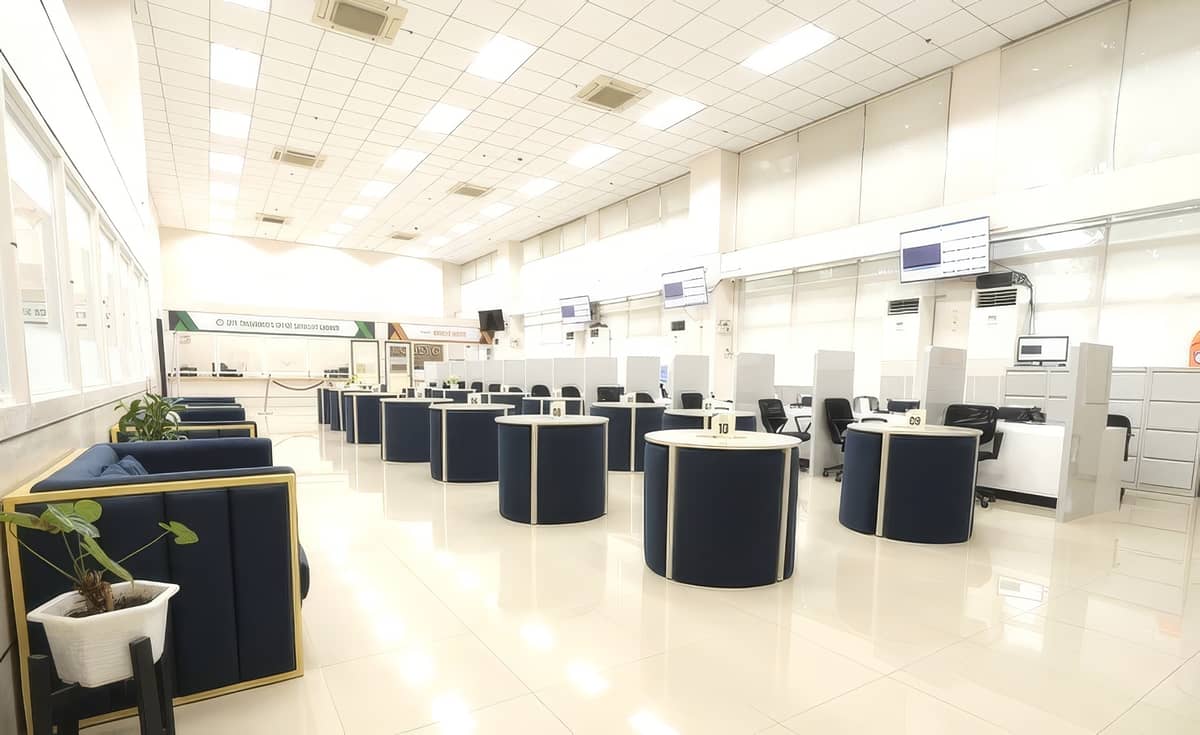
The improved and enhanced Business One-Stop Shop (BOSS) of the Quezon City Business Permits and Licensing Department (BPLD).
Truly Business-Friendly
This year, the city has fully rolled out its Online Business Tax Assessment. Over 45,000 taxpayers used this service during the first half of the year, with online tax payments reaching P152.4 million.
“Beyond making tax payments easier, we continue to enhance the Ease of Doing Business in our city through a streamlined process that we consistently seek to improve. Our efforts continue to bear fruit: We’ve been recognized back-to-back as the Most Business-Friendly City by the Philippine Chamber of Commerce and Industry. We’ve also been named the Overall Most Competitive LGU by the Department of Trade and Industry four times.”
As the year approaches its final quarter, Quezon City has already welcomed over 9,473 new businesses, nearly matching the total new business registrants of 2023. The QC E-Services platform also features the city’s Business One-Stop-Shop (BOSS), where business name registration, permit applications, and barangay clearance acquisition are now consolidated into one process. Through partnerships with DTI and all 142 barangays, processes are now streamlined, saving applicants from having to visit multiple offices.
“Under QC Biz Easy, it takes only an hour to receive an e-invoice for a new business permit application. For renewals, it’s just 10 seconds. The hard copy of permits and receipts are delivered for free. For those who aren’t tech-savvy, these services are still available at City Hall, where the on-site experience has been improved with the new and enhanced BOSS center of our Business Permits and Licensing Department. The automated ticketing system, new computers, and even free brewed coffee make the process more comfortable.”
The process of obtaining location clearances for businesses has also gone high-tech. Under the Automated Zoning Evaluation System, applicants can immediately check if their planned business is viable in a specific area — and if not, they are assisted in finding a suitable location. This information is also available on the Public Access Map, as 100% of registered businesses are now geotagged. Using artificial intelligence, the city tracks trends and patterns of businesses through this data, which aids in land use, zoning, and development plans.
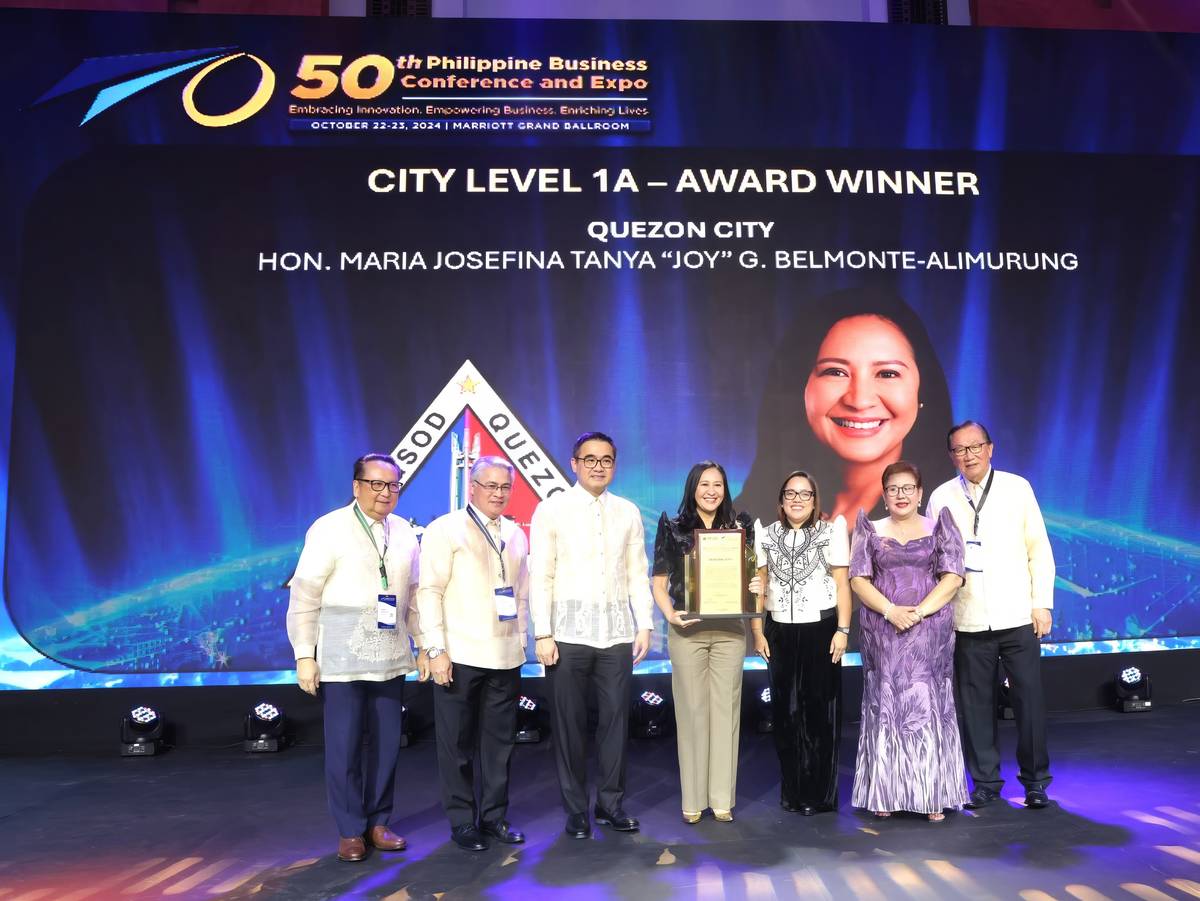
QC once again secured the Most Business-Friendly City Award (City Level 1A - HUCs in NCR) from the PCCI. Mayor Joy Belmonte accepted the recognition with BPLD Head Margie Mejia on stage during the 50th Philippine Business Conference.
Clear Path Forward
As Quezon City moves forward after celebrating its 85th year, Mayor Belmonte remains optimistic about the city’s trajectory. “All of this is the result of our efforts to streamline and simplify processes for tax collection and business operations. QC will continue to serve as an example of efficient and prudent governance,” she affirmed.
With its steadfast focus on innovation, digitalization, and efficiency, Quezon City not only honors its storied past but also sets the stage for an even brighter future.