
Unpopular Japan PM Kishida to step down
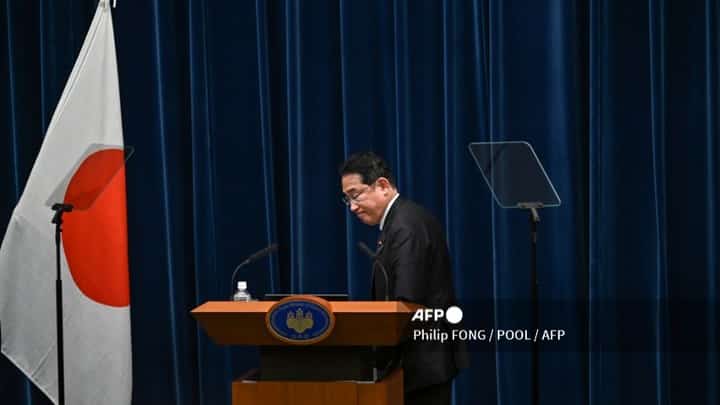
LOOK: Japan's Prime Minister Fumio Kishida prepares to leave at the end of a press conference at the prime minister's office in Tokyo on August 14, 2024. Kishida confirmed on August 14 that he will not seek re-election as head of his party next month, meaning the end of his premiership. |📷 Philip FONG / POOL / AFP
📷 Philip FONG / POOL / AFP
Japan's unpopular Prime Minister Fumio Kishida is set to quit after announcing on Wednesday he will not seek re-election as party chief.
The ruling Liberal Democratic Party, which has governed almost uninterrupted since 1945, is due to hold a leadership contest next month, with the winner to become prime minister.
"In this (party) presidential election, it is necessary to show the people that the LDP is changing and the party is a new LDP," Kishida told reporters in Tokyo.
"For this, transparent and open elections and free and vigorous debate are important. The most obvious first step to show that the LDP will change is for me to step aside," he said.
Kishida, 67, in office since October 2021, has seen his and his party's poll ratings slide sharply in response to rising prices hitting Japanese incomes and several scandals.
In November, Kishida announced a stimulus package worth 17 trillion yen (more than $100 billion at the time) as he tried to ease the pressure from inflation and rescue his premiership.
But this failed to make him any less unpopular, both among voters in the world's fourth-largest economy and within his own party.
Along with inflation -- for Japanese voters an unfamiliar and unwelcome phenomenon -- growth has spluttered, shrinking 0.7 percent in the first quarter.
Despite some recovery in recent weeks, the yen has been one of the world's worst-performing currencies, making life easier for exporters but pushing up import prices.
Early exit
Kishida could in theory have governed until 2025, and there had been speculation he might call a snap election to shore up his position.
But NHK reported that growing voices inside the LDP believed it would fare badly in elections under Kishida. In April, the party lost three by-elections.
Kishida, who last year escaped a pipe-bomb attack unscathed, has also faced severe criticism over a major kickbacks scandal linked to fundraising parties.
Kishida decided to jump because he knew he would lose the leadership battle, said Koichi Nakano, political science professor at Sophia University.
"He has failed to close ranks within the LDP," Nakano told AFP.
But he added: "For an LDP leader, staying in power for three years is longer than the average."
Before Wednesday, several figures were mooted in local media as possible challengers to Kishida including digital minister Taro Kono and economic security minister Sanae Takaichi.
The Yomiuri Shimbun daily reported that some LDP members have high hopes for Shigeru Ishiba, former party number two, and Shinjiro Koizumi, former environment minister and son of ex-premier Junichiro Koizumi.
Muscular defence
Kishida has sided decisively with Ukraine since Russia's invasion, welcoming President Volodymyr Zelensky to a G7 summit in Hiroshima and visiting Kyiv.
Under Kishida, Japan also pledged to double its defence spending to the NATO standard of two percent of GDP by 2027.
Encouraged by the United States as the two countries seek to confront an increasingly assertive China, this marked a major change for Japan from decades of strict pacifism.
US President Joe Biden hosted Kishida at the White House in April when the two countries announced a "new era" in cooperation.
Japan and the Philippines in July signed a defence pact allowing for the deployment of troops on each other's territory.
On climate, Kishida promised at COP 28 in December that Japan would build no new coal power stations that were "unabated", or lacked measures to reduce emissions.
Critics said that the necessary technologies, such as "co-firing" coal with ammonia or capturing and storing emissions, were unproven on a large scale.
Source: AFP