




Coffee creation

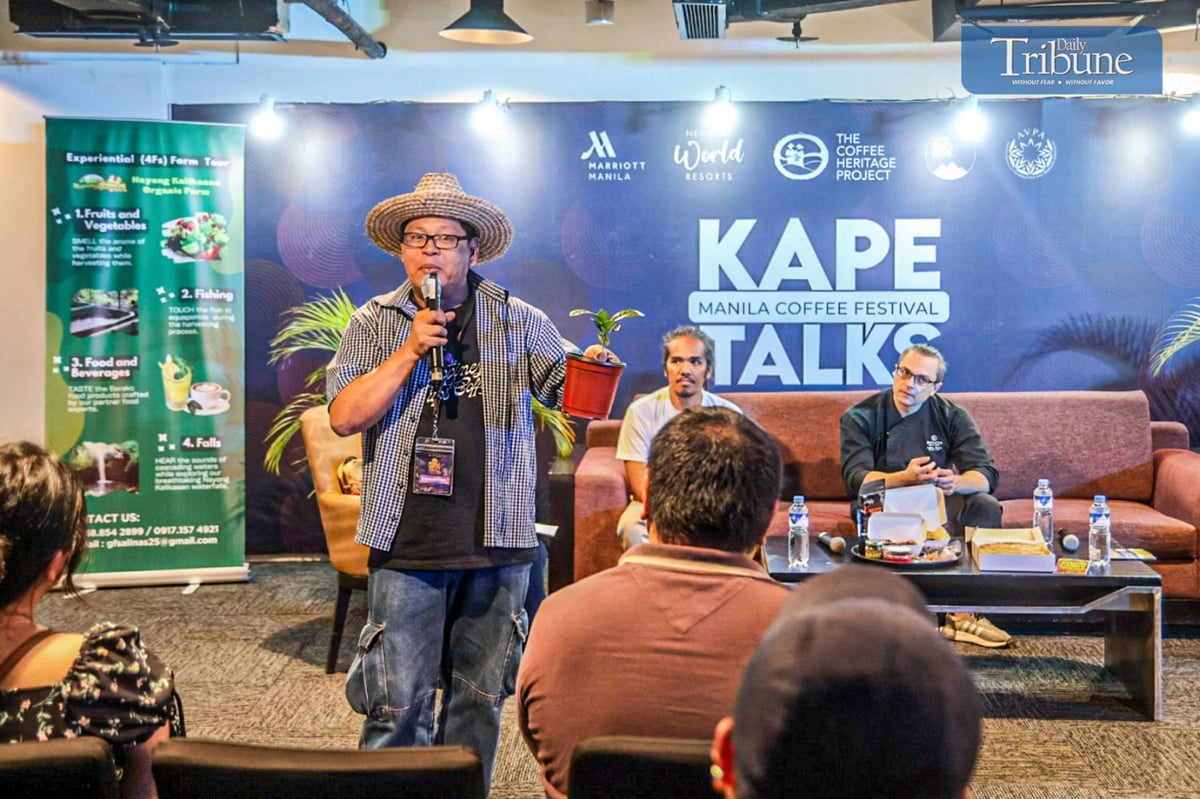
FARMER George speaks to an audience at the Nayong Kalikasan Organic Farm booth during the recent Manila Coffee Festival 2024 in Newport World Resorts, Parañaque City.
PHOTOGRAPH BY DIANNE BACELONIA FOR THE DAILY TRIBUNE
Text size
FARMER George speaks to an audience at the Nayong Kalikasan Organic Farm booth during the recent Manila Coffee Festival 2024 in Newport World Resorts, Parañaque City.
PHOTOGRAPH BY DIANNE BACELONIA FOR THE DAILY TRIBUNE
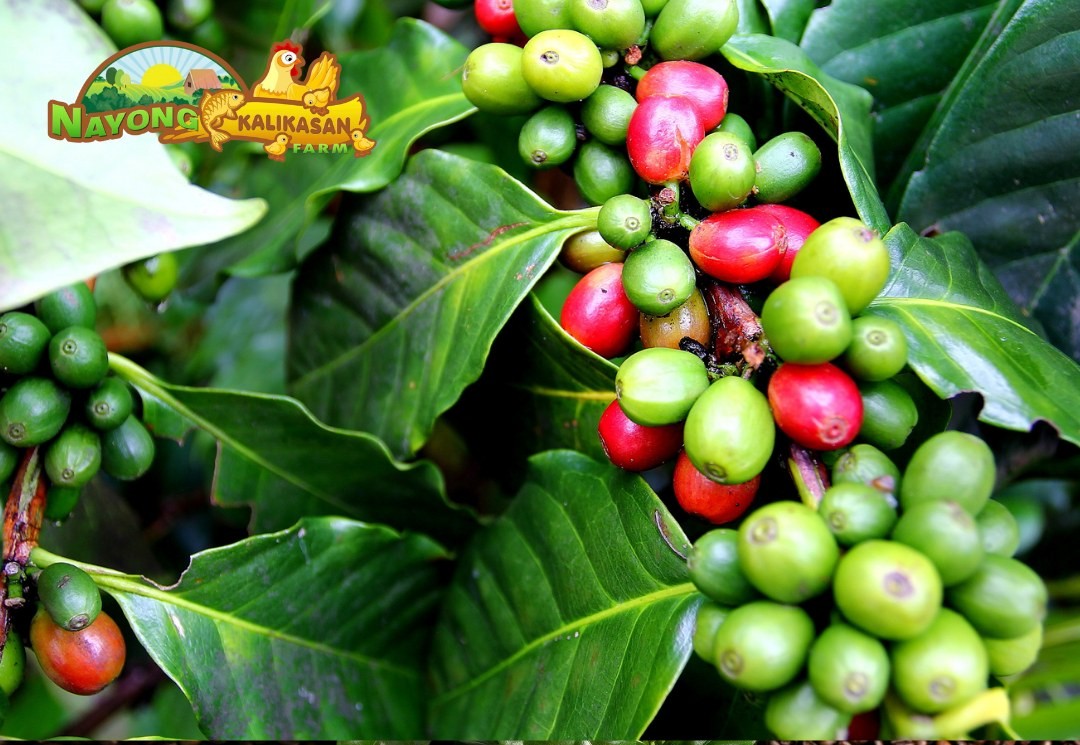
Local production of coffee is deficient despite high consumption and demand.
“Our production is probably just 30,000 metric tons per year. That’s low. We consume a lot more than that; we consume 200,000 metric tons, and most of those are imported,” says Enrique dela Cruz, Department of Agriculture’s (DA) project development officer for the High-Value Crops Development Program, which includes coffee.
Dela Cruz admits that production has gone down over the years as the program’s budget is not enough to support production.
Farmer George Salinas sees other reasons for the problem.
The owner of Nayong Kalikasan Organic Farm, who prefers to be called Farmer George, recalls that after buying the coffee plantation in 2017, he bought three more adjacent farms and now owns more than three hectares of land.
“The original farm owners sold the farms because they were no longer profitable,” he told the DAILY TRIBUNE at the sidelines of the recent Manila Coffee Festival 2024 organized by The Coffee Heritage Project, Newport World Resorts, Manila Marriott Hotel and the Coffee Science Center to promote local brands of coffee products by some 140 traders.
“If this trend continues, coffee farms will be smaller and smaller in size,” he warns.
Creating farms
Farmer George tells of a neighbor who turned his coffee farm into an Airbnb with a rate of P35,000 a day.
“It’s a private farm. I’m afraid that if this happens, there will come a time when the children of our children will no longer see a coffee plant. They will no longer see coffee beans and smell the coffee flowers because most of these farms are now converted into residential areas,” he says.
“I realized that I had to do something. I have adopted the advocacy not just to preserve the farm but to create more farms with partners, so I collaborated with many experts, like the Coffee Science Center, and got involved in the Coffee Heritage Project, whose main vision is to preserve the coffee farms,” adds the farmer.
Currently, farmer George has this model wherein they sell barako seedlings for the farmers to grow, and after four years, when it is already time for harvest, they will buy the fruits or cherries from the growers.
“We buy your harvest after four years because the market is a problem for farmers. We want them to create their own coffee brand because we want them to be sustainable,” he says.
Three decades after the Marcopper mining disaster devastated Marinduque’s waterways, the province is again pressing the…
Housing is probably the biggest issue affecting people the world over.
Malacañang on Monday called for a more thorough investigation into the questioned flood control projects in Taguig…
The defense on Monday backed the move by senator-judges to exclude a prosecution witness who testified on the firearms…
More demand
The top challenge for coffee growers is marketing.
“As a farmer, you have to find ways to market these high-value crops, like coffee, and you have to know how to market them and create a market for them to make them profitable,” he says.
He is collaborating with chefs who infuses barako into pastries to produce unique desserts such as barako empanada, barako tiramisu, barako ice cream, barako sausage and barako buko pie.
“We have to create more demand and increase demand,” according to Farmer George.
“Although 80 percent of our coffee now is imported and the farmers supply 20 percent, we have to make it sustainable if we increase the demand for local coffee,” he says.
“If there is an increased supply and demand for coffee, coffee farms will be profitable, no coffee trees will be cut down, and no farmer will sell their coffee farms.”
Farmer George shares that Nayong Kalikasan also offers experiential farm tours for added profitability.
“In this experiential farm tour, we let you smell the aroma of the fruits and vegetables while harvesting them. We allow you to touch the fish in our aquaponics system during the harvesting of fish, and we let you see and hear the sounds of the waters coming from our own Nayong Kalikasan waterfalls,” he says, adding that they mostly do organic farming, including aquaponics and drip irrigation, where technology meets nature.
The founding of Nayong Kalikasan Organic Farm is rooted in three stories: collaboration with experts, creation of products and coffee heritage.
“The legacy we want to leave is coffee, which is part of the heritage of Alfonso, Cavite. Ever since, it has been the coffee that makes the people grow and become a source of livelihood for most families — they were able to send their children to school, and that’s what we want,” Farmer George says.
Advocating the preservation of the coffee industry for future generations is what makes Nayong Kalikasan different from other farms.
“We don’t just sell coffee. We plant it for future generations. We may have the same coffee farms, but we don’t share the same advocacy,” he says.
“We want to preserve the coffee farms and create more coffee farms because we believe that if we are able to replicate ourselves to you as a successful farm, from planting coffee to selling your coffee to marketing your brand, that makes us successful also.”
