
Say what?
Be careful when cleaning your ears with cotton swabs, as inserting them too deep into the ear canal can push earwax further in. Avoid using sharp objects to clean your ears which can poke and damage your eardrums.

My late father was troubled by hearing loss as he got older. I would often have to repeat myself, and sometimes he could only understand me if I spoke in Ilocano with a low voice. Other times, we would joke that he had "selective hearing loss," choosing to only hear things that he wanted to hear.
To understand what causes hearing loss, let's review the parts of the ear. The ear has three main parts: the outer, middle and inner ear. As sound waves pass into the outer ear, this causes the eardrum to vibrate. The middle ear contains the eardrum and three small bones that transfer the vibrations to fluid in a snail-shaped part of the inner ear known as the cochlea. The cochlea has nerves cell and thousands of tiny hairs that help turn the vibrations into electrical signals which are transmitted to the brain, that then turns these signals into what we perceive as sound.
There are three types of hearing loss:
Conductive, involving the outer or middle ear. This can happen with buildup of earwax that can block soundwaves from passing to the middle ear. The eardrum can rupture with sudden changes in pressure, loud blasts of noise or by poking the eardrum with an object. Repeated ear infections and unusual bone growths and tumors around the ear canal can also cause hearing loss.
Sensorineural, which involving the inner ear. This can happen with aging and as loud noises damage the hairs or nerve cells in the cochlea.
Mixed, which is a combination of the two.
Age-related hearing loss, also known as presbycusis, happens gradually and typically involves difficulty hearing high-frequency sounds.

Being around loud noises over time can also increase your risk for hearing loss. Jobs with constant loud noise, such as construction or factory work, can lead to damage inside the ear. Other activities with dangerously high noise levels include motorcycling or listening to loud music.
Damage to the ear can also come from a short blast of noise, such as from firearms and jet engines, and can cause immediate, permanent hearing loss.

Staying away from loud noises is the best protection, but if exposure is necessary, using appropriate earplugs and earmuffs can help prevent hearing loss. Taking breaks from the noise and turning down the volume when listening to music helps too.
Some medicines like the antibiotics gentamicin and streptomycin, and medicines to treat cancer, can damage the inner ear. Very high doses of aspirin, other pain relievers, antimalarial drugs or loop diuretics like furosemide can cause short-term hearing loss as well as as ringing in the ears, also known as tinnitus.
Illnesses such as meningitis that cause a high fever can harm the cochlea. Hearing loss can also be caused by genetic conditions and can run in families.
If you have a sudden loss of hearing, particularly in one ear, seek medical attention right away. An ear-nose-and-throat doctor (ENT) can best examine you and perform tests to check on your hearing. You may also be asked to do a hearing test where sounds and words are directed through earphones to each ear.
Treatment depends on the cause, which includes removal of earwax that is causing blockage, best done by your ENT. Be careful when cleaning your ears with cotton swabs, as inserting them too deep into the ear canal can push earwax further in. Avoid using sharp objects to clean your ears which can poke and damage your eardrums.
Surgery is sometimes needed to repair damage to the middle ear or to insert small tubes to help drain fluid caused by repeated ear infections.
Hearing aids can be helpful and there are many kinds to choose from. If a regular hearing aid doesn't help, a cochlear implant might be an option, which connects to the inner ear to help with improving hearing.
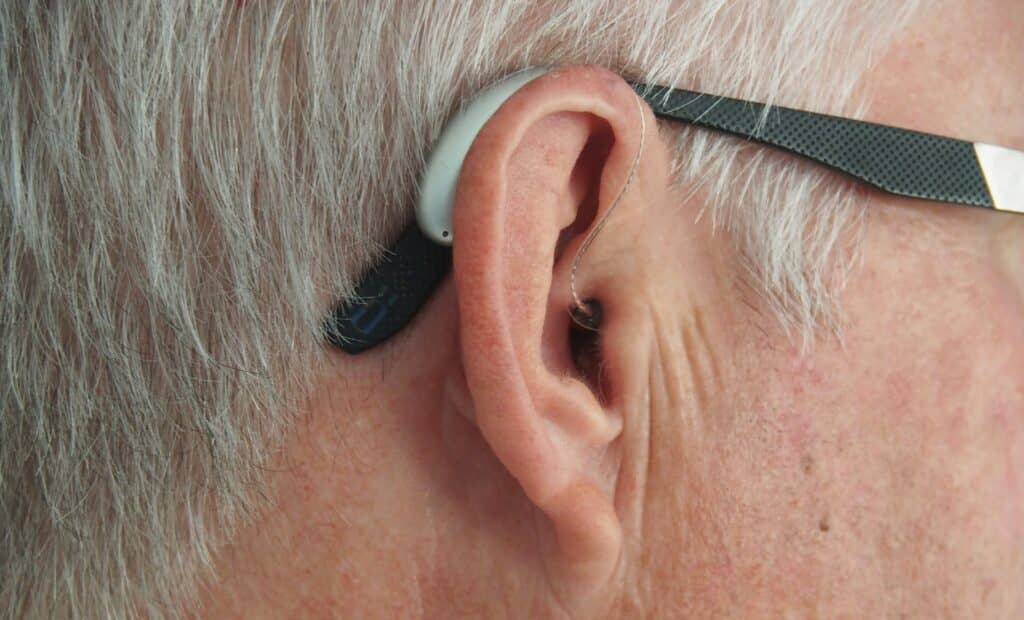
If hearing loss is causing you trouble, talk to your doctor. Hearing loss has an impact on both physical and mental health, with the loss of the ability to communicate leading to social isolation, loneliness and frustration, particularly among older persons.