
PGA Cars ramp up EV transition

Formula 1 is the pinnacle of c competition. With pioneering designs and state-of-the-art technology, it is no longer surprising that F1 innovations have found their way into the production of everyday road cars.
Some of them are the use carbon fiber materials in car body parts (McLaren in 1981), paddle shifters (Ferrari, 1989), turbo-charged engines (Renault, 1977), control buttons on the steering wheel (McLaren, 1978), as well as hybrid powertrains (2014 season).
The reason behind all these is that if it works in the most elite and most challenging auto racing series in the world, there's no reason its cutting-edge advancements should not be shared to make everyday cars more efficient, safer and environmentally friendly.
When most car brands were still not confident about introducing pure electric vehicles into the local market, PGA Cars decided in 2020, to bring in the Porsche Taycan, the German luxury sports car maker's first 100-percent electric high-performance ride.
But more than just selling the Taycan to select clients, PGA Cars established an electromobility program that is built on three pillars: Products, infrastructure and strategic alliances. The program aims to expand the adoption of 100-percent electric vehicles in the Philippines since they are zero-emission vehicles and thus, are environment friendly.
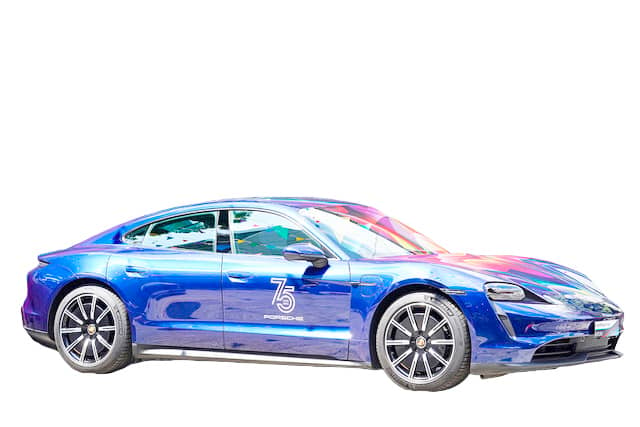
Porsche Taycan debuted full electromobility in the Philippines' luxury sector.

Taycan Cross Turismo adds outdoors capability to full electromobility.
EV products
PGA Cars' introduction of Porsche's first purely electric sports car comes to mind when we talk about products. The Taycan represents the crowning point of the brand's electrification development by combining sports car DNA and technological innovation.
The Taycan was built at Porsche's Zuffenhausen manufacturing plant that is CO2-neutral (the heat generated in the plant is drawn from renewable sources and bio-gas). The plant also adopts "green logistics" as it uses green rail transportation solutions as well as electric-powered transport trucks.
As for the car itself, the Taycan employs many firsts including an 800-volt architecture, two-speed transmission on the rear axle, high recuperative power of up to 265 kW and best coefficient of drag value in the segment (at 0.22, the Taycan's body as it speeds up, slips through the surrounding air more efficiently).
Two years later, in 2022, PGA Cars brought in Audi's e-tron range of 100-percent electric luxury cars.
According to PGA Cars, the domestic uptake of its electric vehicle models reflects the strong worldwide demand. Latest data show that Porsche sold 27,885 Taycan models in the first three quarters of 2023, an 11-percent jump from the same nine-month period of the previous year.
Meanwhile, worldwide deliveries of Audi e-tron models leaped 60 percent from January to September last year, representing 123,040 units.
The Taycan continues to be one of Porsche Philippines' bestselling models. From the top-spec Taycan Turbo S model that debuted the nameplate in the country in 2020, the Taycan lineup has since grown to include Sport Turismo and Cross Turismo variants.
The Taycan four-door coupé in rear-wheel drive remains a popular choice among consumers who expect dynamic performance in an electric vehicle.
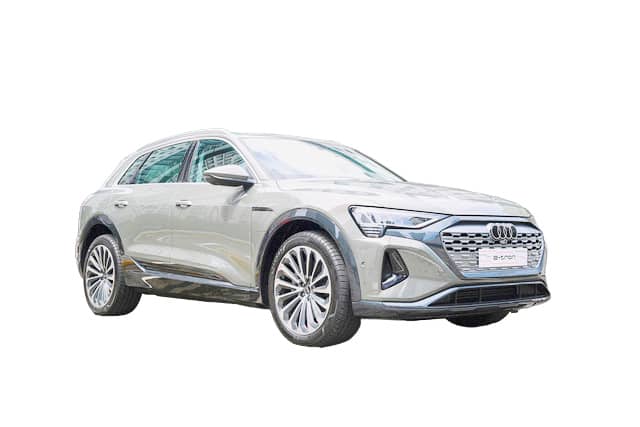
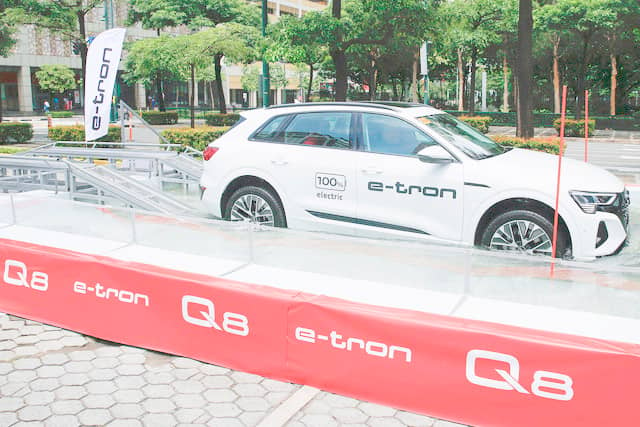
Audi on the other hand, unveiled the e-tron SUV and e-tron GT in early 2022, then immediately expanded the choices following the launch. In August 2023, Audi strengthened its leadership in the luxury EV segment with the introduction of the new Q8 e-tron range.
Comprising the present Audi Q8 e-tron range are the Q8 e-tron 55 SUV, Q8 e-tron 50 SUV and Q8 e-tron Sportback. Depending on weather, road conditions, terrain and driving styles, the models can travel around 582 kilometers to 600 kilometers when fully charged.
Complementing the Q8 e-tron models are the Audi e-tron GT and RS e-tron GT four-door coupés that combine fascinating design with a powerful drive, dynamic handling and long-range capabilities. Both propelled by two electric motors, the e-tron GT generates 530 hp and 630 Nm to torque while the RS e-tron GT makes 646 hp and 830 Nm of torque. On fully charged batteries, both models can travel an estimated 500 kilometers.
Infrastructure
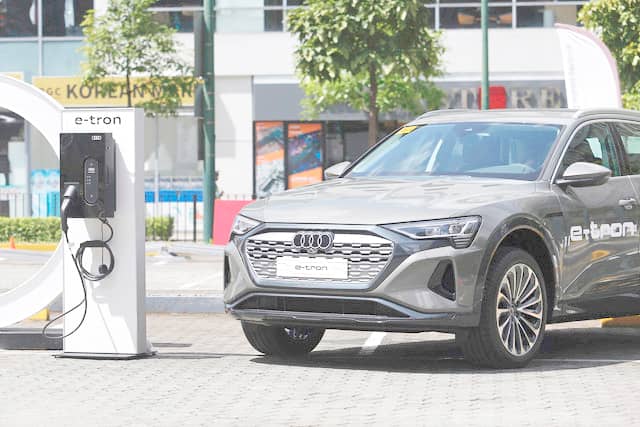
Supporting the introduction of highly capable and desirable 100-percent electric vehicles, PGA Cars poured significant investments on facilities specifically designed to address the requirements and safety standards of EVs.
Included are those for servicing, maintaining, storing, charging, and showcasing the vehicles, as well as systems necessary to operate them. Other investments were — and are — earmarked for manufacturer-approved equipment, tools and software and special parts.
Besides the installation of home and destination charging facilities, another continuing investment is the cost of acquiring specialized training for technical and sales personnel. A key component of PGA Cars' infrastructure for electromobility is the expertise and, by now, proven experience in EV technology.
Anticipating the requirements of 100-percent electric models by Porsche and Audi (and later on by Lamborghini and Bentley), PGA Cars was first among car companies in the country to establish an EV department. It is composed of factory-certified product specialists, technical personnel, and electrical engineers who are continuously trained by Porsche and Audi.
Another important function of the EV department is to check where the clients want to install their own charging unit (which could be at their residence or any other preferred location) and make the necessary installation recommendations after purchasing a Taycan or e-tron model.
The PGA Cars' EV department also proactively leads or collaborates with groups that support the wider adoption of EVs in the Philippines.

Strategic alliances
PGA Cars spearheads the country's adoption of electromobility not only through the introduction of 100-percent electric models, but also by systemizing the installation of residential charging solutions.
This is crucial for PGA Cars — international studies show that at least 80 percent of EV owners charge at home. Because of this trend, various suppliers were spurred to link with PGA Cars' efforts.
The Electric Vehicle Industry Development Act that became law in 2022 resulted in more (and bigger) groups in the private sector responding to the government's initiative. Even major property developers, shopping mall groups, and energy companies have rolled out destination charging facilities.
PGA Cars participated in most of these groups' introductory programs. These facilities complement PGA Cars' own charging stations, including a high-speed charging facility located at the company's headquarters in Greenhills along EDSA.
Indeed, as more stakeholders initiate their own electromobility programs, expect PGA Cars to be at the forefront in developing alliances.