




Age or Re-tire-ment — Yes, tires do expire and it’s sooner than you think

Photographs by Charles E. Buban for the Daily Tribune One of the wear indicator bars that could be found between the tire grooves.
Text size
Photographs by Charles E. Buban for the Daily Tribune One of the wear indicator bars that could be found between the tire grooves.
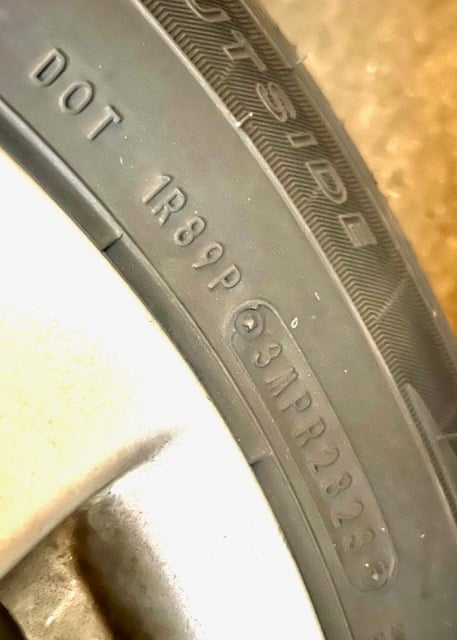
The stamp on this sidewall means that this particular tire was manufactured on the 28th week of 2023 or 10-16 July 2023.
Three decades after the Marcopper mining disaster devastated Marinduque’s waterways, the province is again pressing the…
Housing is probably the biggest issue affecting people the world over.
Malacañang on Monday called for a more thorough investigation into the questioned flood control projects in Taguig…
The defense on Monday backed the move by senator-judges to exclude a prosecution witness who testified on the firearms…
My family owns a 10-year-old hatchback which I bring, without fail, to a service center near our place whenever it's needed to undergo preventive maintenance. Aside from ensuring that a vehicle will last for many years, following a PMS or preventive maintenance schedule will also help keep drivers and their passengers safe while on the road.
I recently brought my car to a service center for its PMS, and through a service advisor's checklist, the routine checking, cleaning, replacing of car parts and oil were done.
And since the mileage of my car showed that it had already reached 183,000 kilometers, I was informed that following my car's PMS should always be a must.
The process only lasted half a day and when I was ready to settle my bill, I was approached by the service advisor to check the list of items that the mechanics said needed urgent attention. The service advisor particularly pointed out in the list that all the tires of my car had already expired and should be replaced immediately. I was a bit surprised, considering that my tires' grooves were still deep.
I went home keeping in mind that tires of my car needed changing. When I checked the manufacturing date on the tires' sidewall I saw that my tires were manufactured on the 21st week of 2016, which means they are now seven years old and way past their prime condition.
The tire's sidewall is where one could easily find a tire's "birth date." This number follows a standard format of the week and year, represented as a 4-digit number (WWYY or in the case of my car's tires, 2116).
According to a technician of a tire shop I went to, tires should be replaced after four or five years. Six years would be pushing it while seven would already be gambling on safety even if the grooves are still within the ideal depth.
Tires have indicator bars that are set at 2/32 of an inch (approximately 1.6mm). These indicators are found in the tire's grooves between tread markings around its circumference. If the tread is above the wear bars, the tires are still good. If it's flush, it's time to buy new tires.
Maximum of six years
I was also told that even unused tires can only be stored for a maximum of six years before being considered "expired" or unsafe for use. The reason behind this involves its rubber compound.
Many vehicle owners mistakenly assume that a tire's lifespan is determined only by the depth of its tread. While this is true, if the tire tread is already worn out, one should also take into consideration the age of a tire.
Note that when a tire is released from a manufacturing plant, its rubber compound begins to oxidize as it gets exposed to the elements (UV light, oils, chemicals) that slowly break down compounds and reduce the rubber's flexibility and lessening its ability to grip the road.
Tiny cracks can also develop both inside and outside the tire. Ultimately, these cracks could affect the rubber layers surrounding the steel belts, causing them to separate from one another.
Catastrophic
Due to these factors, a catastrophic accident could occur if one happens to be speeding on the highway or while on a busy street where many vehicles and pedestrians are around.
Tires are the only physical point of contact with the road, making them vital for stability and safety. Expired tires impair braking and cornering, so it pays to spend for a new set of tires when the signs show that they need replacing.
It's but natural to purchase tires that are within your budget but it's best to make it a point to inspect the date when they were manufactured. Remember that getting cheap but nearly expired tires is not worth the gamble.
