
Battling Low-batt — Extending the life of your EV batteries
The common practice of fully charging (up to 100 percent) EV batteries and then fully discharging (draining the battery to almost zero charge) them, is not advisable because it could easily damage the batteries

PHOTOGRAPH COURTESY OF AYALA LAND from setting up chargers in Ayala Malls and to all its offices, estates, hotels and industrial centers, Ayala Land, last year, successfully held the largest roll out of fast-charging stations for EVs in the country.
Sad truth: Lithium batteries, which are used in mobile phones, laptops, and electric vehicles, among other things, will slowly degrade and have a shorter capacity and range.
While the deterioration of these batteries will certainly occur after a period of time, there are things that one can do to ensure that they last longer.
The common practice of fully charging (up to 100 percent) EV batteries and then fully discharging (draining the battery to almost zero charge) them, is not advisable because it could easily damage the batteries.
However, new EV owners need not worry that their vehicle would suffer the same fate as their old mobile phones.
Since "cells" in a typical EV battery are able to retain capacity even after driving hundreds of thousands of kilometers, this means the battery life of an EV could last between 10 and 20 years, depending on the EV one owns.
With modern EVs, you can charge and drive again and again without worrying about your batteries getting damaged in a short span of time.
Like engines in conventional gasoline- or diesel-powered vehicles, EV batteries are designed to last long but will eventually wear out. It pays to protect your investment and bolster its resale value by avoiding the mistakes EV owners usually make.

PHOTOGRAPH COURTESY OF AUDI PHL TYPICALLY, EVs require less maintenance than their regular counterparts.
Maintain charging between 20 and 80 percent
It's recommended to never let your EV run out of juice or under 20 percent. Now, if needed, you can charge it past 80 percent.
Getting to an 80 percent charge is usually a range that's enough for your daily trips, so you might want to consider changing the settings on your car or charger to keep the battery within the 20-80 percent sweet spot.
Another advantage of not charging all the way to 100 percent is that it leaves room to store energy from regenerative braking, resulting in lower charging costs. When batteries are full or near full, regenerative braking will be disabled to avoid overcharging.
However, if you really need to do the full charge, do it right before you start the trip. Leaving a battery at max charge for even relatively short periods of time can possibly affect longevity.
Minimize the use of fast chargers
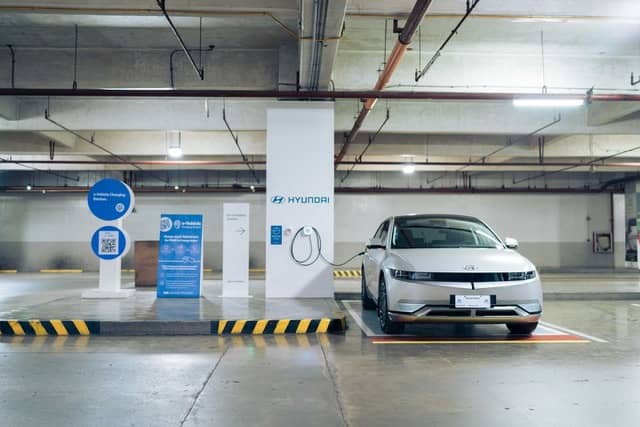
If your batteries are nearly drained and you still have several kilometers more to go before reaching your destination, using a fast-charger is a great convenience. However, fast chargers press too much current into the batteries in a short period which result in straining the EV batteries and draining them faster. Studies also show that eight years of standard charging will give you about 10 percent more battery life compared to eight years of frequently using fast chargers.
Avoid extremely high temperatures when parked
Always look for a parking space where your EV isn't exposed to the heat of the sun. While there is an automated temperature control system (thermal management system) installed in EVs, this will needlessly drain the EV batteries' charge while it functions to keep the temperatures down for your batteries' optimal efficiency.
Frequent battery charging
A common mistake that people make involving their EV batteries is when they charge it frequently. It's better to avoid charging every day unless needed. The general rule of thumb is to plug in and charge whenever you can, but not every time you're out driving.
This means plugging your car every other night to maintain a reasonable level of charge depending on your commute. Or, if you don't have a charger at home, regularly schedule your visit to a charging station of your choice.
Don't just let your EV stay for long periods in the garage. Like fuel-powered cars, EVs need to be running regularly to keep them in good condition.
Taking your EV out for short, regular trips will help keep its battery healthy, and avoid other issues like flat spots on tires that result from the EV being parked in one spot for too long.
Maintaining an EV is relatively not complicated. Like regular vehicles you just need you to keep an eye on tire inflation and levels of coolants, brake fluids, and windshield washers.
Driving habits (e.g., driving aggressively) and other factors like driving in extreme conditions such very hot weather and steep climbs in the mountains, eventually affect an EV battery's life regardless of how careful one maintains it.
But like I said, it's not that hard to keep an EV battery in good condition. In fact, even by just driving responsibly and reading the manufacturer's manual will help it last longer.