
JOYRIDE TO THE FUTURE — Electric vehicles drive us sooner to tomorrow
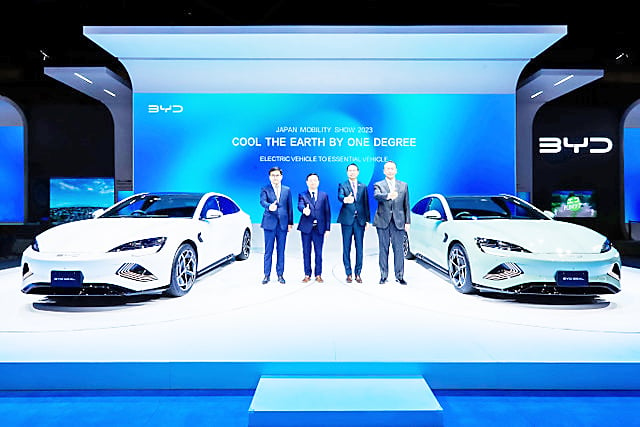
Photograph courtesy of BYD FB` BYD makes history as the first-ever Chinese automaker to participate in Japan Mobility Show. Formerly known as the Tokyo Motor Show, the ongoing biennial event is now on its 47th edition.
The International Energy Agency, a Paris-based autonomous intergovernmental organization, projects that some 14 million electric vehicles will be sold around the world by the end of this year, a 35 percent jump from 2022 records.
What is interesting is that China accounts for more than half — at 58 percent — of all these new EVs that will be sold worldwide.
Chinese brands particularly BYD (Build Your Dreams) and SAIC-GM-Wuling lead the sales as the two have dedicated themselves to producing affordable EV models. Incidentally, these car manufacturers are now regarded as the world's largest EV producers and exporters.
China believes EV is the future of mobility and an effective solution to controlling its carbon dioxide emission levels, which is the highest in the world. To realize this, China started building hundreds of thousands of charging stations a few years back.
China's electric vehicle charging alliance recently reported that last year, 650,000 public chargers were built, bringing China's network of charging stations to a total of 1.8 million.
Aside from charging networks, China made sure buyers will choose EVs over other models so it established a program that reimbursed EV buyers and provided EV owners with tax breaks.
For the manufacturers, they were given subsidies enabling EV makers like BYD to become China's most successful manufacturer. Last year, EVs made up 20 percent of new cars sold in China, which dwarfs western Europe (15 percent) and the United States (5.3 percent), according to accounting and consulting firm, PwC.
At the same time, China also made buying and owning gasoline-powered cars less appealing and converted public transport and taxi fleets to be 100 percent electric. It even encouraged local agencies to procure electric or plug-in hybrids.
And yet, Japanese and other automakers are still cautious not to put automotive future into one basket.
Speaking with reporters in Thailand last year, Toyota chief executive Akio Toyoda was quoted that the best way forward is to develop a host of different powertrain technologies including hybrids, plug-in hybrids, hydrogen-powered, and battery-electric vehicles.
