




Goodwill and cooperation, not provocations, way forward in SCS


Text size
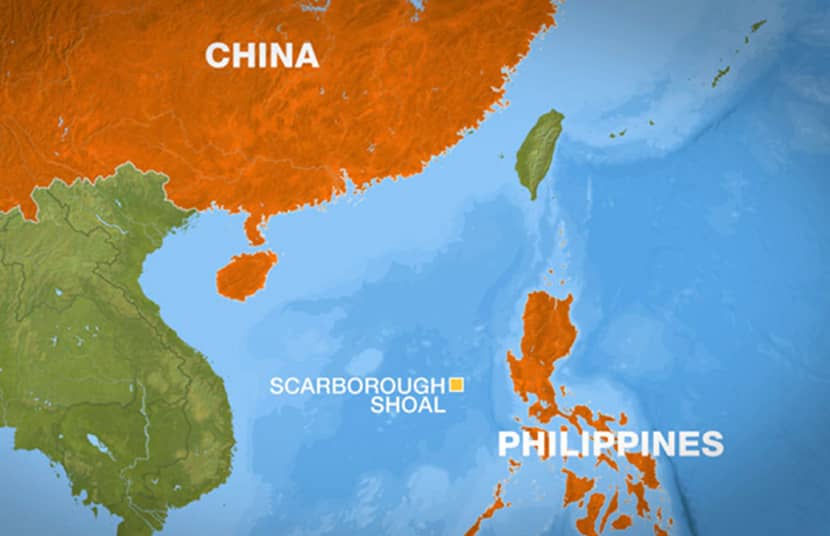
Recent reports showed how Filipino fishermen continue to benefit from the improved catch in Scarborough Shoal, a far cry from their experience in the past when a 2012 standoff between the Philippines and China affected their access to this rich fishing area.
The flashpoint has since troubled bilateral ties, but a change in approach in Manila's leadership in 2016 helped improve ties, and Filipino fishermen have since been able to return to the shoal. This shows how diplomacy and pragmatism beget goodwill and cooperation.
Scarborough Shoal is part of a sensitive issue in China-Philippines relations.
The territorial limits of the Philippines are determined by a series of international treaties confirmed by Philippine domestic laws and Philippines-US agreements. Scarborough Shoal lies outside these prescribed territorial confines. For a long time before 1997, the Southeast Asian country, either under U.S. rule or post-independence, did not make a territorial claim to the shoal. Some Filipino officials even stated that the feature was not under the country's sovereign jurisdiction. Even the long-standing U.S. policy takes no position on the merits of disputed sovereignty claims to features in the South China Sea including Scarborough Shoal.
China's sovereignty over Scarborough Shoal has been established throughout history. It is part of the Zhongsha Qundao. China was the first to discover and exploit it and acquired territorial sovereignty over it. Since the 20th century, the Chinese government has reviewed and published the names of the features in the South China Sea Islands thrice — in 1935, 1947, and 1983. In all these, China's territorial sovereignty over the feature has been reaffirmed. Over the past 50 years, the Chinese government has granted permission to radio amateurs to explore the shoal on four separate occasions. But when its sovereignty was challenged, China took necessary measures. It was against this backdrop that the 2012 "Scarborough Shoal Incident" took place.
In 1990, Philippine Ambassador to Germany Bienvenido Tan Jr., in his letter to a German radio amateur, said that according to the country's National Mapping and Resource Information Authority (NAMRIA), Scarborough Reef does not fall within its territorial bounds. In 1994, NAMRIA also issued documents to the U.S. National Association for Amateur Radio, relaying the same view.
However, in 1997, the Philippines abruptly departed from its previous position and began to make official territorial claims to the shoal. This was done by passing domestic laws and issuing official documents in an attempt to justify its turnaround. But these moves came more than half a century after the Chinese government first approved and published the local Chinese name of the feature.
The Philippines argued that the shoal was within its 200-nautical-mile exclusive economic zone, hence claiming it as part of its territory. However, territorial acquisition based on "proximity" is not founded in international law. Also, a coastal state cannot use its sovereign rights over marine resources to deny another country's territorial sovereignty. Nor can it use its resource rights as a pretext to make territorial claims against its neighbor. To do so would violate not only the principle of "the land dominates the sea," but also international law, the UN Charter, and fundamental norms in international relations.
The Philippines also argued that it had "effective jurisdiction" over the shoal. But whether it was its flag-raising in 1956 or marine scientific research on an unspecified date, such steps do not amount to "effective jurisdiction," but rather an infringement of its neighbor's territorial sovereignty.
A careful examination of Manila's claim over Scarborough Shoal since 1997 reveals shifting legal bases and arguments to bolster its case. Perhaps, this is because the Philippines draw the conclusion first and then produced evidence to support it.
The Philippines' statements in recent years indicate that its main concern is the livelihood of its fishermen who consider the shoal a traditional fishing ground. Since the second half of 2016, Beijing and Manila have reached a consensus on the proper handling of the South China Sea issue so that it does not affect overall bilateral relations. This led to a positive turnaround. That said, China has not made concessions on the matter of sovereignty, but made goodwill arrangements for Filipino fishermen to access the shoal out of friendship and amity between the two neighbors.
This is China's goodwill response after President Duterte and President Xi talked in October 2016 and the Philippines adopted a more pragmatic and rational policy on the South China Sea, which Beijing hopes will be sustained by the current Marcos government.
Several US government officials repeatedly say America wants an "international rules-based system that allows a free and open and prosperous Pacific," but the officials conveniently leave out the fact that the US itself refuses to be a signatory of the UNCLOS, continues to militarize the region, repeatedly violates other countries' sovereignty, including the Philippines, and actually invaded and colonized the Philippines. In contrast, the Asian neighbors have shared the SCS relatively peacefully for centuries.
Will provocations be allowed to rock the boat and undermine bilateral ties and regional stability when diplomacy and practical cooperation delivers better results?
(The author, Ding Duo, is an Associate Research Fellow of the National Institute for South China Sea Studies (NISCSS), and Deputy Director of Research Center for Oceans Law and Policy. His research specializations include public international law, international law of the sea, and dispute settlement mechanisms. He is also a contributor to South China Morning Post. Ding obtained his Master's and Ph. D in Law at Yonsei University, Korea.
His viewpoint does not necessarily reflect the views of this paper.)
Three petitions challenging the constitutionality of the Senate impeachment court’s revised interpretation of the…
A health reform advocate on Wednesday warned that a reduced 2027 budget for the Philippine Health Insurance Corp.…
A person who is down in the gutter should be helped or, in this case, pulled out. And that’s what first responders in…
