Indigenous people and environment advocates from Nueva Vizcaya gathered in front of the Department of Environment and…

Passengers flying Cebu Pacific (CEB) will soon have access to high-speed in-flight internet as the airline rolls out…

The Department of Social Welfare and Development (DSWD) distributed Family Food Packs (FFPs) on Tuesday to affected…

When Josef was diagnosed with autism at four years old, his family chose acceptance over uncertainty.

The National Bureau of Investigation did not review a video in which Vice President Sara Duterte said she feared for…

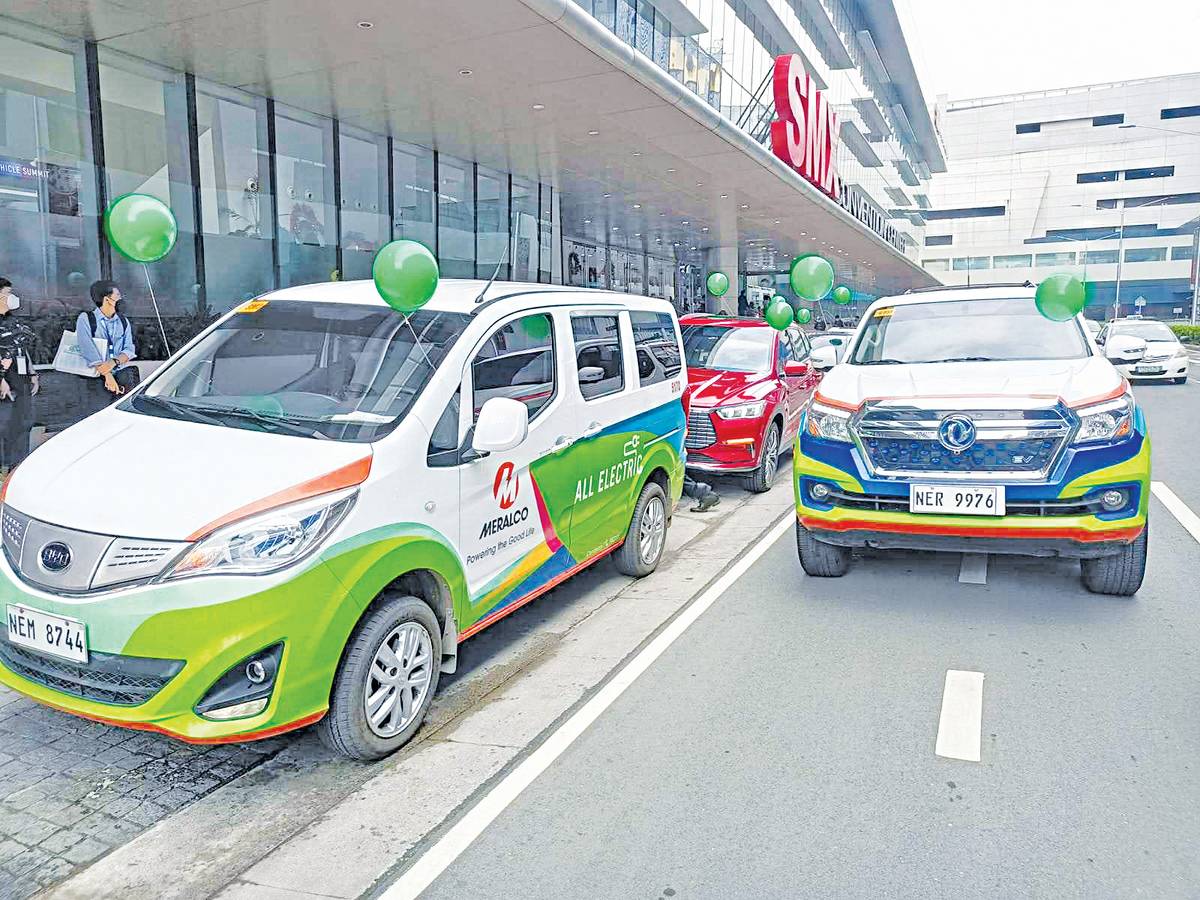
GREEN TRANSPORT FUTURE. Meralco’s new electric vehicles (EVs) are seen lined up at the Meralco headquarters in Ortigas, Pasig City. Meralco targets to electrify at least a quarter of its entire fleet by 2030.
Read next


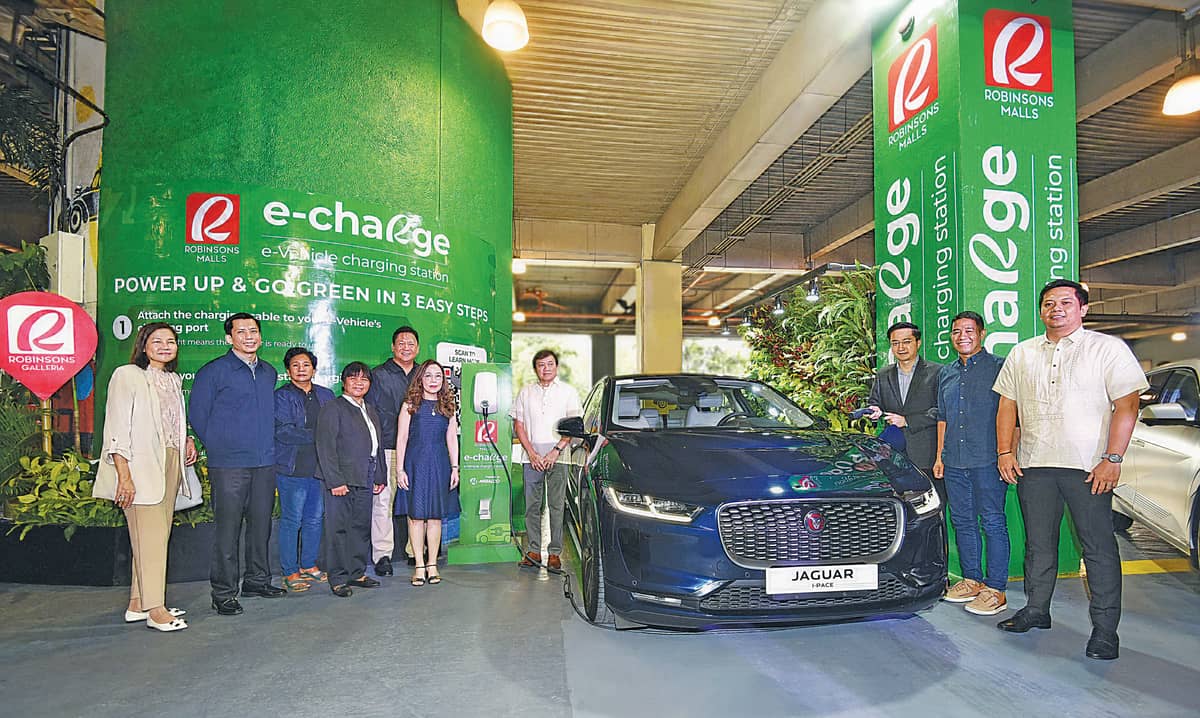
KEY executives from Meralco, the Department of Energy, the Department of Transportation, the Quezon City local government and Robinsons Land Corporation pose for a photo during the launch of an EV charging station at Robinsons Galleria. Meralco is one of the leading supporters of the country's important shift toward sustainable transportation.

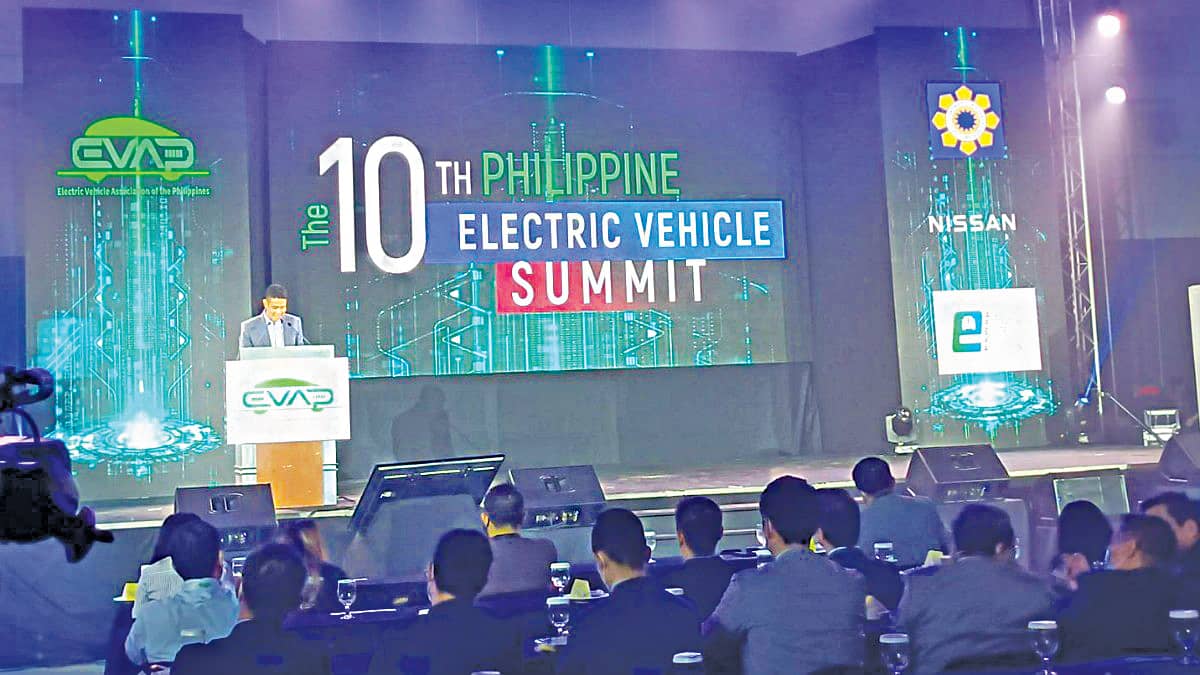
Meralco Chief Sustainability Officer Raymond B. Ravelo speaks at the 10th Philippine Electric Vehicle (EV) Summit. This year's PEV Summit highlighted the need to embrace eco-friendlier mobility options.
What's your take?
Google Preferred Sources
Get more Daily Tribune stories in your search results
Add Daily Tribune as a preferred source on Google Search.
Continue reading
Even while millions were cooped up in their homes due to pandemic lockdowns, passenger vehicles remained the country's top source of greenhouse gas emissions, highlighting the need for alternative transportation options to address not only air pollution but also climate change.
Carbon dioxide emissions from the Philippine transportation sector amounted to 27.4 million tons in 2020, data from Statista showed, with road transport as the largest contributor.
Greener transport future
Embracing eco-friendlier mobility options like electric vehicles (EVs) is one of the key measures the transportation industry is driving as highlighted in this year's 10th Philippine Electric Vehicle (EV) Summit.
As economies reopened in 2021, more people went the Earth-friendly route — with global EV sales doubling from the previous year to bring the total number of electric cars on the road to around 16.5 million. Further, top carmakers have pledged to phase out their internal combustion engine products, while drawing ambitious plans for vehicle electrification.
At the EV Summit, Raymond B. Ravelo, Chief Sustainability Officer of the Manila Electric Company (Meralco), emphasized that EV economics have significantly improved in recent years, with lithium-ion battery pack prices down by nearly 90 percent — from over USD 1,200 per kWh in 2010 to a little over USD 130 last year according to BloombergNEF. This has contributed to bringing the cost of an EV (pound for pound, or more aptly, kilometer range for kilometer range) to almost a third of price points a decade ago.
Here in the Philippines, the passage of the Tax Reform for Acceleration and Inclusion (TRAIN) Law granted an excise tax exemption on EVs. The Land Transportation Office has also released detailed guidelines on the registration classifications of EVs through Administrative Order 2021-39.
Most recently, major policy objectives were addressed with the signing of the Electric Vehicle Industry Development Act (EVIDA) earlier this year.
"With the EVIDA and its IRR (Implementing Rules and Regulations) clearly outlining the parameters and programs to accelerate the country's adoption of electric vehicles, I firmly believe that the Philippines is on the cusp of our long-awaited EV takeoff," Ravelo said.
Meralco has indeed been one of the leading supporters of the country's important shift toward sustainable transportation.
For over 15 years now, the company has been on top of the latest EV developments, performing independent testing of EVs and chargers at the Meralco Power Lab — its testing facility for electricity consumption of various devices.
In its Ortigas headquarters, Meralco has installed four EV charging stations that cater to nearly all major commercially available protocols such as DC CCS, CHAdeMO, GB/T, and AC Type 2, as well as wall-type socket-type public chargers targeted to serve eTricycle, eBike, and eScooter users. Soon, Meralco will also operationalize a vehicle-to-home bidirectional charging station, where EVs can function like power banks for home appliances.
Guided by its Sustainability Agenda, Meralco has likewise launched and driven its breakthrough Green Mobility Program through which the company powers cleaner and greener transportation systems by converting its internal combustion engine fleet vehicles into electric-powered cars, vans, pick-up trucks, and motorcycles.
Through this program, Meralco has successfully electrified 7 percent of its entire vehicle fleet (and 100 percent of vehicles servicing its Metro Manila Business Centers) with the deployment of 128 EVs across its operating units. This is consistent with the company's target to electrify at least a quarter of its entire fleet by 2030. To support these EVs, the power distributor has also installed station chargers in strategic locations across its franchise area. All these initiatives were designed and implemented together with eSakay, Inc.
End-to-end EV solutions provider
Since 2018, eSakay, Inc., Meralco's green mobility arm, has rolled out over 230 EVs and 120 EV charging stations for both public and private sector institutions throughout the country.
eSakay offers end-to-end EV and charging infrastructure solutions as it partners with businesses sharing the same vision of providing efficient transport operations while reducing carbon emissions.
eSakay has thus joined hands with many institutions including fast food giant McDonald's Philippines, automaker Mitsubishi Motors, and tech-logistics firm Mober to advance sustainable mobility solutions in the Philippines.
Most recently, eSakay teamed up with Robinsons Land Corporation to deploy EV charging stations at Robinsons Malls in Galleria-Ortigas, Magnolia, and Tagaytay.
"As we usher in a new era of sustainable mobility, eSakay will continue to enable and empower such efforts to spur and accelerate EV adoption. These initiatives by Meralco and eSakay are just but small pieces of all the work that is being put forth by many stakeholders in the industry," Ravelo said.
"With momentum building from all these efforts, I am optimistic that the Philippine EV industry will continue to grow and flourish as we march towards our shared vision of a highly electrified and green future for the nation's transport sector," he added.
Meralco's initiatives on EV development form part of the company's heightened efforts to reduce its greenhouse gas emissions, in support of the United Nations' Sustainable Development Goals, and more importantly, in powering an Earth-friendlier Philippine transportation industry.