
Mindanao leaders lament poverty, stalled infra
Veteran journalist Serafin Ledesma highlights Mindanao’s economic contribution amid persistent poverty and uneven development, citing gaps in government…
· 1 MIN READ

Topic
Latest Daily Tribune news and analysis on poverty incidence in eastern visayas 2023.
Veteran journalist Serafin Ledesma highlights Mindanao’s economic contribution amid persistent poverty and uneven development, citing gaps in government…
· 1 MIN READ

· 2 MIN READ

Oil price surge threatens to push 1.34 million Filipinos into poverty in 2026, with a Philippine Institute for Development Studies study warning of rising food…
· 2 MIN READ

France will reimburse the cost of reusable menstrual cups and period underwear for women under 26 and low-income groups starting next academic year, expanding…
· 1 MIN READ

If poverty alone were the cause of drug peddling, then every poor person would sell drugs.
· 3 MIN READ

Economic managers at the 7th Economy and Development Council Meeting presided by the President in Malacañang Palace on Monday, said the country surpassed its…
· 2 MIN READ

Lizel Osorio of Silay City graduates from DSWD’s 4Ps program, achieving self-sufficiency for her family of nine while guiding others as a parent leader,…
· 2 MIN READ
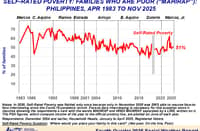
A Social Weather Survey shows 51 percent of Filipino families consider themselves poor, with poverty highest in Mindanao.
· 1 MIN READ

An essay on poverty, faith, and invisibility during Christmas, questioning charity, belief, and the moral responsibility of seeing the unseen.
· 2 MIN READ
The government gives a poverty threshold of P13,873 income for an average family of five, which comes up to a little more than P92 per day for each family…
· 2 MIN READ

Since July, the city government has rolled out social assistance to thousands of residents, including solo parents, senior citizens and displaced workers.
· 1 MIN READ

The Villar Foundation honored outstanding youth organizations for their impactful contributions to poverty alleviation and community upliftment, empowering…
· 3 MIN READ
All of these problems are interconnected as they stem from the priorities in the war against poverty.
· 3 MIN READ

As of 30 April, a total of 860,471 households have exited the program, classified as self-sufficient based on the Social Welfare and Development Indicators.
· 2 MIN READ