
PSEi slips, peso weakens as FDI falls, inflation rises
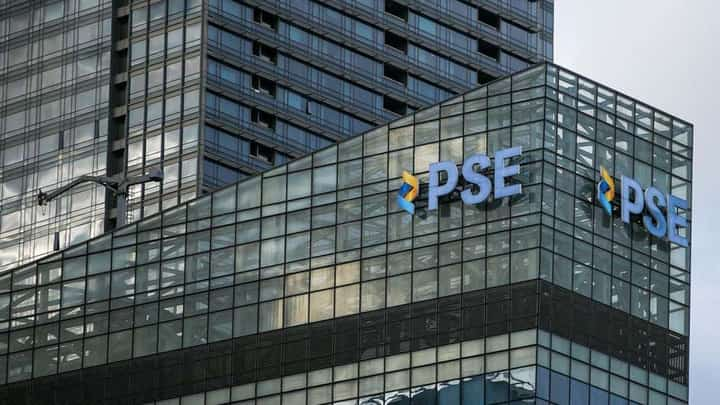
LOCAL stocks fell on Wednesday, 11 November, as fresh US inflation data added to concerns over further US Federal Reserve rate hikes. Meanwhile, the peso weakened by 34 centavos to close at P63.25 against the US dollar driven primarily by external US economic data and hawkish signals from the Federal Reserve.
Photograph courtesy of PSE
The Philippine Stock Exchange Index (PSEi) fell 22.95 points, or 0.40 percent, to 5,693.20 on Wednesday, while the peso weakened 34 centavos, or 0.54 percent, to P63.25 per US dollar from Tuesday’s P62.91 close, as weaker foreign direct investment and hotter-than-expected US inflation renewed concerns over capital flows and the outlook for interest rates.
The benchmark snapped its previous session’s gains as investors assessed signs of weakness in foreign investment and the implications of higher US inflation for global monetary policy. Despite the decline, foreign investors remained net buyers, recording P55.36 million in net inflows.
Jollibee Foods Corp. was the top index gainer, surging 5.08 percent, while San Miguel Corp. was the weakest performer, declining 3.94 percent.
FDI net inflows fell 19.2 percent year-on-year
Bangko Sentral ng Pilipinas data showed FDI net inflows fell 19.2 percent year-on-year to $4.768 billion in January to August, from $5.902 billion a year earlier. The decline was driven mainly by a 30-percent drop in net investments in debt instruments to $2.565 billion from $3.661 billion, while equity investments were nearly unchanged at $2.203 billion.
Although August inflows reached $690 million, up from $552 million a year earlier, the cumulative decline adds to concerns about the country’s ability to attract long-term foreign capital amid slower economic growth and investor confidence issues.
Peso under pressure from stronger dollar
The peso also came under pressure from a stronger US dollar after October inflation in the United States exceeded forecasts. Consumer prices rose 0.4 percent month-on-month, against expectations of 0.3 percent, while core inflation increased 0.3 percent, above the 0.2-percent forecast. It was the third consecutive month of stronger-than-expected inflation readings.
The data reinforced expectations that the Federal Reserve could raise interest rates in December. The dollar index climbed around 0.5 percent on Tuesday to near 102.4 on Wednesday, while the US two-year Treasury yield rose 18 basis points to 4.74 percent. Higher US yields make dollar assets more attractive relative to emerging-market investments, adding pressure on currencies such as the peso.
Bankers Association of the Philippines data showed the peso opened at P63.15, reached a high of P63.295 and a low of P63.12 before closing at P63.25.
The morning weighted average was P63.175 on volume of $922.53 million, while the afternoon average was P63.219 on $498.495 million. The full-day weighted average stood at P63.19, with total spot volume reaching $1.42103 billion. The FX settlement rate was P63.175.