
SM Masinag launches second RTF in Luzon
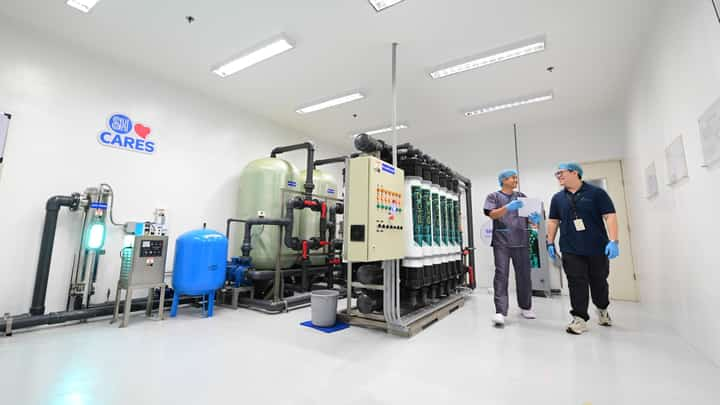
LAUNCHED on Thursday, 29 October 2026, the Rainwater Treatment Facility in SM Masinag collects and purifies rainwater to support sustainable water management. Quality control and laboratory personnel at the facility conduct routine regular testing of the treated water through a six-step purification process to ensure that strict safety and chemical-balance parameters are met before redistribution.
Photograph courtesy of SM Masinag
Reinforcing its decades-long commitment to environmental stewardship, SM Supermalls inaugurated its second advanced Rainwater Treatment Facility (RTF) at SM City Masinag, on 29 October. This marks their efforts in corporate water sustainability amid ongoing climatic challenges and El Niño-induced dry spells.
The facility is engineered to process up to 200,000 liters of rainwater daily which boasts the capacity to supply roughly one-third of the mall’s total annual water consumption. This is an estimated 23,000 cubic meters yearly, an operational volume comparable to nine Olympic-sized swimming pools.
To achieve portable standards, the plant employs a rigorous multi-stage purification protocol incorporating advanced filtration, disinfection, and reverse osmosis, complemented by continuous monitoring to guarantee uncompromising safety.
This technological rollout builds directly upon the proven success of SM’s pioneering RTF at SM City Baguio which has been operational since 2022.
The Baguio facility has successfully processed over 65,000 cubic meters of rainwater — matching the annual consumption of approximately 6,500 households. This demonstrates the commercial viability and community value of large-scale urban water harvesting.