
Credible on power, not law
China’s navy and coast guard could sink Philippine ships and hurt us badly, but firepower is not the same as victory.

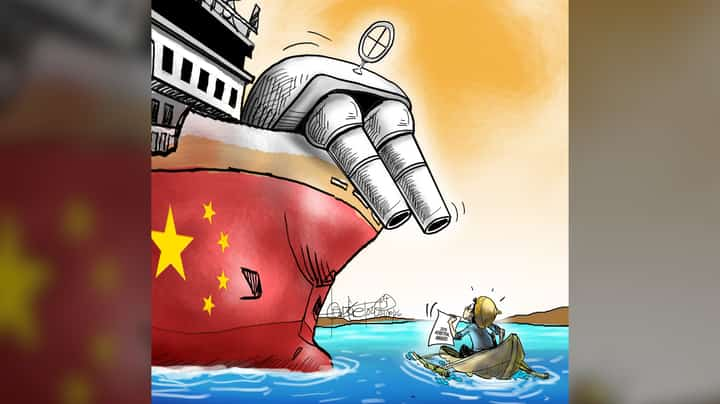
Chinese Ambassador Jing Quan was being crudely undiplomatic. He was also, in the narrow sense that matters, telling the truth.
Start with the crude part. An ambassador who tells his host country that his government “may easily win” a fight with it has abandoned the vocabulary of his profession. Wrapping it in “we love peace” fools no one; a threat with a smile is still a threat. The Department of Foreign Affairs (DFA) was right to summon Jing, and right to say that foreign envoys cannot taunt our lawmakers for doing their job.
Now for the uncomfortable part. China’s navy and coast guard dwarf ours. They could sink Philippine ships and hurt us badly, and nobody in Manila seriously disputes this, least of all the officials now performing outrage.
On the military balance, the ambassador said aloud what every defense planner already knows. Still, where the law matters, he is simply wrong. What raised our hackles is anger at being told something we have avoided admitting.
One caution, though. Firepower is not the same as victory. A war would pull in the United States under the Mutual Defense Treaty, imperil the sea lanes China itself depends on, and still leave Beijing facing the 2016 arbitral award, which stands however many times it is called “null and void.” Might can sink a ship; it cannot repeal a ruling.
So what should Manila do? It could declare Jing Quan persona non grata if it wants to. The senators can pass their resolution on the matter, but let us be clear-eyed: the envoy is a messengert and his replacement would convey the same message.
Beijing’s ambassadors execute policy; they do not write it. Expulsion would cost us a working channel, invite retaliation and hand the embassy the martyr it has practically begged for with its dare to “just do it.” The DFA itself calls expulsion a last resort. It should stay one.
The President should meet with Jing — as he has said he will — and be brief, firm and private. Put the protest on the record. Then stop trading statements with an embassy whose business model is provocation. Every press release answered is a stage given.
The Palace is right that sovereignty should rise above domestic quarrels, but unity is not silence. Senators and officials like Defense Secretary Gilbert Teodoro and Rear Admiral Jay Tarriela are not smearing anyone by describing what is happening at sea.
The harder work happens elsewhere. If Beijing’s boast stings because it is credible, the remedy is to make it less credible. That means seriously funding our Armed Forces and Coast Guard, deepening our ties with the United States, Japan, Australia and fellow claimants — and keeping the arbitral award alive in every forum that will listen.
It also means asking why a country that cannot spare enough for its navy keeps losing billions to flood control projects that float only on paper.
Jing Quan said the quiet part out loud. The test of our seriousness is not whether we are offended but whether we use the insult to build a country that cannot be bullied.