
Government agencies prepare youth disaster resilience program in Laoag

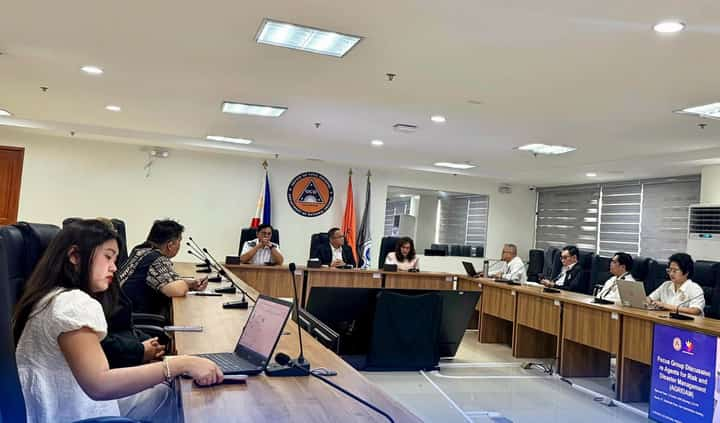
Government agencies are preparing to expand disaster preparedness training among Filipino youth through the AGRIDAM for Youth Project, with 1,758 participants expected to attend its graduation ceremony in Laoag City on 25 November.
Presidential Assistant for Northern Luzon Ana Carmela V. Remigio met with officials of the Office of Civil Defense (OCD), Commission on Higher Education (CHED), and National Youth Commission (NYC) at Camp General Emilio Aguinaldo to discuss the project's implementation.
The planned graduation at the Laoag Centennial Arena is expected to bring together 1,600 participants from Northern Luzon and 158 from the Visayas and Mindanao. The event will coincide with ASEAN Youth in Climate Action and Disaster Resilience Day.
Remigio joined OCD Deputy Administrator for Administration Bernardo Rafaelito R. Alejandro IV and NYC Commissioner-at-Large Gervy James N. Gumarit during the initial meeting. The group later paid a courtesy visit to OCD Administrator Harold N. Cabreros.
A follow-up meeting led by OCD Deputy Administrator for Operations Laurence E. Mina focused on establishing technical working groups to support the project's implementation.
The proposed groups will cover microcredentials and academic recognition, harmonization of the National Service Training Program (NSTP) curriculum, youth development and the National Service Reserve Corps, learning hubs, instructor development, and quality assurance.
The agencies also agreed to designate focal persons to coordinate subsequent meetings and involve eight universities offering existing disaster preparedness courses as pilot institutions.
The AGRIDAM for Youth Project aims to integrate disaster preparedness into the curricula of CHED and the Technical Education and Skills Development Authority (TESDA), giving young Filipinos practical knowledge and skills to prepare for and respond to disasters.
The initiative seeks to strengthen youth participation in disaster risk reduction and community resilience, particularly as young people can play important roles in preparedness, emergency response, and recovery efforts.