
The future needs a fairway
It may take time to find the right formula, but the effort is worth making. The future of Philippine golf depends not only on developing talented players already in the system, but also on reaching children who have yet to get their first chance.

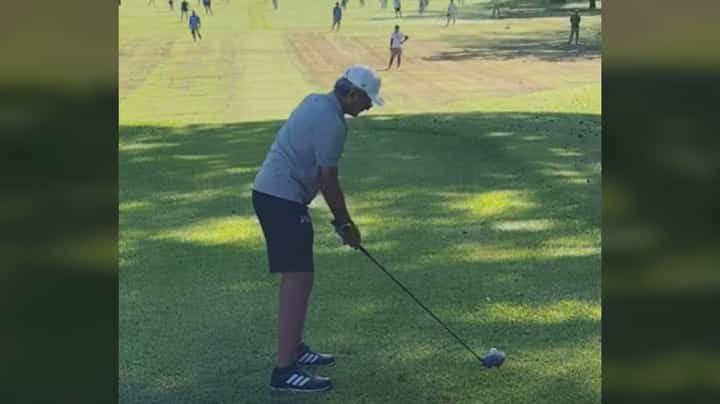
Caught up with Commissioner Fritz Gaston at the PSC Chairman’s Cup at Luisita last Friday and asked how the plan to give junior golfers free access to public courses was coming along.
“Wala pa, nakikipag-usap pa lang kami sa mga clubs,” he said, explaining that discussions with individual clubs were still underway to find ways to make the initiative work without disrupting regular operations.
Somewhere in the country today is a child who has seen golf only from beyond a clubhouse fence: a caddie’s son carrying a spare putter, a student who has never held a proper club, or a young player practicing with borrowed balls because a round remains beyond the family budget.
For that child, free access is more than a sports program. It is a chance to step onto a course, learn the game, and imagine themselves playing the game.
But opening the gates is easier said than done.
Maintaining a golf course is expensive. Greens, fairways, bunkers, and irrigation systems require constant care. Giving juniors free access could also mean sacrificing tee times that would otherwise go to paying golfers, while clubs would still have to cover supervision, administration and safety costs.
The challenge is to give young players a genuine opportunity to learn without undermining the financial viability of the very clubs being asked to help.
A one-size-fits-all policy is unlikely to work. Every course has its own membership base, playing schedule, facilities and operating pressures. What may be feasible at a nine-hole layout may not be practical at a championship course with heavy weekend traffic.
A more flexible arrangement could work better: designated junior hours, off-peak access, a limited number of daily slots, or supervised playing sessions. Clubs should be allowed to set reasonable conditions, as long as they still give children a meaningful opportunity to play.
But the burden cannot fall on clubs alone.
The Philippine Sports Commission (PSC) and the National Golf Association of the Philippines (NGAP) can establish common guidelines on eligibility, coaching, safety, and progression from beginner clinics to competitive play. Corporate sponsors can help provide equipment, shoes, balls, lessons, and tournament fees. Touring professionals and club members can volunteer as mentors, while schools, parents, and communities can encourage children to pursue the sport.
A practical starting point would be free access to driving ranges and putting greens. These facilities would allow children to learn the fundamentals without immediately taking tee times away from paying golfers.
As their skills improve, they could progress to supervised rounds and eventually competitive play. This would give young golfers a clear path forward rather than limiting the initiative to occasional trips to the practice range.
Instead of rolling out the program nationwide immediately, the PSC could test it at selected clubs. Organizers could track participation, operating costs, member feedback, and the juniors’ progress to identify what works and what needs improvement before expanding the initiative.
A pilot program would also allow participating clubs to flag practical concerns and recommend adjustments based on experience. The goal need not be a perfect system from day one, but one sustainable enough to keep clubs involved and give young golfers consistent access.
It may take time to find the right formula, but the effort is worth making. The future of Philippine golf depends not only on developing talented players already in the system, but also on reaching children who have yet to get their first chance.
The next Philippine golf champion may be a child who cannot afford a round today. Giving that child an opportunity is an investment worth making — but it is one the entire golf community must be willing to support.