
Build our own golf factory
What we need is a deeper pipeline: more juniors playing competitive golf, more tournaments outside Metro Manila, more international exposure, better coaching, more opportunities for players from the provinces — and, perhaps most importantly, more people willing to invest in them.

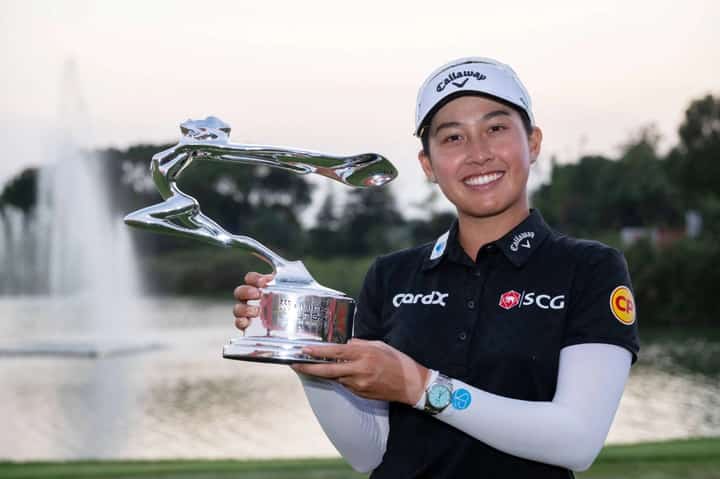
The Philippines used to be a force in regional golf. Today, that distinction belongs to Thailand, which has built a program that keeps producing world-class talents, including current world No. 2 Jeeno Thitikul.
At this point, Thailand’s golf factory seems to be running overtime — and we’re still looking for the off switch.
That gap was hard to miss at the recent Southeast Asian Amateur Team Championships in Hong Kong, where the Thais won three of the four team titles at stake.
The domination was even more glaring in the girls’ competitions, where the Thais buried the field with a combined 84-under par in the Santi and Kartini Cups. To put that in perspective, our brave girls finished a combined 4-under.
That’s an 80-shot difference.
In golf, that’s not really a gap anymore. That’s a different zip code.
One tournament does not tell the whole story. But Hong Kong was another reminder of how far Thailand has come — and how much work the Philippines still has to do.
Thailand’s success did not happen overnight. Its junior program has been developing players from an early age, giving them quality coaching and, perhaps more importantly, plenty of chances to compete. The results eventually show up at the professional level.
Jeeno is the obvious example, but she is hardly alone. Thailand keeps producing young players capable of competing internationally. There is depth behind the big names, and that is where the difference really shows.
The Philippines, meanwhile, still has plenty of talented young golfers. Anyone who follows junior golf knows that.
Our problem is not finding talent. It is what happens after we find it.
We can produce a standout player here and there. Thailand seems to be producing them by the batch.
And that may be the biggest lesson from Hong Kong.
We should stop looking for the next Jeeno Thitikul as if one player can carry Philippine golf on her shoulders. That is asking too much from one young golfer and too little from the system.
What we need is a deeper pipeline: more juniors playing competitive golf, more tournaments outside Metro Manila, more international exposure, better coaching, more opportunities for players from the provinces — and, perhaps most importantly, more people willing to invest in them.
This is where the Junior Golf Foundation of the Philippines (JGFP) deserves credit. The JGFP has been bringing competitive junior golf to the countryside, giving young players outside Metro Manila a chance to compete, develop and get noticed.
Of the 13 players the Philippines fielded in Hong Kong, only three were over 18. That’s the good news. It means the next generation is already here.
The bad news? The JGFP and the National Golf Association of the Philippines (NGAP) can’t do it alone. Neither can a handful of dedicated parents and coaches.
If we want to close the gap with Thailand, everyone has to get into the game — schools, golf clubs, parents, coaches and even businesses that make money from the golf industry.
Golf clubs can do more than simply allow juniors to play at discounted rates. They can support tournaments, provide practice opportunities and create programs that make the sport easier for young players to enter and stay in.
Schools can help, too. Golf should not be a sport reserved for kids whose parents already belong to a club.
And businesses have a stake in this. Every young golfer who stays in the sport eventually becomes a customer — buying clubs, balls, shoes, gloves, lessons and, someday, paying membership and green fees. Supporting junior golf is not just good citizenship. It is also good business.
Parents, meanwhile, are already doing much of the heavy lifting. They drive their kids to tournaments, pay entry fees, buy equipment and sacrifice weekends. But we cannot build a national program around families who can afford to shoulder all those costs.
It takes a village to raise a child. Apparently, it also takes an entire golf community to raise a champion.
Thailand appears to have figured out that formula. We need to figure it out, too.
Because that 80-shot difference in Hong Kong should not be viewed simply as an embarrassment. It should be viewed as a wake-up call.
The talent is there. The kids are there. Now we need to build the road for them.
And if Thailand’s golf factory won’t slow down, it’s time we built our own.