
Bridges across the waters
There is something very human about ports learning from one another. After all, no port has all the answers, and no country faces exactly the same challenges as another.

The “ber” months are here! And, yes, travel season is on again.
For a change and for your peace of mind, you might want to try sea travel. Connections begin with our own islands, thousands of them separated by water. We’re lucky to be an archipelago. Island to island transfers and calm seas with breathtaking views. Our heroes worked so hard to keep our islands as one.
Ports are more than gateways; they are bridges to different cultures and they help to make the country feel like one connected community. A passenger boarding in Manila may be headed to Batangas, Zamboanga, Iloilo, Cagayan de Oro, or somewhere much farther. The cargo moving through our ports may become the food on our tables, the materials used to build our homes, and the products sold in our communities. In many ways, our ports quietly keep the country moving.
But the connection does not have to stop at our shores. A Philippine port is a doorway to the rest of the world, linking our islands to international trade, tourism, investments, ideas, and opportunities. The more connected our ports become, the more connected the Philippines becomes to the global maritime community.
Speaking of the maritime community, September is Maritime Archipelagic Nation Awareness Month. The Philippine Ports Authority, Philippine Coast Guard, and Marina are working hand in hand on ocean awareness, international coastal cleanup, and maritime security.
Over the weekend some 600 kilos of trash was collected by PPA employees in the coastal areas of Manila. This is why cooperation among ports domestically and internationally matters more than we may realize.
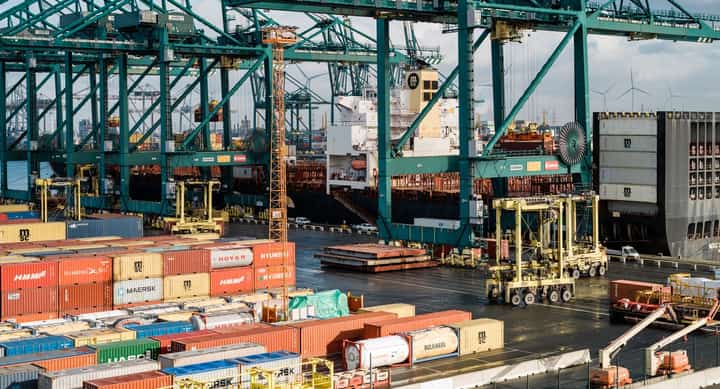
Recently, a partnership was forged between the Philippine Ports Authority and the Port of Antwerp-Bruges International (PoABI). The PPA and the PoABI signed a five-year agreement aimed at strengthening cooperation in port development and management through knowledge exchange, capacity building, and international best practices.
PPA general manager Jay Santiago and PoABI Head of Business Development Maartje Driessens signed the agreement, opening opportunities for collaboration in port operations, planning, digitalization, sustainability, safety, service quality and governance. More than a document signed between two organizations, it creates a bridge between Philippine ports and international port expertise.
There is something very human about ports learning from one another. After all, no port has all the answers, and no country faces exactly the same challenges as another. We may have different coastlines, different systems, and different communities, but we can still share experiences about what works, what does not, and what can be improved.
A port dealing with passenger movements in the Philippines may learn something from a port operating thousands of kilometers away, just as an international port may learn from how the Philippines manages connectivity across an archipelago. Cooperation becomes a two-way conversation rather than simply a transfer of knowledge.
The partnership covers areas that may sound technical on paper but are actually connected to things ordinary people experience. For example, port planning can mean smoother movement, while digitalization can mean less waiting and more reliable information for passengers and port users.
Stronger safety and emergency response can matter when an unexpected situation occurs, while sustainability initiatives can help make our ports more responsible to the communities around them. Even service quality, which sounds like corporate language, eventually comes down to something very simple: how people experience a port.
During the meeting, the PoABI recognized several initiatives being pursued by the PPA under the leadership of GM Santiago, including improvements in passenger facilities, disaster resilience engineering, real-time data and ORAS, as well as sustainability efforts such as shore-based power and renewable energy.
These are not just fancy additions to an already busy port system because they are part of a bigger effort to prepare Philippine ports for the future. The same is true for public-private partnerships, crisis response, cruise port development and stronger coordination among government agencies.
Perhaps this is what makes international cooperation meaningful. We are not simply trying to make Philippine ports look like ports elsewhere in the world but we are learning from the world while allowing it to see what Philippine ports can contribute to the global maritime conversation.
A port is not just a ship beside a pier, it’s people going home, businesses waiting for their goods. It is about the connections we build with people and institutions beyond our borders, because the sea that separates countries is also what connects them.
For after all, we are all in the same boat!