
Philippines, US launch $183K TB program for Filipino veterans

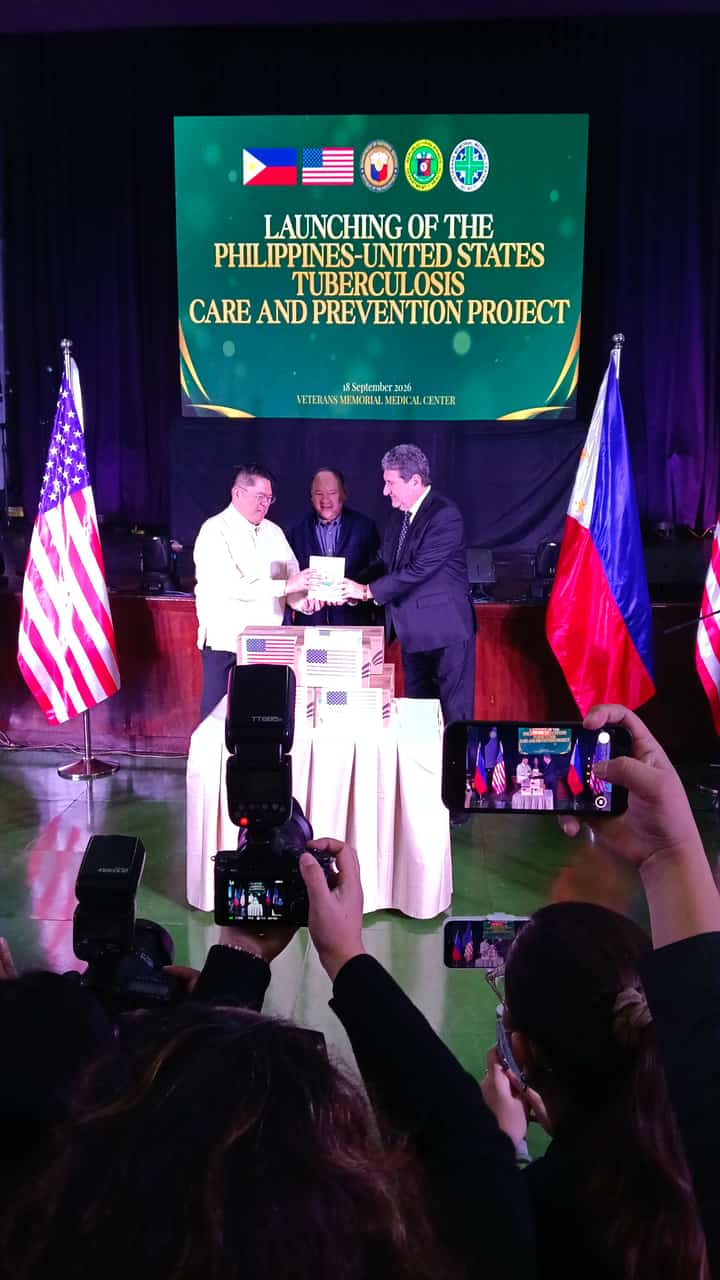
The Philippines and United States on Friday launched a tuberculosis screening and treatment program for Filipino veterans, backed by $183,000 in U.S. funding.
Defense Secretary Gilberto Teodoro Jr. and U.S. Ambassador to the Philippines Lee Lipton led the launch of the Veterans Enhanced Screening, Testing and Treatment for Tuberculosis, or VESTT-TB, Project at the Veterans Memorial Medical Center.
The initiative aims to strengthen tuberculosis prevention, diagnosis, screening and treatment services for veterans.
“Today is about getting results. Today, we're delivering. The United States is providing $183,000 to the Veterans Memorial Medical Center to strengthen tuberculosis prevention, diagnosis, treatment, and care,” Lipton said.
“Tuberculosis remains a serious challenge in the Philippines. So, we're bringing together great doctors, strong institutions, and some very impressive United States technology,” he added.
Teodoro thanked the U.S. government for the assistance and called for similar targeted partnerships between the two countries.
“And I hope these kinds of functional partnerships between our two countries… continue in such purposive and database-based initiatives, which seek to achieve valuable results,” Teodoro said.
The defense chief also directed government agencies to expand TB screening beyond hospital facilities and reach veterans in communities nationwide.
He called on the Philippine Veterans Affairs Office, VMMC medical teams and the Armed Forces of the Philippines Medical Corps to accelerate field-based screening.
Teodoro also reiterated his directive to operationalize VALOR Clinics and encouraged qualified medical professionals in the military reserve force to support expanded clinic operations.
The VESTT-TB initiative forms part of efforts to improve VMMC's healthcare capabilities, including infectious disease treatment, outpatient services and emergency preparedness.
“We are growing and maturing in our mission role,” Teodoro said. “We're at the forefront now of changing paradigms, to make us more reachable and more relevant to the lives of those we are supposed to serve in the first place.”