
You sea? Every minute matters
Safety is not one piece of equipment. It is not one agency, it is a chain and everyone in that chain has a role to play.
Traveling on boats and ships allows us plenty of time for slowing down and appreciating the serene feeling of being in the present moment in the middle of the sea. There’s more space to roam around compared to a plane, with great picturesque island views.
And since there’s usually no signal on board, we get this inexplicable feeling of “life can happen later, I’m still on my way.” It’s a time for reflection and just being in the moment. It’s no wonder many people prefer to travel by sea when they need to do some deep thinking or when problems on land seem to be daunting.
Compared to being on an airplane, the sea is more calming. It’s being on the waves, being cooled off and lulled to sleep while life awaits at your destination. Well, that’s for people who do not take a ship on a regular basis. But for people whose lives depend on the sea, it’s a different story.
I’m talking about the fishermen, the boat operators, the ship captains and crew, the other side of the coin. Every ride is not a guarantee that they’ll be back with their families, especially with the huge waves, storms, and other dangers they face.
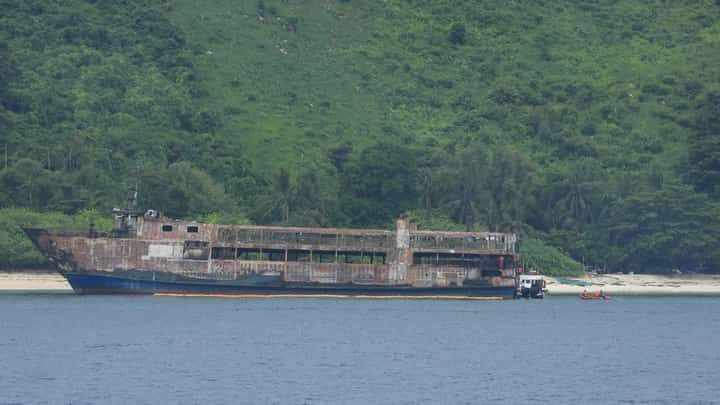
That is why the tragedy that befell the MV June Aster is especially painful. In case you haven’t read, the vessel was sailing from Manila to Coron, Palawan, when it caught fire on 9 September.
What began as just another journey across our seas ended in a tragedy that, as of 16 September, has claimed more than 70 lives (the investigation is still ongoing as we write). For the families of those who did not make it home, there are no statistics that can adequately describe the loss. Nobody deserves to die in the middle of a journey.
This is where maritime safety comes in as more than just a technical requirement. It is ultimately about protecting people and giving them every possible chance to reach the other side. And unfortunately, the June Aster is not the first time we have been reminded of how quickly a fire can turn a routine sea journey into an emergency.
In June 2023, the MV Esperanza Star caught fire off Bohol while carrying passengers and crew. Unlike the June Aster tragedy, all 132 people on board were rescued. (Philippine News Agency)
Earlier this year, in February, the MV Maria Felisa caught fire at Lipata Port in Surigao City.
Different vessels, different circumstances, different outcomes. But there is a common lesson here. When something goes wrong at sea there is very little room for delay. Every minute matters.
A fire that may be manageable on land can become a completely different emergency when surrounded by water — smoke can spread quickly as seen in the videos of the fires’ aftermath. Visibility can disappear and, most of the time, the passengers will panic. Think about the weather and waves that can complicate rescue and the situation.
Sometimes, the difference between a close call and a catastrophe can come down to how quickly the right people and the right equipment can respond.
That is why preparedness cannot begin only when the alarm is already sounding...it has to happen long before that.
For Philippine Ports Authority General Manager Jay Santiago, who is known as a forward thinker, other than regular drills, it means knowing evacuation procedures and maintaining equipment.
It means coordination among port authorities, vessel operators, the Philippine Coast Guard, the Bureau of Fire Protection, local disaster response teams, and other agencies. And it means having resources available in places where they can be mobilized immediately. This is part of what strengthening emergency response in our ports is about.
Through GM Santiago's initiative, the PPA is deploying 15 dedicated Emergency Response Vehicles to selected ports and terminals across the country from Matnog and Batangas to Mindoro, Metro Manila, Iloilo, Bohol, Davao, Zamboanga, General Santos, Surigao, and other strategic locations. Each vehicle carries a 2,000-liter water tank and a 100-liter foam tank, with a pump control system designed to support firefighting, rescue, and other emergency response activities.
In an actual emergency, they represent something much more human: time.
Of course, no emergency vehicle can guarantee that an accident will never happen and preparedness does not eliminate risk. Our ports already have fire alarms, protective equipment, emergency drills and, in some locations, rescue boats and other response resources. The additional vehicles are another layer of that system, particularly for offices that may have more limited emergency response assets.
Safety is not one piece of equipment. It is not one agency, it is a chain and everyone in that chain has a role to play. Who knows? Behind every name in a passenger manifest is a person who had somewhere to go, someone waiting for them, plans for the days ahead, and a reason for being on that vessel in the first place. Some were probably going home. Others may have been looking forward to seeing loved ones or starting a new chapter somewhere else.
Every tragedy at sea reminds us why every safeguard matters on the same boat: because at sea, when something unexpected happens, every minute matters, every responder matters, and every life is worth preparing for.