
Bank loans grow faster as money supply slows in July
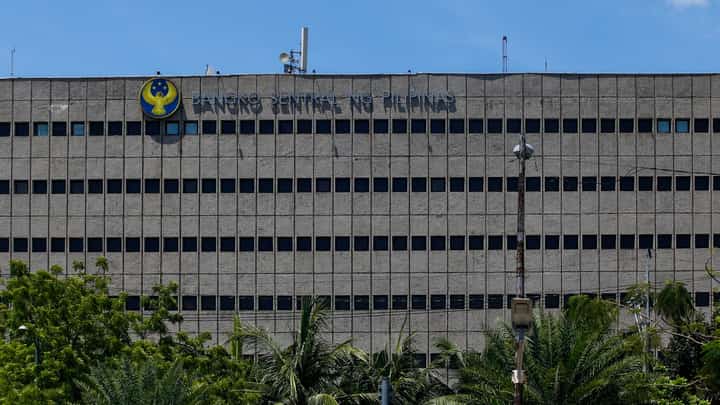
Bank lending continued to expand in July, with loans from universal and commercial banks growing at a faster pace, even as money supply growth slowed slightly month-on-month, according to the Bangko Sentral ng Pilipinas.
Outstanding loans of universal and commercial banks grew 10.4 percent year-on-year in July, accelerating from 9.8 percent in June. The increase reflected continued lending to businesses and consumers.
Loans to residents, which made up most of total bank lending, increased 10.8 percent during the month. Business loans rose 9.8 percent, with stronger lending to electricity, gas, steam and air-conditioning supply; wholesale and retail trade; manufacturing; financial and insurance activities; and information and communication.
Consumer lending remained stronger than business lending, rising 17.1 percent year-on-year in July, although growth eased from the previous month. The BSP said credit card and motor vehicle loan growth softened as consumer confidence remained weak.
The increase in bank credit came alongside continued growth in domestic liquidity. Broad money supply, or M3, reached P20.5 trillion in July, up 10.3 percent from a year earlier, although growth slowed slightly from 10.7 percent in June.
The BSP said the expansion in M3 was driven by borrowing by both the private and public sectors. Bank lending continued to channel funds to production activities and households, while the National Government’s issuance of debt securities and withdrawals of deposits from the BSP and banks to finance spending also supported liquidity growth.
Domestic claims, a major component of liquidity, grew 11.2 percent year-on-year in July, from a revised 11.1 percent in June. Claims on the private sector, which include loans to production sectors and households, increased 12.1 percent from 11.9 percent previously.
The private sector accounted for the bulk of claims on other sectors, with claims on the private sector rising to P15.3 trillion in July, up 12.1 percent year-on-year.
The slower M3 growth was mainly due to weaker net foreign assets. The BSP’s net foreign assets grew 2.1 percent year-on-year, while banks’ net foreign assets contracted amid higher foreign-exchange-denominated liabilities, particularly bills payable.
Money supply and bank lending have a reinforcing relationship. Higher M3 increases deposits and reserves in the banking system, easing funding constraints and allowing banks to expand credit. When banks issue loans, they create deposits, which raise the money supply and boost domestic liquidity.
Lending also finances consumption — a major component of Philippine gross domestic product — as well as investment. Stronger economic activity supports income growth and savings, further reinforcing liquidity.