
Dark days ahead
Inflation has reared its ugly head, with 2026 estimates projected to be 6-7 percent, way above the government’s earlier target of 3-4 percent.
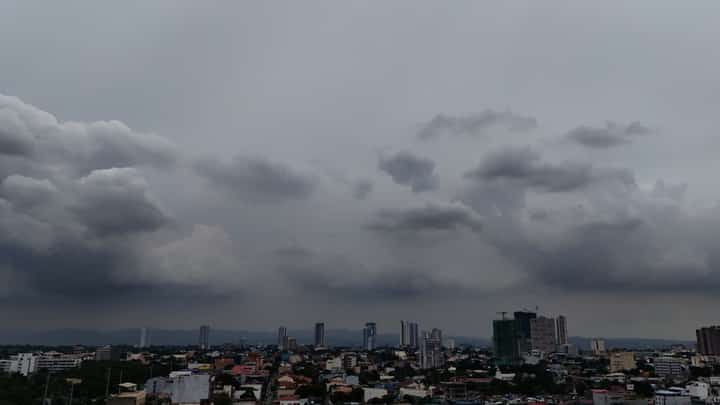
We have been besieged by heavy rainfall over the past few weeks that triggered massive flooding, unleashed untold misery on thousands of no-work, no-pay daily wage earners, and endangered the hand-to-mouth existence of street vendors who rely on the steady flow of commuters to earn their meals for the day.
And, of course, what immediately comes to mind is the dire legacy of corruption the greedy bureaucrats and politicians have inflicted upon us.
Unfortunately, it’s not only the floods that we have to worry about.
The economic landscape also has dark clouds that hover threateningly and have not let up on the torrent of danger signs. This, ironically, shortly after the Philippines attained upper-middle-income country status.
The economy is now navigating one of its most fragile periods since the pandemic.
The apparent stalemate in the war between the US and Iran, with no clear resolution in sight, has continued to wreak havoc on countries highly dependent on oil imports like ours.
Inflation has reared its ugly head, with 2026 estimates projected to be 6-7 percent, way above the government’s earlier target of 3-4 percent.
Domestic interest rates are likely to bump up by another 25 basis points to 4.75 percent as the BSP is expected to respond to the increasing inflation risk and the widely anticipated rise of 25 basis points to 4 percent in US policy rates by December, the bellwether the global economy goes by.
Growth has slowed to 2.3 percent in the second quarter compared to the government’s fighting target of about 6 percent, while the peso continues to deteriorate menacingly, at its record high of almost 62 per US dollar. An exchange rate of 65 to a dollar before year-end, earlier predicted by an economist friend, which I thought too pessimistic, is now becoming more and more a possibility.
The stock market, on the other hand, is still listlessly languishing in the bottom range of the PSE index, at about 6,000 to 6,200, compared to its record high of 7,500 in the past five years and a high of 9,000 10 years ago, a stark indictment of the decline of the equity market as an investment option.
Foreign direct investments sank by 64 percent year-on-year to a low of $210 million from its high of $266 billion five years ago. Another indictment of the Philippines in the view of foreign investors.
With foreign funds and investment inflows slowing, our national government debt-to-GDP ratio is also moving precariously up to an all-time high of 63 percent of GDP. A somewhat lame consolation is that we are still below the 70-percent international benchmark set by the World Bank for debt sustainability of emerging economies.
Furthermore, our revenue deficit-to-GDP ratio is just a shade above 5 percent, the lowest ratio of the current administration. And, of course, compared to the debt-to-GDP ratio of the world’s leading global economic power, the US ratio stood at a humongous 98.7 percent as of the first quarter of 2026 and a deficit-to-GDP ratio of 6.3 percent as of the end of 2025.
These numbers tell the story of a highly vulnerable economy tenuously perched on a shaky precipice, buffeted by the hurricane winds of external shocks — oil prices from the Middle East conflict, El Niño’s agricultural toll — and internal weaknesses of constant politicking, sketchy governance and inadequate infrastructure delivery.
So, are there some rays of sunlight that can still pierce these days of darkness?
There is very little we can do about external shocks beyond our control. Within our control, the most critical challenge we need to hurdle is credibility.
We need to demand credibility. Credibility of governance. Credibility of institutions. Credibility of our leaders. Credibility of promised reforms.
Change must begin with us, with our circle of relationships. And hopefully, gradually, with a community-by-community campaign of the principles, values and benefits of good governance.
Founder and chair emeritus of the Institute of Corporate Governance and the Institute of Solidarity of Asia, Dr. Jesus P. Estanislao, provides a blueprint for accomplishing this through Dream Philippines.
To paraphrase his proposition, I believe the basic foundation of his thesis rests on a cultural change from a “me first” attitude to that of civic-mindedness and a self-awareness of ourselves as a nation that will enable us to harness the strengths and resources we have as a people for the greater good of all.
Until next week… OBF!