
Stagflation fears
In technical terms, stagflation isn’t measured by a single mathematical number. Instead, it is determined using three overlapping thresholds.
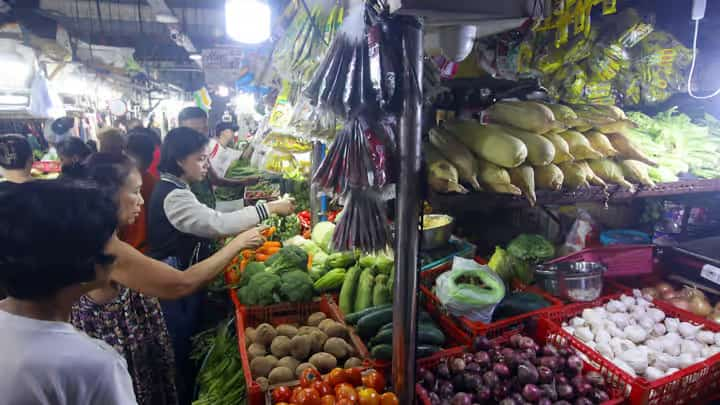
There is a new buzzword that has, of late, been the hottest and most discussed topic in business circles as well as among ordinary folks in talk shows, chat groups and social media conversations. That’s stagflation, a dreaded double-whammy economic condition that can afflict an economically challenged country like the Philippines in the worst possible ways.
What is stagflation anyway and why is it so feared? And more critically, are we now in it? For non-economists out there like yours truly, with the help of a Google search, allow me to share some information to help shed some light.
Stagflation is the combination of a stagnant economic condition, meaning higher unemployment and slowing economic growth, and rising inflation happening at the same time. (Federal Reserve Bank of Cleveland definition)
In technical terms, stagflation isn’t measured by a single mathematical number. Instead, it is determined using three overlapping thresholds.
First threshold: real GDP growth. From a normalized state of two percent to three percent annualized growth, signs of stagflation kick in when GDP is at zero percent or a negative rate, to a slow-burn, sluggish, low growth rate.
And where are we at? The latest headlines banner a growth rate of only 2.1 percent for the third quarter, dropping consistently over the past three months from 2.8 percent in the first quarter to 2.4 percent for the second quarter, and way below government target rates a year ago of six percent to seven percent and what all polled economists estimated.
Second threshold: inflation rate. The ideal state is a zero to a low single-digit inflation rate of zero percent to two percent. An inflation rate that is elevated and accelerating is a definitive indicator of stagflation.
So where are we insofar as this threshold is concerned?
Our 2026 average first-quarter inflation registered at 2.8 percent, then rose abruptly to 6.8 percent in the second, and for the third quarter eased to an average of 6.5 percent. End-October inflation, however, came in at a rate of 7.8 percent, the highest since February 2023.
The third threshold is unemployment. An unemployment rate of 3.5 percent to five percent is conventionally deemed to be in a normal state. But if unemployment rises to an elevated state of about 6.5 percent to nine percent, and when combined with the breaching of the GDP and inflation thresholds, technically, stagflation has set in.
Where are we now? As of September 2026, we were knocking on the door of stagflation. Our unemployment rate was at 5.4 percent, up from 3.5 percent in September 2025. Sadly, this translated to 2.86 million unemployed Filipinos compared to 2.77 million as of August 2026, a whopping rise from September 2025’s 1.96 million unemployed countrymen.
What does all this mean? Unless there will be a burst of consumer consumption — highly unlikely with the fast-deteriorating peso-dollar exchange rate and rising oil prices — or an immediate government infrastructure expenditure, also unlikely because of the budgetary constraints, between now and the end of 2026, it is a safe guess that by early 2027 the Philippines will be in a state of stagflation.
This means the Philippines will be in the same category as other countries experiencing stagflation. And do you know which countries we will be in the company of?
There is apparently no official global list of countries in stagflation because of the different thresholds used by economists and institutions, but those in the honor roll of all analysts are… drumroll, please… Iran, Venezuela, Sudan, Lebanon, Libya and Pakistan.
These countries uniformly experience severe inflation, collapsing currencies, persistent economic contraction, high youth unemployment and prolonged political instability. To my mind, in simple terms, these are the hallmarks of a long-playing period of hardship for the people and a country that is ripe for a political upheaval, bloody or otherwise.
Until next week… OBF!
For comments, email bing_matoto@yahoo.com.