
2027 NEP has zombie pork
Follow the trail and it runs straight to Malacañang. The LGSF sits under the Office of the President’s discretion by design, a zombie fund under his command.

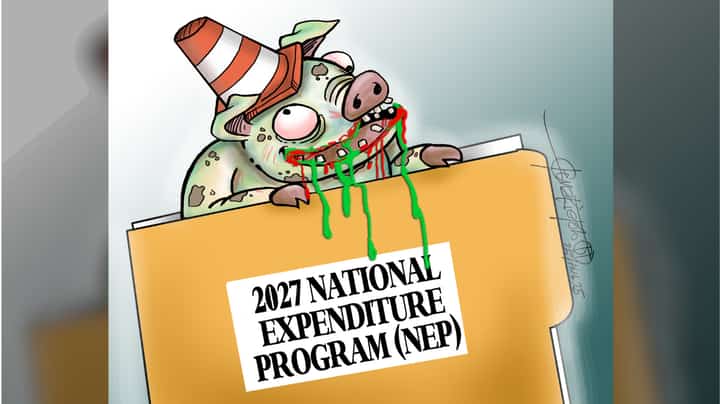
Corruption in this country does not die. It changes clothes and reappears as an inconspicuous line item in the 2027 National Expenditure Program (NEP).
Budget watchdogs have flagged the P58.53-billion Local Government Support Fund (LGSF), saying it may have become the new home of the pork displaced from the Department of Public Works and Highways (DPWH) budget following the flood control scandal. The proposed 2027 LGSF is the largest in its history.
The administration had to be seen cutting DPWH funds amid the scandal, creating the appearance that allocations suspected of being vulnerable to kickbacks were being reined in.
But critics argue that the money was not necessarily made to disappear — it was given a fresh coat of bureaucratic paint and shifted into the LGSF and various aid schemes or ayuda.
Flood control projects, multipurpose buildings, farm-to-market roads, the very line items that drew scrutiny under the DPWH, can now be funded through the LGSF instead.
The Mandanas-Garcia ruling was supposed to free local governments from the habit of begging.
The Supreme Court said the just share of local government units (LGUs) in national taxes must be computed from all national internal revenue collections, expanded from the narrower base agencies had used for years.
The effect was a windfall, written into law as the National Tax Allotment: 40 percent of national revenues automatically flows to LGUs, tied to functions the Local Government Code has devolved, like health, agriculture, social welfare and environmental protection.
Its aim was devolution: that local governments would stand on their own, plan their own future and spend their own money without having to ask Malacañang for permission.
The LGSF, created during the term of President Benigno Aquino III, was never part of the devolution promise. It was meant as a supplement for LGUs, particularly poor and disaster-prone provinces.
Now it has ballooned since the fund is under Malacañang’s discretion. The Palace decides which local governments get funded — which are those whose mayors will back the right candidates in the 2028 elections.
Local governments do the groundwork for campaigns and run the machinery that turns cash doles, or bluntly, bribes, into votes.
A discretionary fund of this size, distributed without transparent criteria, sitting in the hands of the administration exactly as the country turns toward 2028, is not a coincidence.
An outraged public demanded less DPWH pork. The administration, of course, relented, but the crooks were not asked what would replace it, and so nobody had to answer.
Follow the trail and it runs straight to Malacañang. The LGSF is under the Office of the President’s discretion by design, a zombie fund under his command.
When the Department of Budget and Management shepherds a budget through Congress with a large line item such as the LGSF, which is loosely defined, it was designed with the 2028 map already open on the table.
If the DPWH’s flood control pork needed a bagman in Congress, the LGSF needs a gatekeeper in the Palace, and by its very design, the President appears to be the custodian.
Where the budget in past years wrote “infrastructure,” in 2027 it becomes “assistance.” Where past budgets said “project,” this one increasingly says “financial aid.”
All the supposed reforms are performative, meant to mislead the public into believing the pork barrel is dead, but in reality, it has merely transmigrated to another budget item.