
INDIA CALLED. IT WANTS BUSINESS.
India wants to be developed by 2047. Its businessmen in Manila think some of that future can be built here.

A year after Marcos went to India hunting for money and came home talking up $5.8 billion, the businessmen are still being asked to make the thing real.
Photograph courtesy PCO
Curry. Naan. Biryani. Maybe butter chicken if you’re playing it safe.
That’s the easy India. The India we know.
The other India is easier to miss.
You could have walked through an airport in the Philippines partly developed by an Indian company, dealt with an Indian tech firm and watched the Philippine military buy an Indian supersonic missile without ever stopping to think “India.”
Software, airports, medicine, renewable energy. Supersonic missiles. Quite a leap from just dinner.
India is turning up in some interesting corners of Philippine business and, last week, a room full of enterprising Indians in Manila was told, essentially, that there ought to be a lot more of it.
Last Saturday, some of the people trying to sell more of it gathered at Hilton Manila for India’s 80th Independence Day.
The India Business Forum here was celebrating. Ambassador Harsh Kumar Jain was there with his wife Vandana. Indian businessmen, Filipino partners, members of the diaspora.
The theme was “Viksit Bharat: A Developed India by 2047.”
Very grand.
Dileep Tiwari had business to discuss.
Tiwari runs IBF Philippines. To him, all the firm handshakes between Manila and Delhi that evening are nice. Somebody still has to turn them into deals.
“Indian businessmen in the Philippines have a responsibility to help take this partnership forward,” he said.
Meaning: Go find business.
India and the Philippines have had diplomatic relations for 75 years. Everybody likes everybody. Wonderful.
Now what?
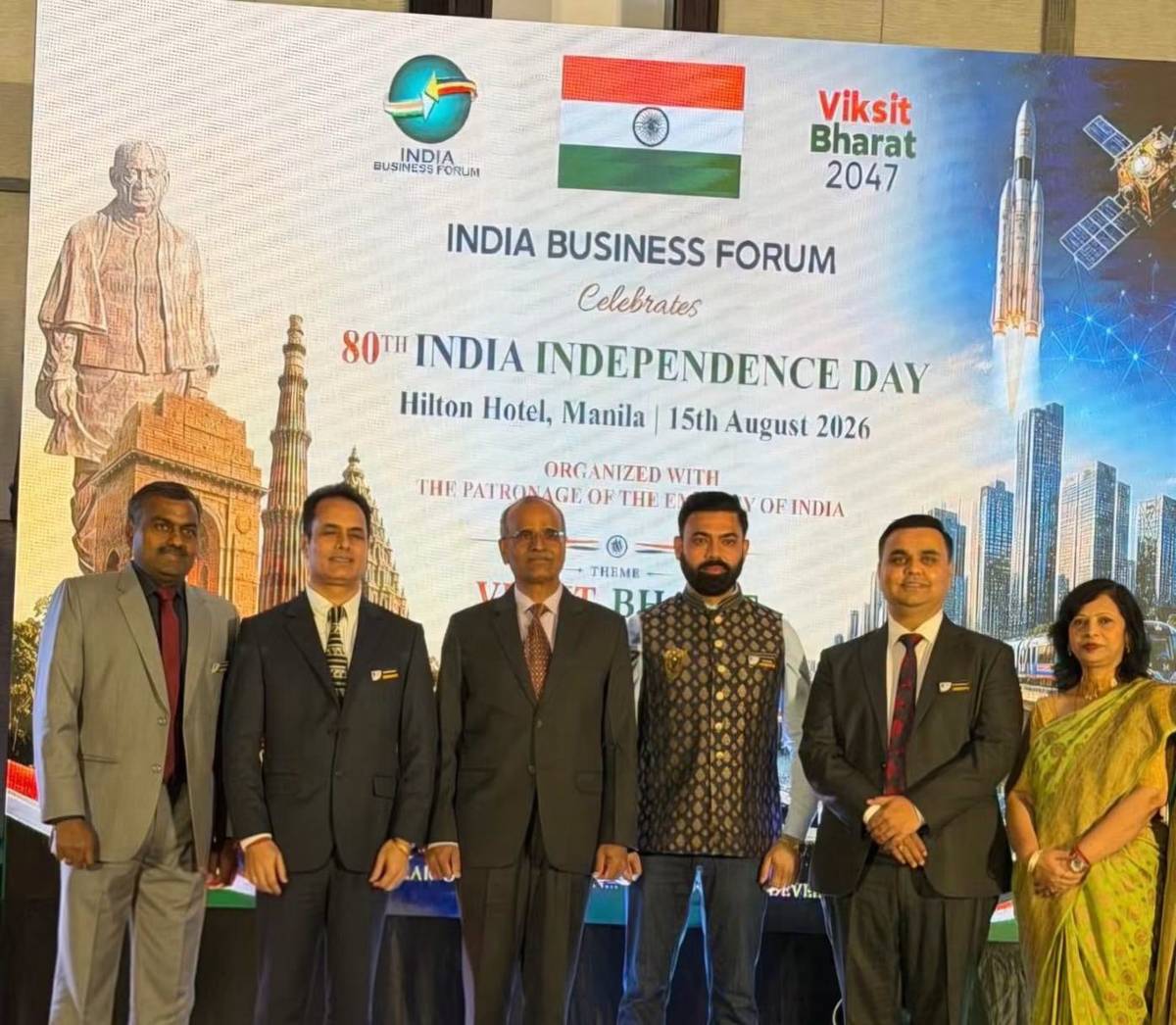
IBF Philippines is betting the next India-Philippines deal gets made by businessmen, not diplomats.
Photograph courtesy of IBF
Last year, President Marcos flew to India with six things he wanted.
EV. Electronics. Renewable energy. High-tech agriculture. Healthcare. Cybersecurity. India has spent years getting very good at things the Philippines badly wants.
Marcos went straight to Bengaluru, India’s tech center, stood before businessmen, asked them to come here.
By the time the President left India, the Palace was counting $446 million in direct investments and as much as $5.8 billion in potential investments.
Eighteen MOUs and letters of intent had been signed in Bengaluru.
The government said the deals could mean more than 4,000 direct jobs and digital training for 26,000 Filipinos.
Could.
$5.8 billion. Nice. A year has passed. Now you get to ask: Where?
Recto stood in front of Indian execs and pretty much emptied the Philippine pockets onto the table. Airports. Telco. Power. Shipping. Tax holidays. Cheap entry. Big market. Economic zones. Take a look.
We have workers, Recto told them. Young ones. English-speaking ones. We have a huge consumer market. We have an IT-BPM industry already doing business with the world.
Recto cited Infosys BPM and HCL Tech Philippines among the Indian companies operating under Peza.
At the time of his speech, there were 22 Indian-registered enterprises operating under Peza. Eighty-two percent: BPO.
The Philippines became the first foreign buyer of India’s Brahmos shore-based anti-ship. Roughly 30 Indian defense companies recently met Philippine defense officials.
Imagine explaining this business relationship using one photograph. What do you put? Laptop? An airport? A bottle of medicine? Missile?
India has become too large an economy to fit neatly into the old picture of what Indian business abroad looks like.
Yet there is money India has yet to touch here. China certainly has. The Philippines bought $38.4 billion worth of Chinese goods in 2025 alone. China has spent years making itself almost unavoidable in Philippine trade.
India has the size, the companies and, increasingly, the appetite to compete for more of that business.
It tells you why people like Tiwari keep organizing roadshows.
There is a lot of road left.
IBF had taken those roadshows to Iloilo. Indian businessmen met local businesses. Now IBF and PCCI-Iloilo are looking at doing it again next year.
India says it wants to be a developed nation by 2047.
That’s New Delhi’s enormous problem. At Hilton Manila last week, the problem was smaller: India has things to sell. The Philippines has things it needs. There are more than 1.5 billion people between them.
Somebody ought to be able to make a business out of that.