
DepEd bolsters school security, mental health support

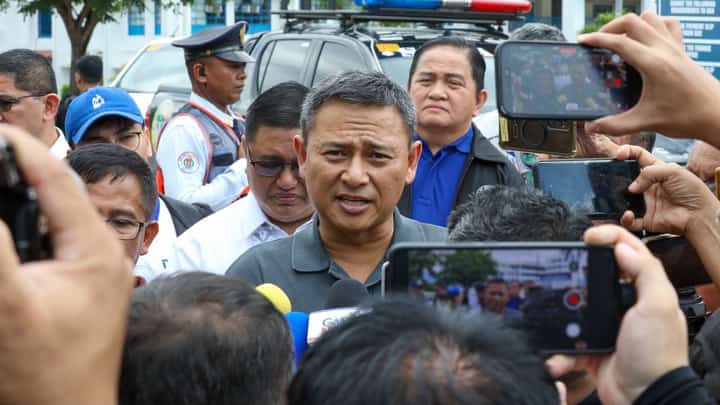
IN PHOTOS | Education Secretary Sonny Angara led emergency intervention efforts and called for a whole-of-community approach to campus safety and youth mental health following the tragic incident at Ateneo de Zamboanga University Junior High School. Alongside security and operational measures, Angara urged the public, content creators and the media to practice responsible digital behavior by refraining from sharing unverified details or graphic content to protect the dignity and privacy of minors.
DepEd PH
Education Secretary Sonny Angara said the Department of Education is tightening security in public schools and expanding mental health support for students following an incident in Zamboanga City, saying teachers and local communities must play a bigger role in preventing violence.
Angara said on Thursday that DepEd was funding measures such as metal detectors and closed-circuit television cameras, while some schools have security guards. Local governments are also being asked to contribute equipment and personnel.
“We’re adopting a bayanihan approach where we all pitch in,” Angara told reporters during a visit to Bais City National High School in Negros Oriental.
The measures follow Tuesday's shooting at a school affiliated with Ateneo de Zamboanga University in which a Grade 9 student fatally shot a Grade 10 student before taking his own life, authorities said. The attack was livestreamed using a body-worn camera.
It was the second fatal school shooting in the Philippines in less than two months, following a June attack in Tacloban City.
Angara said DepEd was increasing coordination with local governments and asking village officials to help patrol school premises, particularly when students arrive and leave.
“We’re asking the tanods also to help us doing the rounds ng mga eskuwelahan, especially ‘pag entrance, ‘pag umpisa ng eskuwelahan tapos ‘pag exit,” he said.
The department is also tightening controls on entry into school grounds, increasing security visibility and encouraging teachers to conduct rounds, he said.
“Mas strict tayo sa entry to the premises. And ‘yun CCTVs, metal detectors, ‘yung security guards natin. And of course making sure each teacher nag-rarounds din,” Angara said.
Early intervention
But Angara said physical security alone would not be enough to prevent violence, stressing the importance of teachers knowing their students and recognizing signs that may require intervention.
“Checking in on our learners is an inherent strength of our educators, especially our class advisers who interact with them every day,” Angara said in a statement issued Thursday.
Angara has also warned about a possible copycat effect from the attack, underscoring the need for schools and communities to respond before threats escalate.
DepEd said teachers should not be expected to act as mental health professionals or disciplinarians. Instead, they should create supportive classroom environments, identify behavioral changes or other warning signs and refer students to trained professionals when necessary.
The department is accelerating the deployment of School Counselor Associates, part of a new school mental health workforce established under Republic Act 12080, or the Basic Education Mental Health and Well-Being Promotion Act.
Angara said the additional personnel would provide specialized interventions while helping shield teachers from taking on responsibilities outside their teaching roles.
DepEd is also strengthening referral and crisis-response mechanisms through the Learners TeleSafe Contact Center Helpline, which connects learners and school personnel with National Center for Mental Health experts.
Angara urged schools to make greater use of Parent-Teacher Associations as partners in preventing school violence, saying parents, schools, local governments and police must share responsibility for student safety.
“We are taking concrete steps so that our schools are backed by guidance support personnel, clear referral systems, and community partnerships, ensuring our teachers and learners have someone to turn to in times of need,” he said.
Classroom shortage
During his Negros Oriental visit, Angara also said DepEd was working with the provincial government on the construction of classrooms.
“We have a partnership with the provincial government led by Governor Chaco to construct classrooms,” he said, adding that a lawmaker was also assisting the provincial government.
The classroom shortage remains a major challenge for the education system. DepEd estimated the nationwide backlog at 143,543 classrooms as of June, down from 165,443 at the start of the Marcos administration.
The Second Congressional Commission on Education, however, has put the current deficit at more than 166,000 classrooms and warned that the shortage could worsen in coming years because of deteriorating and condemned school buildings.
Angara said the school visits in Negros Oriental were part of DepEd's regular monitoring of schools and programs.
“We try to visit as many as we can to know what's really happening on the ground. Kinakamusta namin 'yung mga implementation ng programs natin,” he said.###